


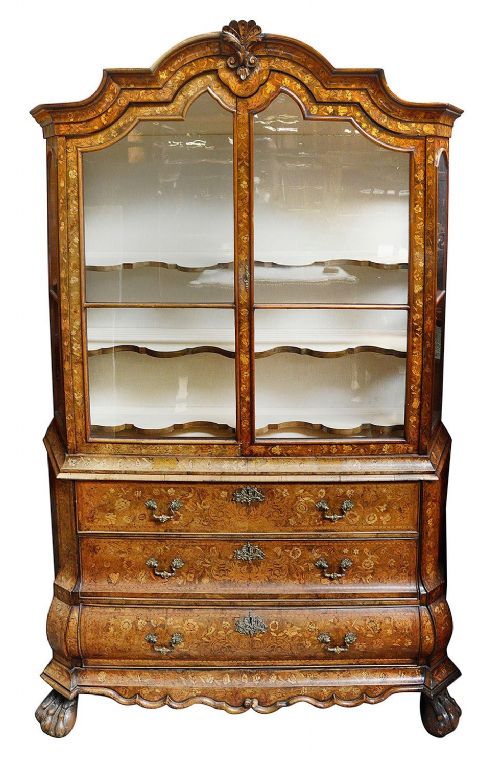
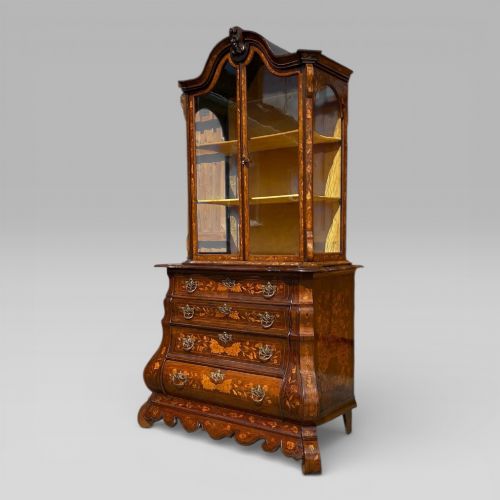
Baroque Walnut Chest
A baroque walnut chest brings profound depth of grain and intricate floral or arabesque inlay into a room, anchoring the space with centuries of craft.
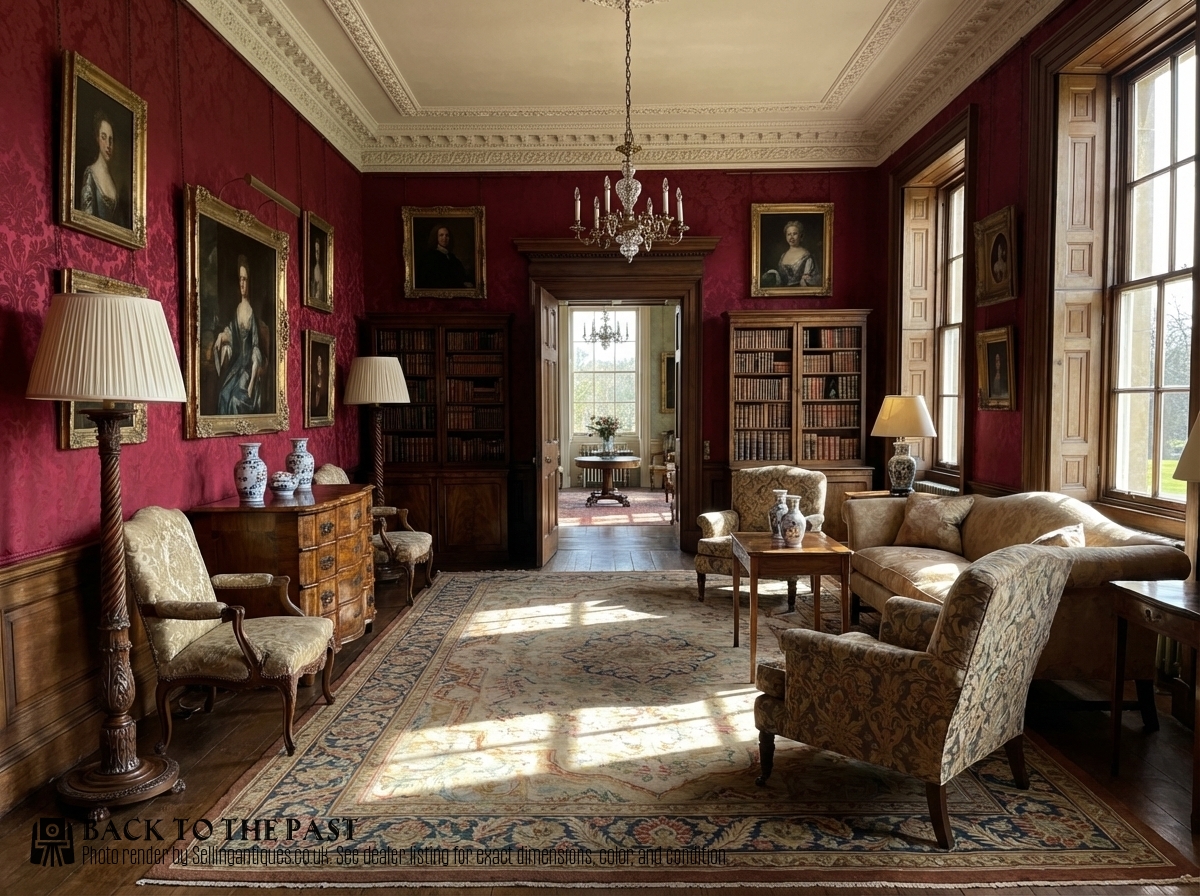
Baroque Walnut Chest
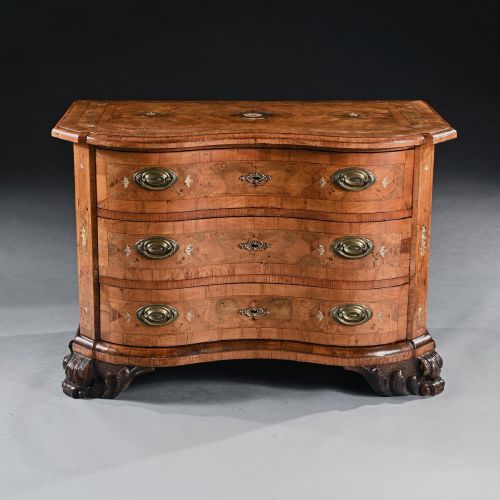
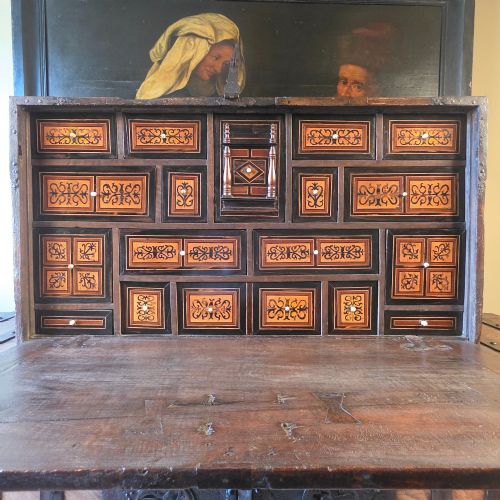
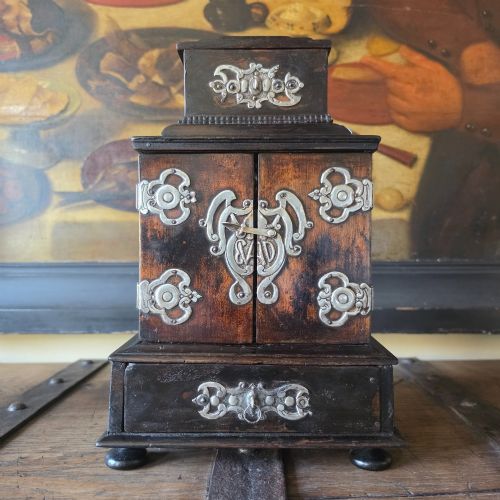
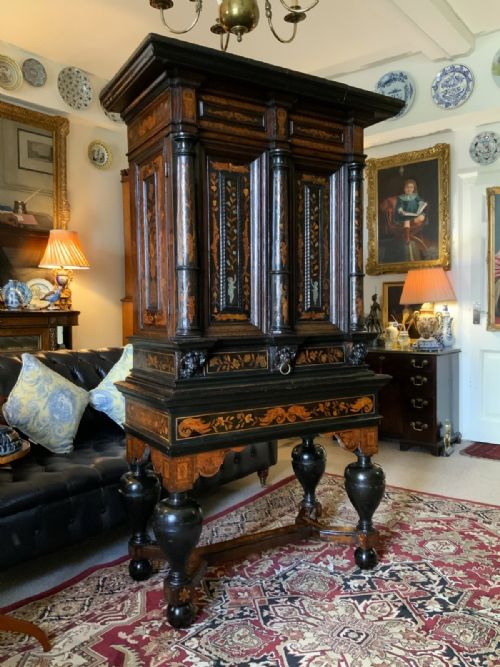
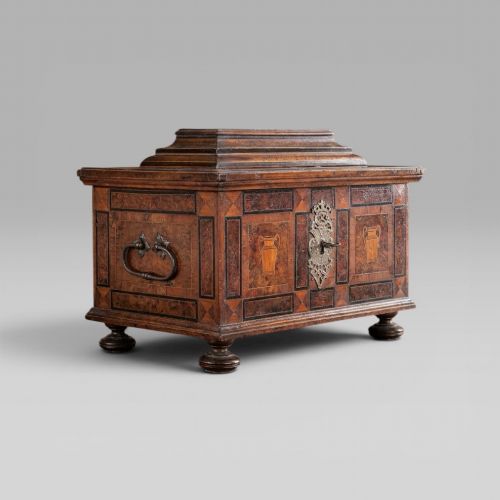
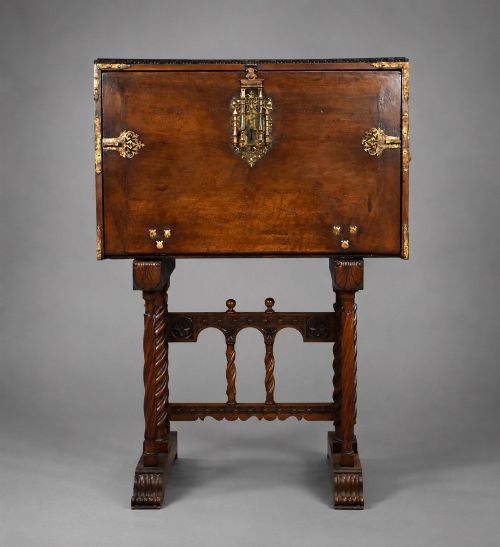
A baroque walnut chest represents a heavy architectural form dating primarily from the seventeenth and eighteenth centuries, originating across England, the Netherlands, Germany, Italy, and Spain. These pieces function as substantial storage furniture, appearing as chests of drawers, commodes, and cabinets on stands.
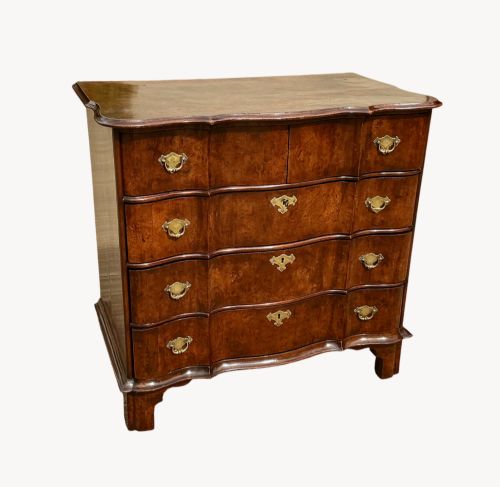
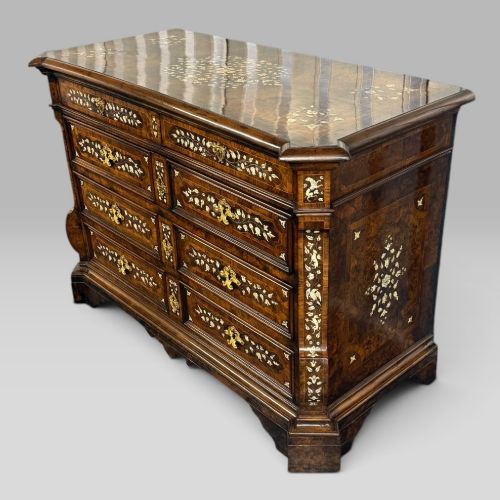
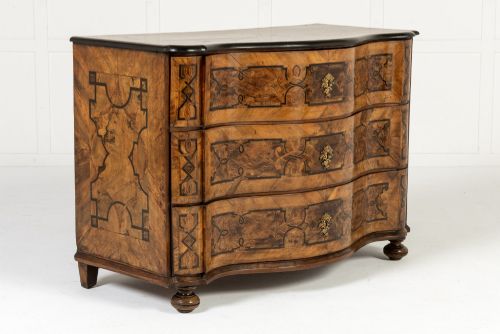
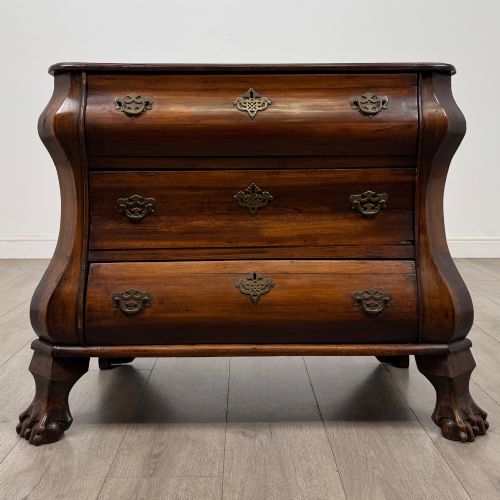
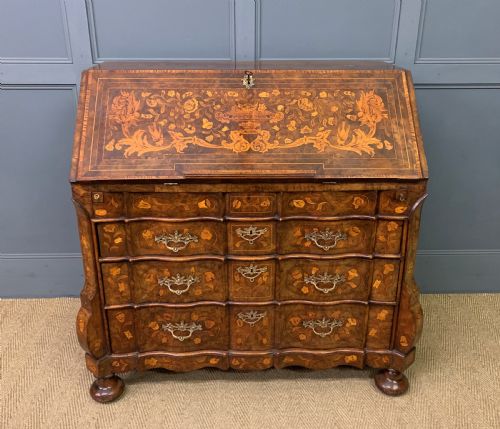
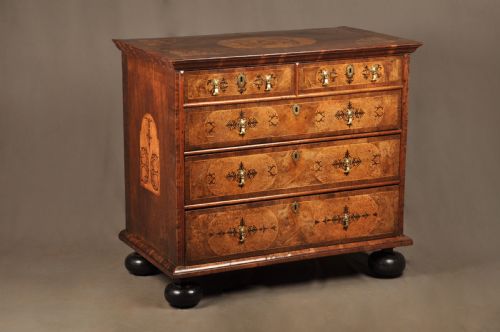
The most common iterations on this page include Dutch and German examples featuring elaborate marquetry, alongside plain walnut or burr walnut drawer fronts from the William and Mary period. Regional variations stretch from bombé silhouettes to serpentine profiles and straight-fronted chests.
Makers and workshops across continental Europe produced these items using native and imported timber, often pairing the primary carcass with contrasting fruitwood, pewter, and ivory details.
How they were made
Cabinetmakers constructed these pieces using solid walnut, oak, and fruitwood frames, applying fine veneers such as burr walnut and oyster veneer to large flat surfaces. The technique of oyster cutting sliced small branch wood transversely to create concentric circular patterns across the grain.
Marquetry ornamentation involved cutting delicate floral, arabesque, and pictorial motifs from contrasting woods, pewter, and ivory, then fitting them meticulously into the walnut ground. Brass handles, escutcheons, and hinges provided robust functional hardware that secured the doors and drawers.
Baroque Walnut Chest Retail Price Guide 2026
Typical asking prices for baroque walnut chest among the pieces listed under this phrase on Sellingantiques today, from the lower quarter to the upper quarter. They describe what is for sale here now, not the wider market.
Regional styles span Dutch Baroque, German Baroque, Spanish Baroque, and William and Mary designs.
What varies in quality
The precision of the marquetry and the choice of veneer dictate the visual impact, with tighter floral patterns and more symmetrical burr walnut figuring marking superior execution. The complexity of the carcass shape, particularly the controlled sweep of a bombé or serpentine front, distinguishes standard joinery from masterwork production.
Originality of the surface finish and hardware defines the integrity of each piece, as untouched patination and period-correct brass mounts hold far greater historical weight than modern replacements.
Edwards And Roberts·Grand Ducal Workshops
The Baroque Walnut Chest Glossary
- Marquetry
- Decorative inlay technique using thin slices of wood, pewter, or ivory arranged to form pictorial or floral patterns across the surface.
- Burr walnut
- Timber taken from a tree growth or burl, yielding a swirling, highly figured grain pattern prized for veneering.
- Bombe
- A swelling, outwardly curving furniture profile that bulges outward towards the base, seen frequently in continental European pieces.
- Oyster veneer
- Circular slices cut from small branches and arranged to resemble oyster shells across the surface of the timber.
- Serpentine
- A furniture front or edge shaped with a central convex curve flanked by two concave curves, creating an undulating line.
Baroque Walnut Chest: Frequently Asked Questions
How do I date a baroque walnut chest?
Examine the secondary woods inside the drawers and the construction techniques of the carcass joints, which typically shift from hand-cut dovetails in the seventeenth century to more refined joinery by the eighteenth century. Regional styles like William and Mary or Dutch bombes also point to specific decades of production.
Compare the veneer patterns and hardware mounts against known period examples, noting that seventeenth-century pieces often display oyster veneers while later pieces favour elaborate floral marquetry.
Where should I place a baroque walnut chest at home?
Position the chest against a solid wall in a principal living space or hallway where the rich brown tones and figured grain can act as a focal point. Keep the furniture away from direct sunlight and heat sources to protect the delicate walnut veneers from drying out.
Ensure the room maintains stable humidity levels because extreme environmental shifts cause the timber and inlaid marquetry to move or lift.
What is the difference between a commode and a chest of drawers?
A commode generally refers to a low, decorative chest of drawers developed on the continent during the seventeenth and eighteenth centuries, often featuring more elaborate serpentine or bombé shapes. Traditional chests of drawers can be taller and serve a purely utilitarian storage function.
Continental pieces labelled as commodes frequently incorporate richer marquetry and more sculptural brass hardware than standard British equivalents.
How do I care for antique walnut furniture?
Dust the surfaces regularly with a soft, dry cloth to prevent dirt accumulation in the intricate recesses of the marquetry and carvings. Apply a microcrystalline wax periodically to nourish the timber and preserve the historic lustre without building up heavy residues.
Avoid using silicone-based commercial polishes or liquid cleaners, which penetrate old finishes and damage the original wood patination.