





Baroque Wall Tapestry
A baroque wall tapestry brings grand scale and rich texture to an interior, transforming plain plaster into a storied landscape of myth and foliage.
Baroque Wall Tapestry
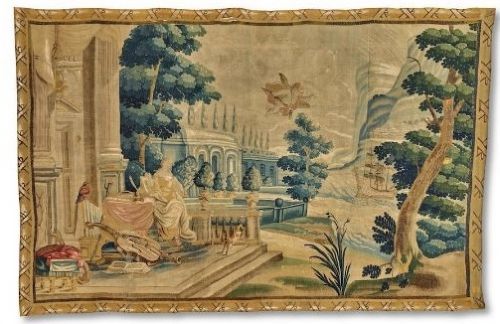
A baroque wall tapestry represents a major textile work designed to hang in a formal interior, spanning periods from the seventeenth century through to the eighteenth century. When you search for a baroque wall tapestry, you encounter heavy woven panels depicting biblical scenes, mythological narratives, and lush garden landscapes.
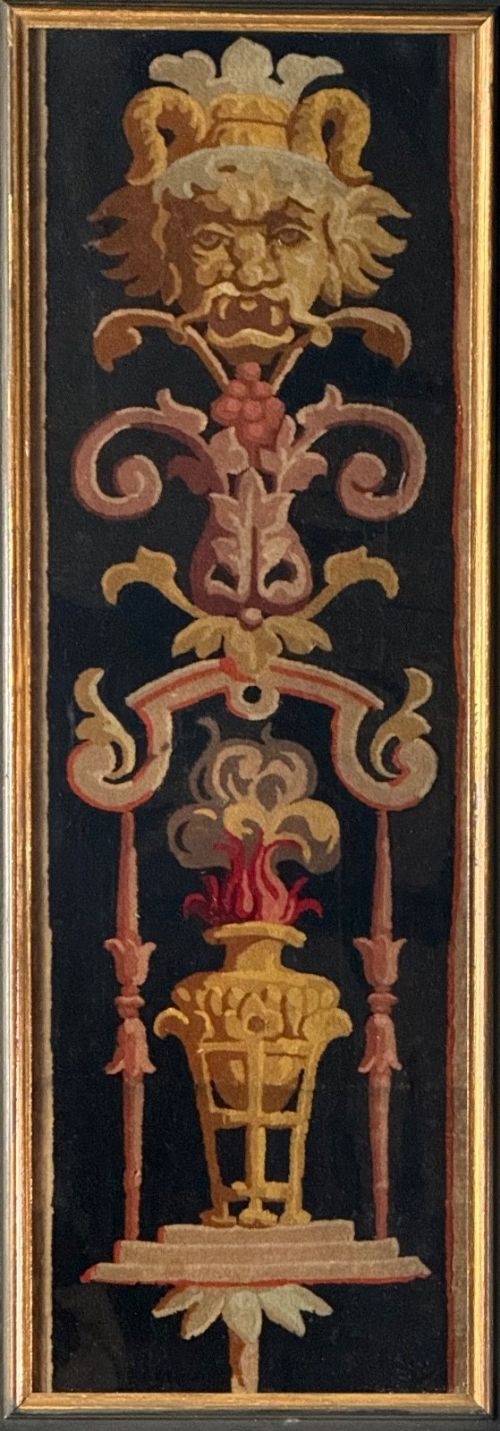
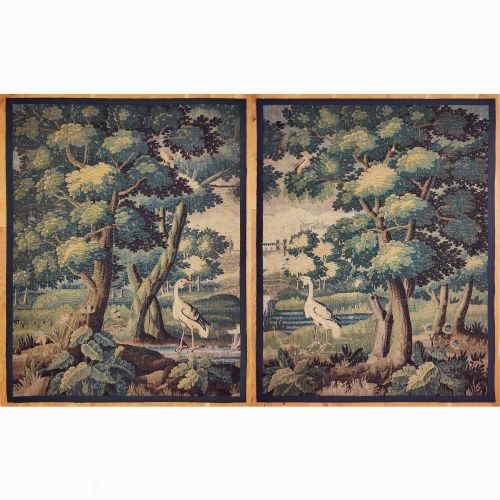
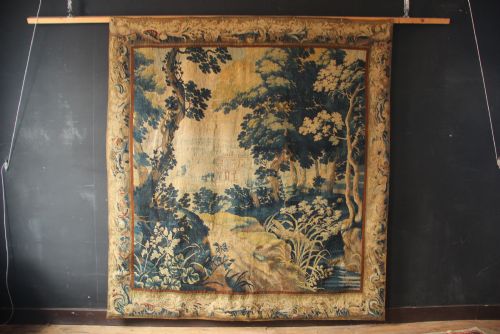
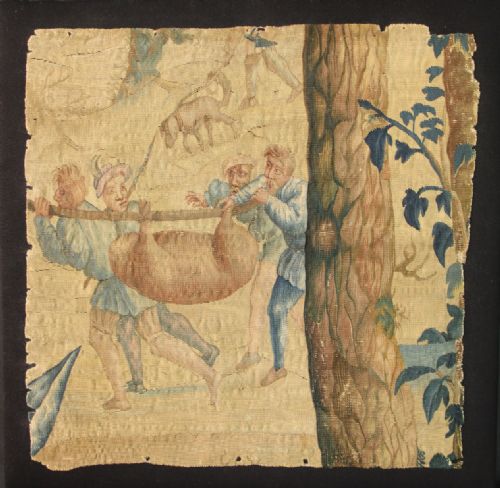
The most common form on this page is the verdure tapestry, which shows dense foliage, trees, and small animals or birds in a woodland setting. Flemish and French origins dominate the selection, often taking the form of large wall hangings, framed textiles, or smaller tapestry fragments and cushion covers.
Materials and construction
These textiles rely on combinations of wool and silk woven together on looms to create intricate pictorial depth and varied colour fields. Artisans utilised canvas and linen as foundational backing or support structures, while secondary pieces incorporate elements of wood, glass, and ciselé silk velvet.
The weaving technique allows for subtle gradations in tone, particularly in verdure scenes where foliage ranges from deep forest greens to muted earth tones. Individual panels often survive as fragments or needlework panels, reflecting the considerable labour required to produce grand scale wall art during the seventeenth and eighteenth centuries.
Listings span the seventeenth and eighteenth centuries, featuring Flemish, French, and North German origins alongside materials like silk, wool, and velvet.
Evaluating the work
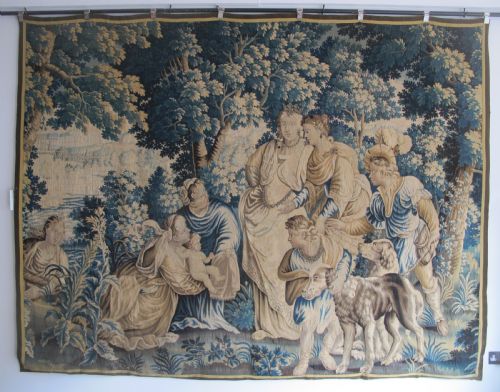
Quality in these textiles rests upon the complexity of the pictorial design and the fineness of the weave. Pieces featuring detailed mythological figures or biblical narratives require greater skill than repetitive foliage motifs found in standard verdure panels.
The survival of original colour and the integrity of the silk and wool threads dictate the visual impact of the hanging. Full-scale wall tapestries retain a commanding presence, whereas fragments and cushion covers demonstrate the continued use of historical textile elements in smaller domestic contexts.
The Baroque Wall Tapestry Glossary
- Verdure tapestry
- A textile featuring a landscape design dominated by trees, plants, and foliage. These scenes often include small birds or animals tucked into the undergrowth.
- Tapestry fragment
- A surviving portion of a larger wall hanging that has been separated from its original context. Such pieces are frequently mounted or framed for display.
- Needlework panel
- A textile created through hand stitching with wool or silk thread rather than on a loom. Eighteenth-century examples often emulate the pictorial style of woven wall art.
- Ciselé velvet
- A velvet fabric featuring a pattern created by cutting certain pile loops while leaving others uncut. This technique produces contrasting textures within the textile.
- Mythological tapestry
- A woven panel illustrating stories from classical mythology. These works typically display complex figural groups and dramatic narrative action.
Baroque Wall Tapestry: Frequently Asked Questions
Where were these tapestries made?
The pieces originate primarily from workshops in Flanders, France, and northern Germany during the seventeenth and eighteenth centuries.
Flemish and French centres produced the largest grand scale works, while regional makers contributed specialised panels and cushion covers.
How do I hang a heavy textile?
Large wall hangings require secure weight distribution, often utilising a hidden wooden batten or a sleeve sewn along the top reverse edge.
Distributing the tension evenly across the width prevents distortion of the wool and silk fibres over time.
What is a verdure scene?
A verdure scene depicts a lush forest landscape filled with trees, shrubs, and dense plant growth.
These compositions focus on natural greenery and woodland settings rather than human figures or historical events.
Are all these pieces full size?
The selection includes a wide range of formats, from large grand scale wall hangings exceeding two metres to compact fragments and cushion covers.
Smaller items such as needlework panels and framed textiles offer alternative ways to display historic weaving in restricted spaces.