


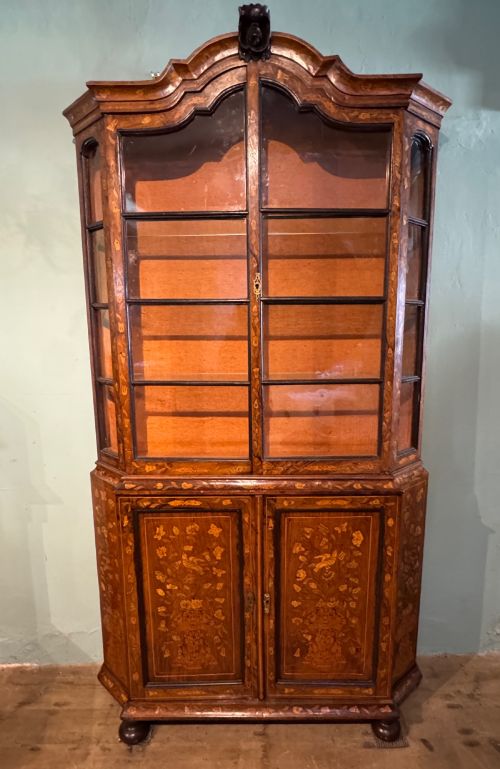
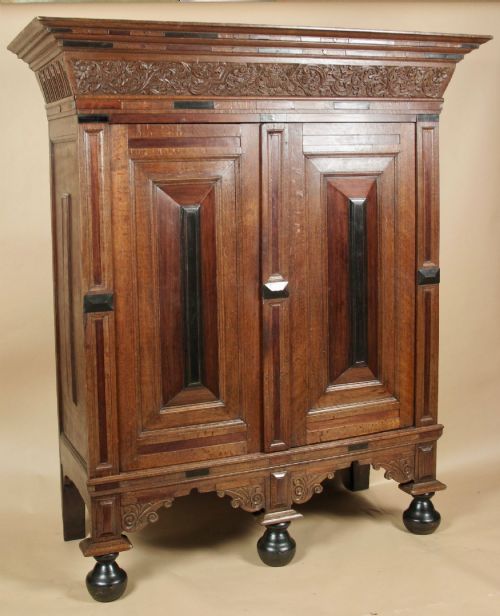
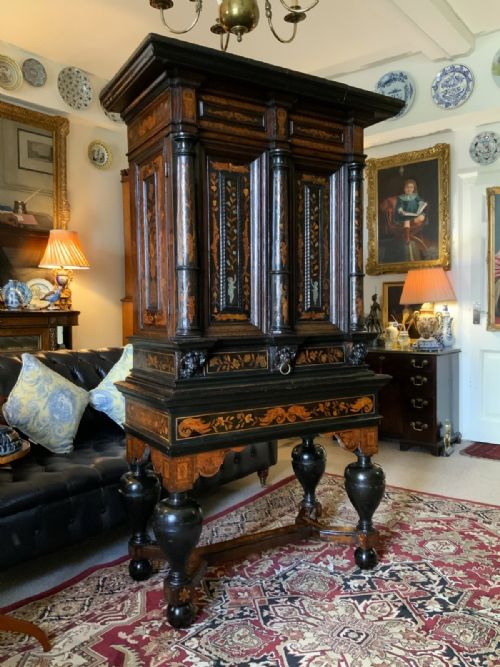
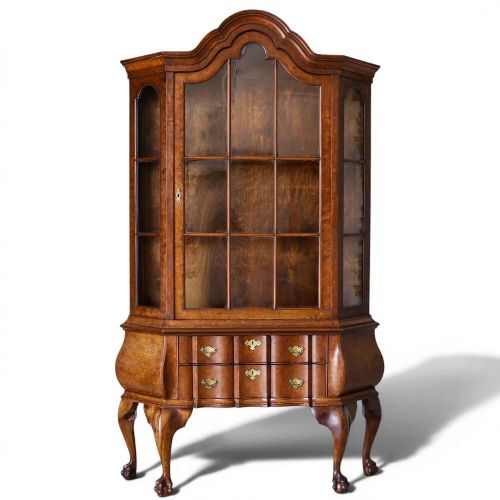
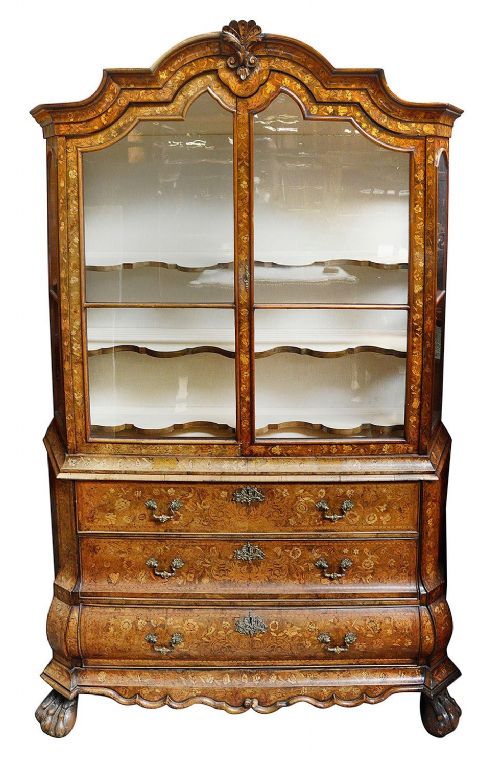
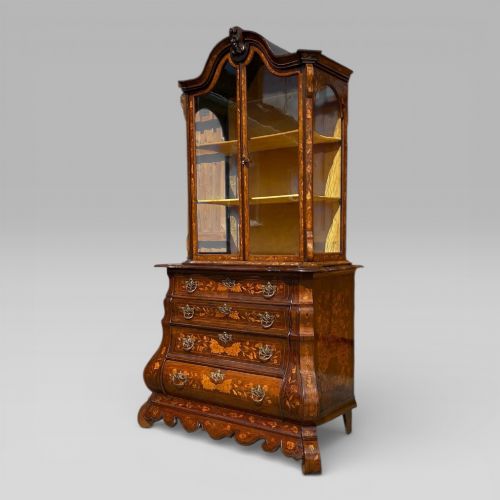
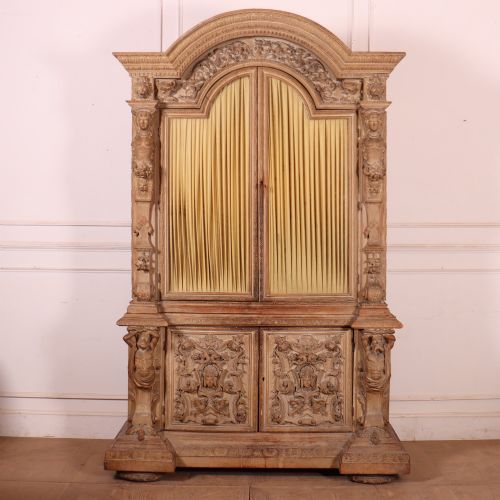


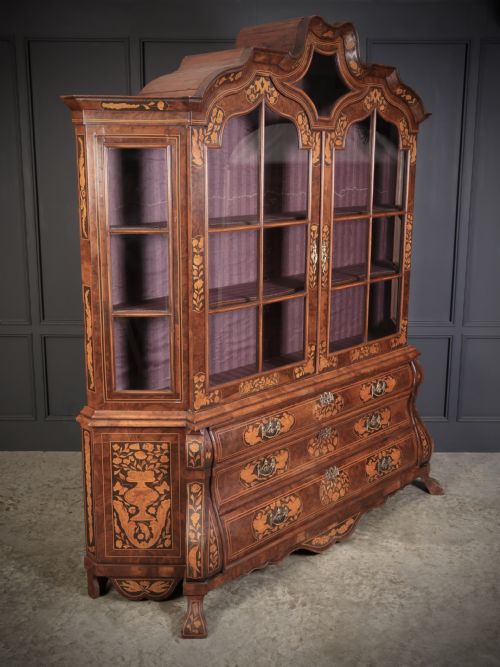


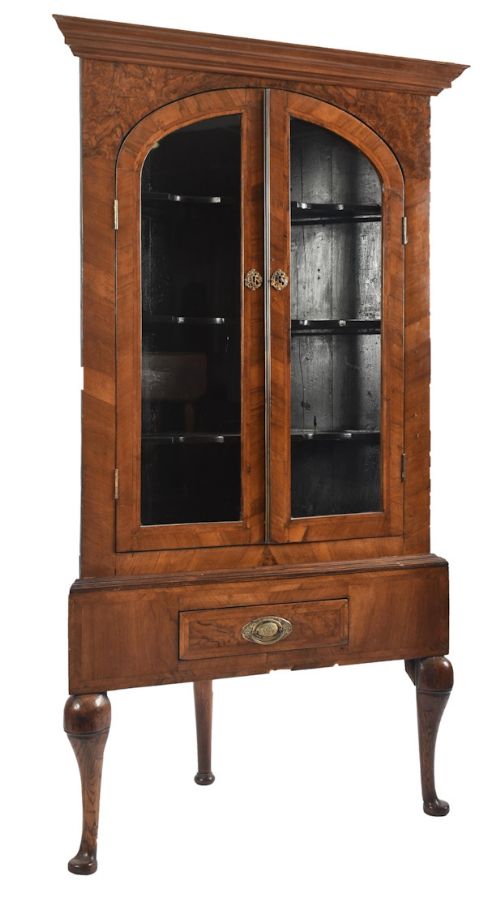
Baroque Display Cabinet
A baroque display cabinet brings dramatic architectural timberwork and intricate floral marquetry into a room.
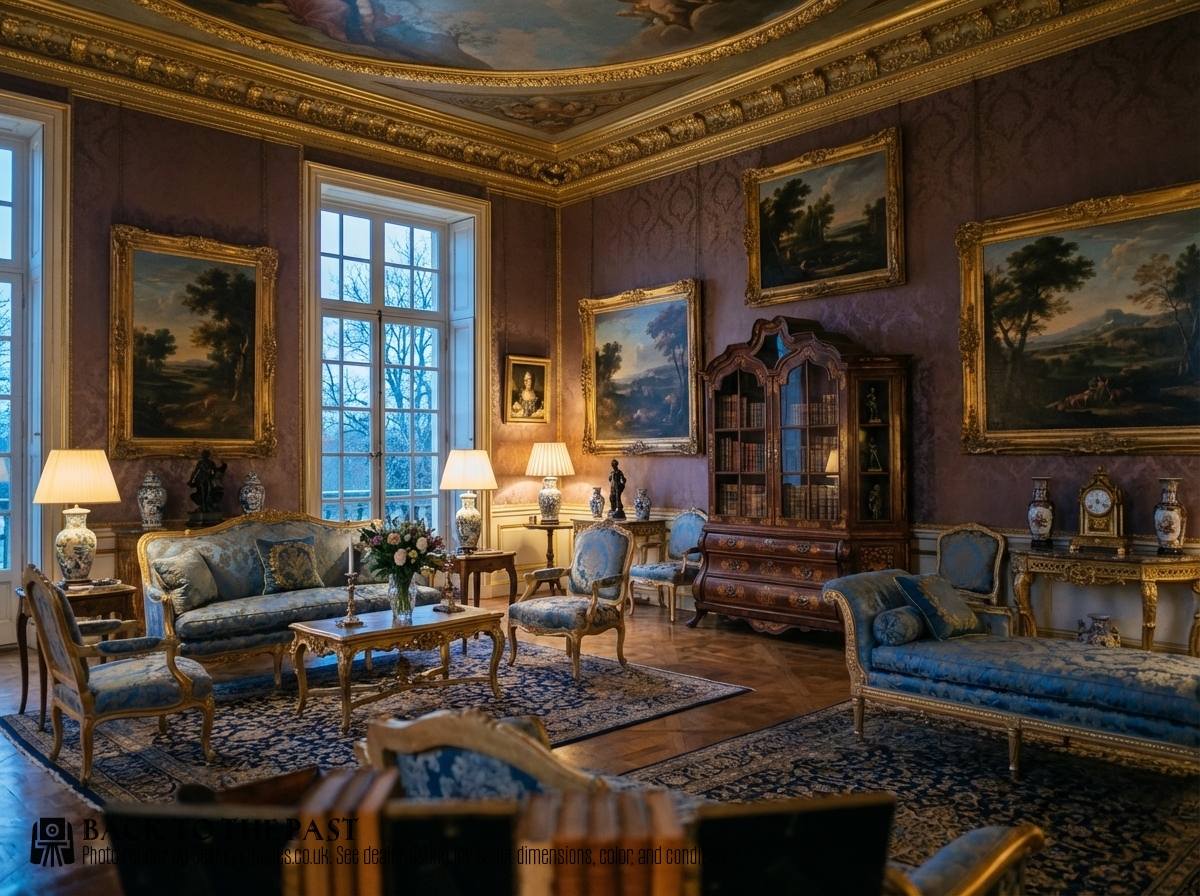
Baroque Display Cabinet
A baroque display cabinet combines practical storage with glazed or open shelving designed to showcase prized possessions. When you search for this phrase, you will encounter diverse forms including bureau bookcases, cabinets on stand, vitrines, and linen presses.
The pieces appearing here span from the 17th century through revival periods up to the 1930s, reflecting centuries of cabinet-making traditions. Dutch and Italian examples dominate the selection, often featuring rich timber veneers and Bombe silhouettes.
Many items incorporate glazed upper sections or glazed doors specifically intended for the exhibition of ceramics and glassware. Lower sections frequently utilise robust drawer configurations or enclosed cupboard spaces.
How they were made
Cabinet-makers constructed these pieces using solid foundations of oak, walnut, and fruitwood, applying elaborate burr walnut veneers across prominent surfaces. Skilled artisans then embellished the timber with marquetry and floral inlay utilising contrasting woods.
Metalwork played a vital structural and decorative role, featuring cast brass handles and hinges alongside pewter inlay. Glazing bars divided the glass panels of upper cabinets into neat geometrical panes to support the structure.
Surface decoration frequently embraced rich grain patterns and painted finishes, while specialised techniques created the distinctive curved profiles of Bombe cabinets.
Listings feature walnut, oak, fruitwood, and burr walnut across pieces spanning from the seventeenth century to the 1930s.
What varies in quality
The precision and complexity of the floral marquetry and pewter inlay define the upper tier of these cabinets. Finely executed botanical motifs across burr walnut and fruitwood distinguish master workshops from standard production.
Architectural proportions and timber selection dictate overall structural harmony. Cabinets utilising deeply figured burr walnut and carefully matched grain patterns demonstrate superior craftsmanship.
The integrity of the original glazing, hardware, and structural mounts influences the character of each piece. Surviving period brasses and intact original glass panels elevate the standing of a cabinet.
Edwards and Roberts
The Baroque Display Cabinet Glossary
- Marquetry
- Decorative patterns formed by fitting together thin slices of wood veneer into complex pictorial designs. This technique transformed flat cabinet doors into floral canvases.
- Bombe
- A swelling, outward-curved contour characteristic of advanced case furniture. This undulating shape requires considerable joinery skill to execute successfully.
- Vitrine
- A glass-fronted cabinet specifically built for displaying porcelain, silver, and curiosities. These display pieces protect delicate items while offering uninterrupted visibility.
- Bureau bookcase
- A dual-purpose piece combining a sloping writing desk below with shelving above. The upper section typically conceals books behind glazed or solid doors.
- Kussenkast
- A heavy traditional Dutch cupboard featuring prominent cushion-moulded door panels. These monumental storage pieces frequently incorporate ebony and rosewood details.
Baroque Display Cabinet: Frequently Asked Questions
What is a baroque display cabinet?
A baroque display cabinet is a decorative storage piece featuring rich timber veneers, glass panels for exhibition, and often elaborate marquetry. These items originated as status symbols for wealthy homes.
Today they serve as focal points in living spaces, combining historical presence with practical shelving for collections.
Where were these cabinets made?
The pieces seen here originate primarily from workshops in the Netherlands, Italy, Spain, and France. Dutch cabinet-makers were particularly renowned for floral marquetry.
Regional preferences shaped the distinct silhouettes, from the sweeping curves of Italian vitrines to heavy Dutch press cupboards.
How do I style a cabinet at home?
Position your cabinet against a flat wall where natural light can catch the glazed upper section and highlight the timber grain. Ensure adequate clearance for doors that swing outward.
Balance the visual weight of the heavy wooden base by arranging lighter ceramics and glassware on the upper shelves.
How do I date a cabinet?
Dating relies on examining construction methods, timber choices, and decorative styles such as Dutch marquetry or Italian carved wood. 17th-century examples often feature robust oak and rosewood, while 19th-century revival pieces utilise machine-cut veneers.
Reference markers like the reign of King Willem I or specific revival decades help narrow down the production era.