
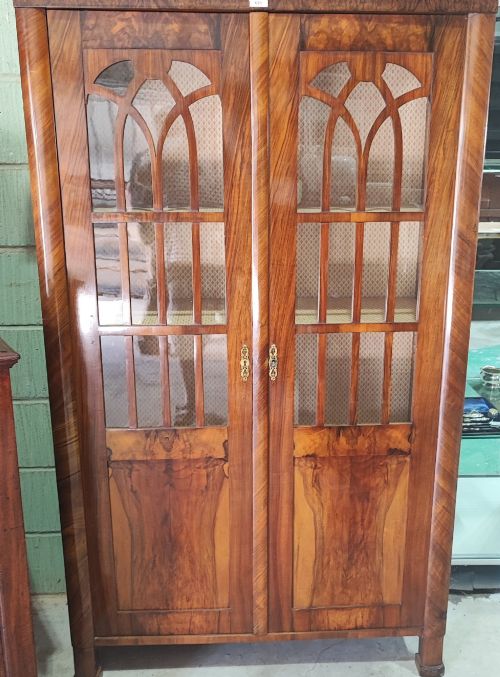
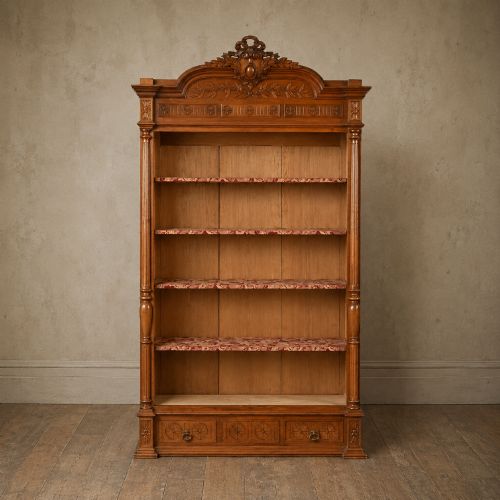
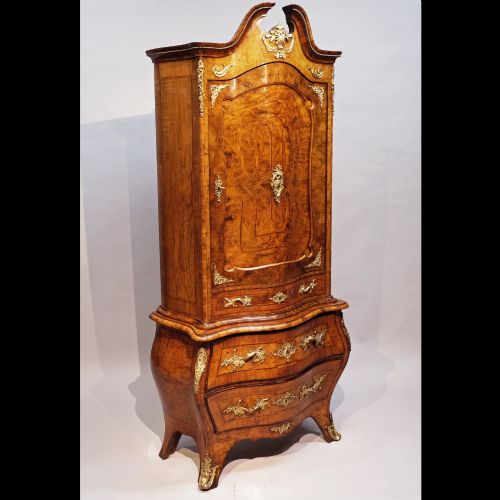


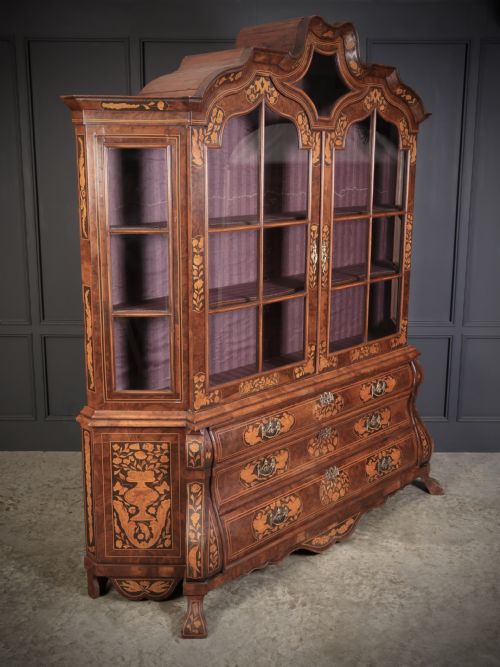


Continental Walnut Display Cabinet
These continental walnut display cabinets bring rich warm timber and clear glass together to frame treasured objects with understated European elegance.
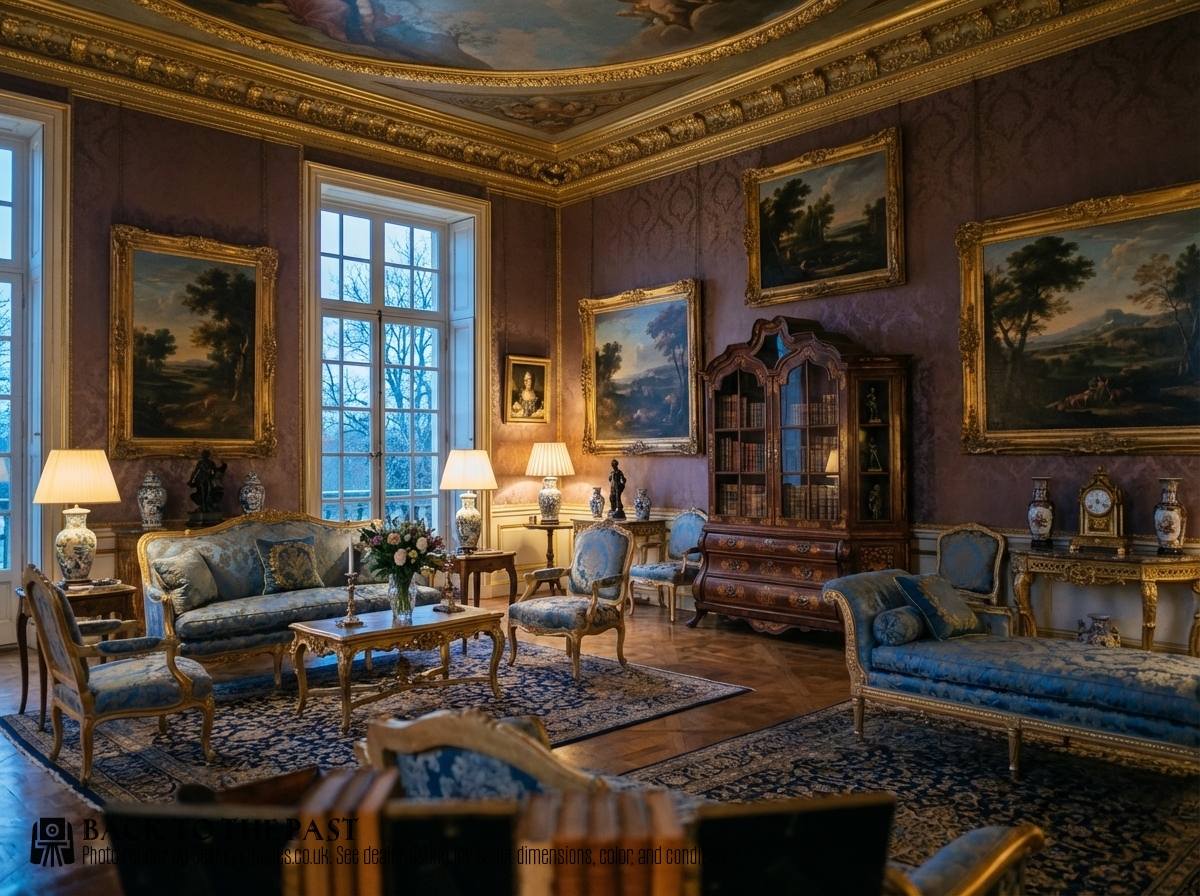
Continental Walnut Display Cabinet
The versions most commonly met on this page range from nineteenth century Biedermeier and Rococo Revival pieces to eighteenth century Italian and Dutch examples. Their timber construction balances structural utility with decorative presence, using solid wood and figured veneers to showcase collections behind glass panels.
Materials and construction methods
Makers utilised walnut, burr walnut, and cherrywood timbers, often applying intricate marquetry inlay to enrich the external surfaces of the carcase. Structural integrity relied on solid wood framing combined with brass fittings, iron hardware, and decorative ormolu mounts.
Glazing framed the central viewing areas while interior shelving held books and display items securely within the cabinet. Carved details and shaped facades demonstrated the technical competency of nineteenth and eighteenth century workshops.
The listings include regional styles such as Biedermeier, Dutch Rococo, Italian Neoclassical, and French Provincial across multiple cabinet forms.
Judging the quality of a piece
Quality rests upon the selection of timber figures, where richly grained burr walnut or carefully matched veneers elevate the visual impact of the facade. The crispness of carved woodwork and the harmonious proportions of bombe shaping or architectural cornices distinguish finer examples from simpler vernacular pieces.
Construction fidelity reveals itself in the seamless integration of glass doors, well-fitted drawers, and original brass or ormolu hardware that complements the walnut body without overpowering its natural grain.
The Continental Walnut Display Cabinet Glossary
- Walnut
- A dense, rich brown hardwood prized for its durable qualities and attractive grain patterns. It serves as the primary timber foundation for these continental cabinets.
- Burr walnut
- A specialised veneer taken from the growth wart of a walnut tree, exhibiting swirling, knotty patterns. This material is reserved for the most decorative cabinet facades.
- Ormolu
- Gilt-bronze ornamentation applied to furniture for decorative effect. It provides a metallic contrast to the dark walnut timber.
- Biedermeier
- A central European style of the nineteenth century prioritising clean lines and utility over excessive ornamentation. It highlights the natural beauty of wood veneers.
- Vitrine
- A glass-fronted display cabinet designed specifically for showing porcelain, glassware, or small curiosities. These pieces place emphasis on maximum visibility.
Continental Walnut Display Cabinet: Frequently Asked Questions
What rooms suit a continental walnut display cabinet?
These cabinets suit living rooms, studies, or dining spaces where books and decorative objects benefit from enclosed shelving and glass protection. Their rich timber tones anchor traditional and transitional interiors alike.
Positioning them away from direct sunlight preserves the walnut finish and protects the interior contents from thermal fluctuations.
How do I distinguish Biedermeier from Rococo Revival styles?
Biedermeier pieces favour restrained geometric forms and flat planes that celebrate the natural figure of the walnut veneer. Rococo Revival pieces embrace exuberant curves, carved ornamentation, and dynamic contours such as bombe shaping.
Observing the silhouette and carved detailing quickly clarifies which design vocabulary a specific cabinet follows.
Are these cabinets suitable for storing heavy books?
Many examples function as bookcases and library cabinets built with solid wood shelving capable of supporting substantial volumes. Checking the depth and internal support structure ensures the shelves meet your storage requirements.
Lighter vitrine versions serve better for porcelain and glassware rather than heavy folio collections.
How should I care for walnut cabinet timber?
Maintaining walnut requires consistent indoor humidity levels and gentle dusting with a soft, dry cloth to prevent the wood from drying out. Avoiding silicone-based polishes preserves the original patina of the surface.
Periodic application of appropriate furniture wax keeps the timber nourished and maintains its natural sheen.