

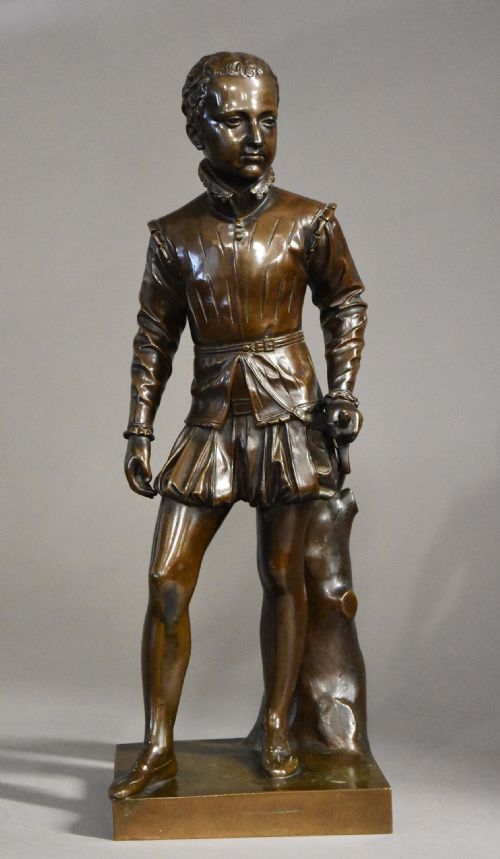

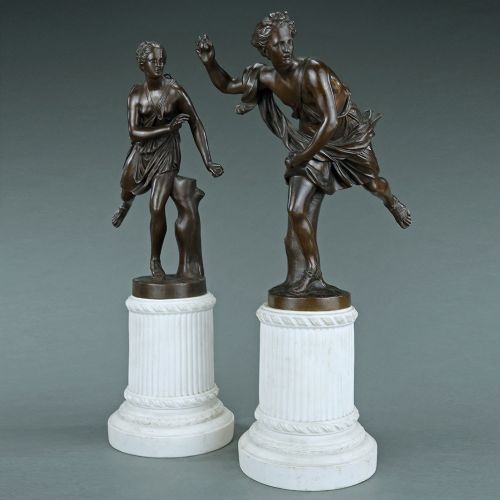
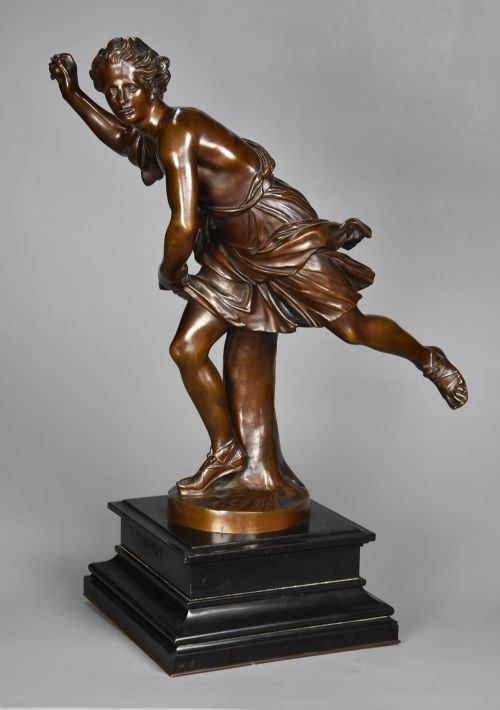


Barbedienne Foundry Sculpture
A barbedienne foundry sculpture brings nineteenth-century French bronze casting into your room with exceptional detail and classical fidelity.
Barbedienne Foundry Sculpture
When you search for barbedienne foundry sculpture, you are looking at nineteenth-century French bronzes cast by the renowned Ferdinand Barbedienne foundry in Paris. These pieces include mythological figures, classical antiquities, and French animalier subjects modelled by celebrated sculptors.
You are most likely to meet nineteenth-century examples on this page, ranging from large figures of Venus to dynamic animalier casts by Antoine-Louis Barye. The selection spans neoclassical subjects, academic figures, and French Baroque interpretations.
The objects take the form of freestanding bronze statues, often mounted on marble bases or ebonised wood plinths. Every piece bears the hallmarks of the Parisian foundry's dedication to quality reproduction and reduction.
Materials and casting methods
The works utilise cast bronze, often enhanced with patinated bronze, dark patina, parcel-gilt bronze, or gilt bronze finishes. These metallic surfaces capture subtle tonal gradations and highlight the fine chiselling applied after the foundry cast the metal.
Foundry artisans combined bronze with marble and ebonised wood for bases and architectural supports. The reduction process, pioneered by the foundry, allowed large classical and contemporary statues to be scaled down accurately into smaller cabinet bronzes.
Barbedienne Foundry Sculpture Retail Price Guide 2026
Typical asking prices for barbedienne foundry sculpture among the pieces listed under this phrase on Sellingantiques today, from the lower quarter to the upper quarter. They describe what is for sale here now, not the wider market.
Listings feature nineteenth-century dates including specific years like eighteen-eighty and eighteen-sixty, alongside broader nineteenth-century periods.
Distinguishing quality in the cast
The subtlety of the surface finish distinguishes finer examples, where patinated bronze or gilt accents catch the light naturally. The integration of marble bases and the clarity of the foundry stamps or signatures further elevate the standing of a piece.
Ferdinand Barbedienne·Antoine Louis Barye
The Barbedienne Foundry Sculpture Glossary
- Animalier
- A nineteenth-century artistic movement focused on the realistic depiction of animals, particularly predators and prey. Sculptors like Antoine-Louis Barye excelled in this genre.
- Patinated bronze
- Bronze treated with chemical solutions to produce a specific surface colour or tone. Dark patinas were frequently utilised to accentuate sculptural depth.
- Parcel-gilt bronze
- Bronze objects featuring selective gilding applied to specific areas of the design. This technique creates contrast against the darker patinated bronze surface.
- Reduction sculpture
- A mechanical process that allowed large statues to be accurately copied in a smaller scale. Ferdinand Barbedienne championed this method for commercial bronze production.
- Neoclassical
- An artistic style inspired by the classical art and culture of ancient Greece and Rome. Many barbedienne foundry sculptures reproduce these antique forms.
Barbedienne Foundry Sculpture: Frequently Asked Questions
How do I identify a barbedienne foundry sculpture?
Look for foundry stamps, signatures, or cachets inscribed directly into the bronze surface, usually near the base. The sharpness of the casting and the quality of the chasing also point to the Parisian workshop.
Compare the subject matter against known nineteenth-century foundry catalogues, noting whether the piece is an animalier subject or a classical reduction after the antique.
What is an animalier bronze?
An animalier bronze depicts animals in naturalistic poses, often showing tension between predators and prey. Artists like Antoine-Louis Barye studied anatomy closely at the Paris zoo to inform these works.
These sculptures gained immense popularity during the nineteenth century, valued for their dynamic energy and meticulous surface detail.
How should I clean my bronze sculpture?
Dust the surface gently with a soft, dry brush to prevent particulate buildup. Avoid using water, soap, or chemical polishes, as these can strip the original patina.
Apply a very light coat of microcrystalline wax occasionally if the metal appears dry, buffing it gently with a clean cloth.
Where were these sculptures made?
These pieces were produced in Paris by the foundry established by Ferdinand Barbedienne. The workshop collaborated with leading sculptors of the nineteenth century to cast bronzes for an international clientele.
Many works were also sold as Grand Tour souvenirs for travellers returning from continental Europe.