

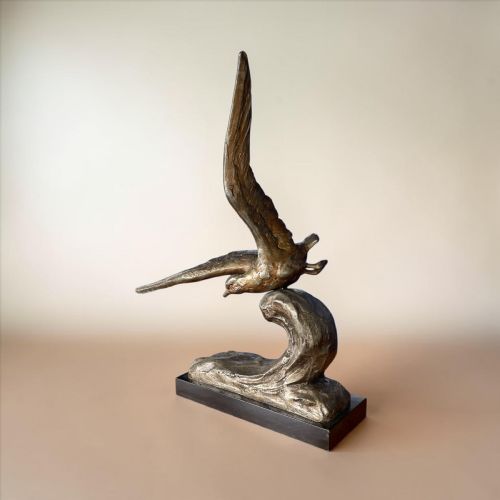


French Bronze Bird Figure
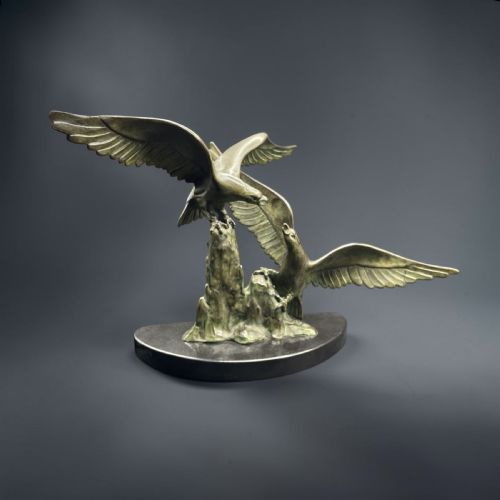
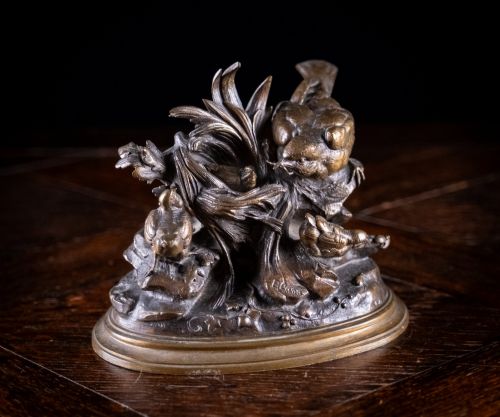
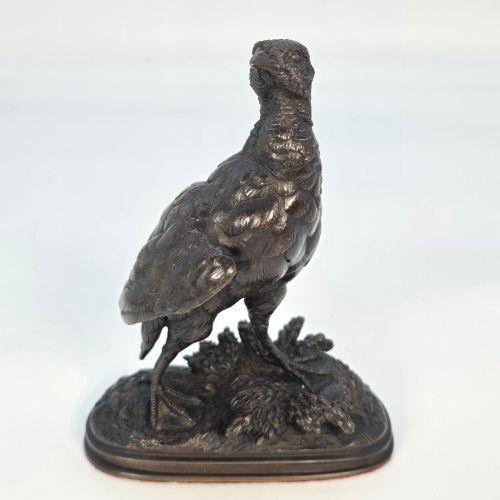
A French bronze bird figure captures animated plumage and fierce naturalism, offering a tactile piece of continental sculpture for the desktop or mantel.
French Bronze Bird Figure
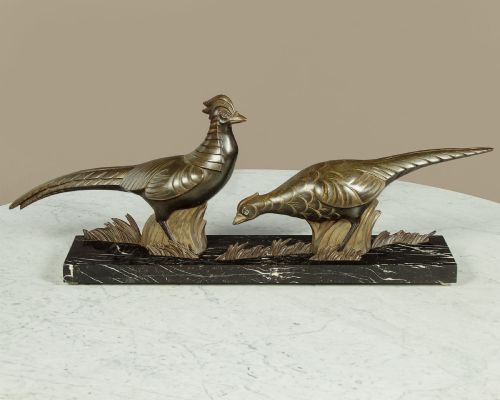
A French bronze bird figure brings realistic animalier studies and stylised avian forms into interior spaces, spanning desk accessories like inkwells and bookends alongside standalone sculptures. You will frequently encounter nineteenth-century naturalistic subjects and streamlined Art Deco interpretations.
The selections range from eagles and golden pheasants to storks and sparrows, often mounted upon natural bronze branches or marble bases. These pieces reflect shifting tastes across the decades, moving from precise nineteenth-century animal studies to twentieth-century decorative treatments.
Materials and casting methods
Foundries utilised traditional lost-wax or sand-casting techniques to capture minute feather details in bronze, patinated metal, and ormolu. Artisans then applied chemical patination or gilt finishes to create dark patina, golden highlights, and varied surface textures.
Many works combine cast bronze elements with contrasting materials such as marble plinths or gilt metal mounts. These composite constructions required precise metalworking skills to secure the heavier figures to their stone bases.
French Bronze Bird Figure Retail Price Guide 2026
Typical asking prices for french bronze bird figure among the pieces listed under this phrase on Sellingantiques today, from the lower quarter to the upper quarter. They describe what is for sale here now, not the wider market.
Listings feature works spanning the nineteenth century through to nineteen-thirty, incorporating marble plinths, patinated bronze, and gilt metal.
Assessing quality in bronze figures
The sharpness of the chasing work and the depth of the patina separate standard castings from exceptional examples. Superior pieces retain crisp feather texturing and careful hand-finishing that survive beneath layers of age.
Foundry marks and legible signatures add significant authority to a casting, demonstrating the involvement of established workshops and named sculptors. The integration of the subject with its base also reveals the maker's original intent and structural care.
Barbedienne·Antoine Louis Barye·P J Mêne·Maurice Bouval·Christophe Fratin·Ferdinand Pautrot
The French Bronze Bird Figure Glossary
- Animalier
- A nineteenth-century artistic movement dedicated to the realistic portrayal of animals. Sculptors in this genre focused on anatomical accuracy and dynamic movement.
- Patina
- The surface coloration and sheen developed naturally over time or applied chemically by the foundry. This finish protects the metal and defines the visual depth of the sculpture.
- Ormolu
- Gilt bronze created by applying a finely ground high-carat goldmercury amalgam to a bronze object. The piece was then heated to drive off the mercury, leaving a rich golden coating.
- Lost-wax casting
- A historic method of metal casting where a molten metal is poured into a mould that has been created by means of a wax model. This technique allows for intricate detail and undercut forms.
French Bronze Bird Figure: Frequently Asked Questions
How were these bronze birds used?
Many of these pieces served practical functions in nineteenth-century studies and libraries, functioning as inkwells with hinged lids or heavy bookends to support leather-bound volumes.
Other examples were created purely as decorative sculptures and figurines, designed to be displayed on mantelpieces, pedestals, or glass-fronted cabinets.
How do I identify the casting period?
Examining the base materials, patination styles, and any foundry stamps will often point toward a specific era, such as the nineteenth century or the Art Deco period of the nineteen-thirties.
Signatures cast directly into the bronze or engraved artist attributions also help date the work when matched against known working periods of the sculptors.
How should I clean my bronze figure?
Dusting the surface gently with a soft, dry brush is generally sufficient to maintain the patinated metal without disturbing historical finishes.
Avoid using abrasive cleaning agents, polishes, or wet cloths, as these can strip away the original patination and damage the exposed bronze underneath.
What is animalier art?
Animalier art refers to the realistic and dynamic representation of animals in sculpture and painting, which gained immense popularity across France during the nineteenth century.
Sculptors observed wildlife closely in menageries to capture authentic postures, muscular tension, and natural avian behaviours in bronze.