


Bamboo Turned Nesting Tables
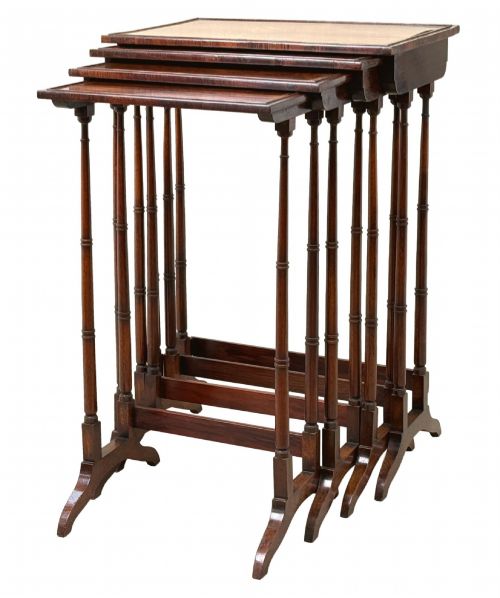
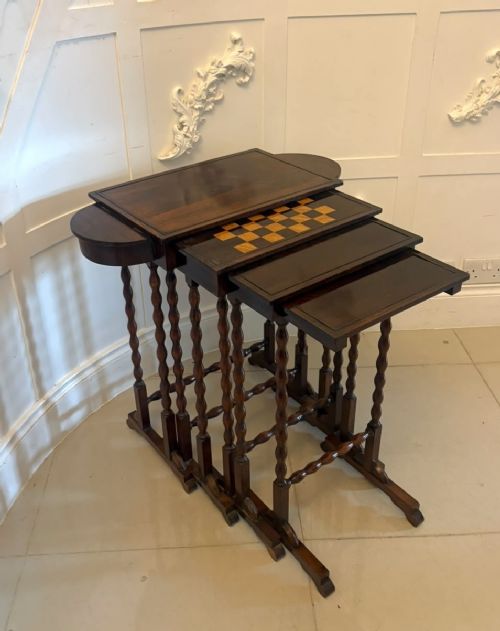
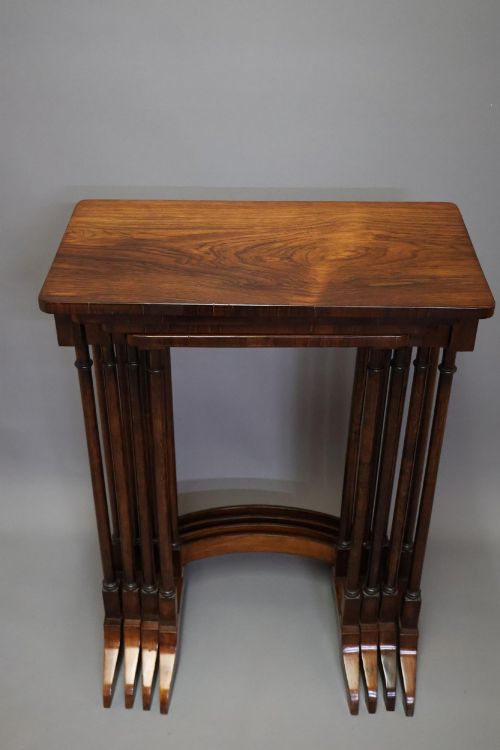
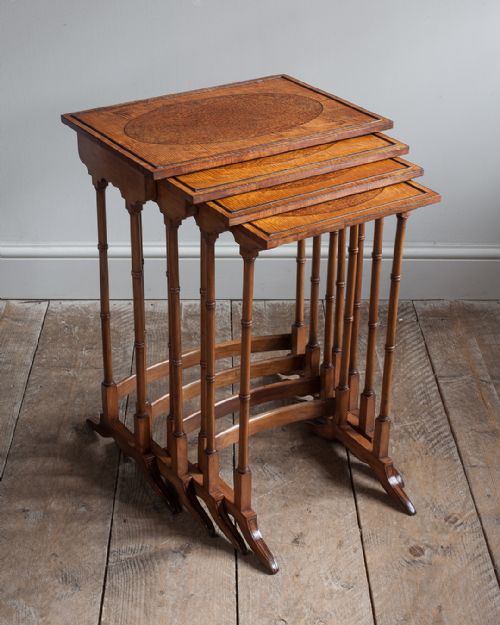
Bamboo turned nesting tables offer ingenious tiered surfaces for small spaces, combining slender turned supports with graduated quartetto tops.
Bamboo Turned Nesting Tables
Bamboo turned nesting tables comprise sets of graduating occasional tables designed to slide neatly beneath one another when not in use. The turning on the supports mimics natural bamboo, a decorative motif popular across the nineteenth century and into the Edwardian era.
The pieces listed here span the Regency, Georgian, and Edwardian periods, showcasing forms from simple sets of three to complete quartetto sets of four. Materials include rosewood, satinwood, mahogany, and boxwood, occasionally complemented by lacquer work and Chinoiserie styles.
How they were made
Cabinet makers utilised dense hardwoods such as rosewood, satinwood, and mahogany to turn the slender uprights and shape the table tops. Lathe work created the characteristic segmented joints and ridges associated with simulated bamboo turning.
Joinery techniques focused on creating lightweight yet stable frames that allowed each smaller table to slide smoothly into the next. Selected timbers were polished to reveal deep grains, while finer examples incorporated boxwood stringing or intricate lacquer decoration.
Current listings span the 19th Century, Regency, and Edwardian periods, employing rosewood, satinwood, mahogany, and boxwood.
What varies in quality
Quality rests in the precision of the turning and the selection of cabinet timbers, where figured rosewood or satinwood elevates a set far above plain mahogany or mixed timber. The crispness of the simulated bamboo joints reveals the hand of a skilled turner.
The Bamboo Turned Nesting Tables Glossary
- Quartetto
- A matched set of four graduating occasional tables designed to nest together. This form gained great popularity during the Regency period.
- Simulated bamboo
- Wood turned and painted or carved on a lathe to imitate the jointed stems of natural bamboo. Cabinet makers utilised this technique to satisfy fashionable taste for exotic materials.
- Chinoiserie
- European artistic style reflecting Chinese motifs and decorative techniques, often applied through lacquer and gilt on furniture. This aesthetic appears on select occasional tables from the periods represented.
Bamboo Turned Nesting Tables: Frequently Asked Questions
What is a quartetto nest?
A quartetto nest consists of four tables that descend in height and width so each smaller piece slides completely beneath the one above it.
This clever design maximises floor space in smaller rooms while providing multiple surfaces for entertaining.
How do I identify Regency sets?
Regency sets typically employ rich timbers like rosewood and mahogany, featuring slender turned supports and classical proportions.
They often date from the early nineteenth century and rely on clean lines rather than heavy ornamentation.
Are Edwardian sets different?
Edwardian versions frequently utilise light satinwood and may incorporate delicate painted decoration or stringing.
These pieces reflect a lighter aesthetic suited to drawing rooms at the turn of the twentieth century.
How were these tables used?
Owners deployed the individual tables around a room for tea, writing, or playing games when guests visited.
When not in use, the entire group compressed into the footprint of the largest single table.