



Vintage Nesting Tables Wood
Vintage nesting tables wood sets offer clever space-saving designs that slip together neatly when not in use.
Vintage Nesting Tables Wood
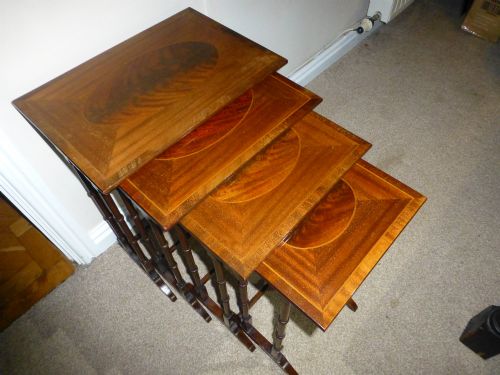
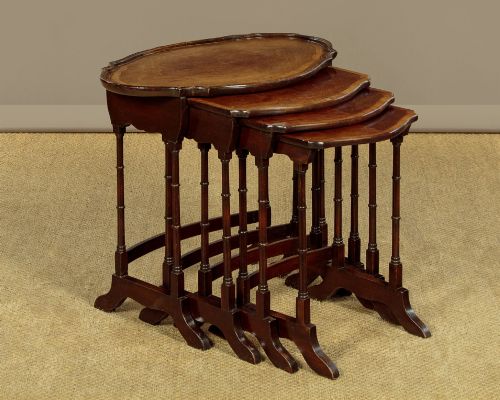
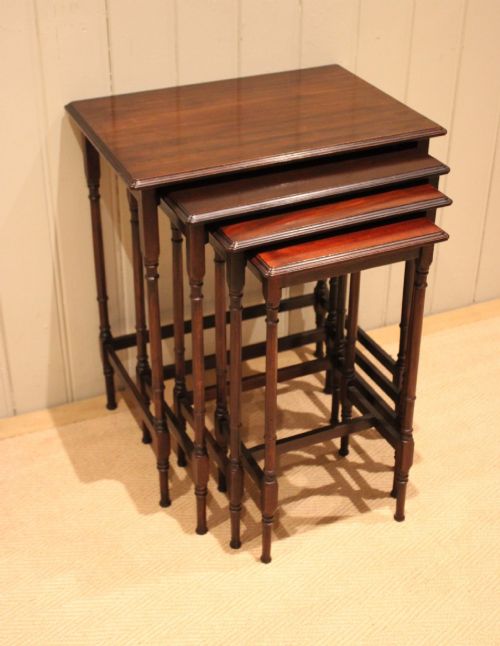
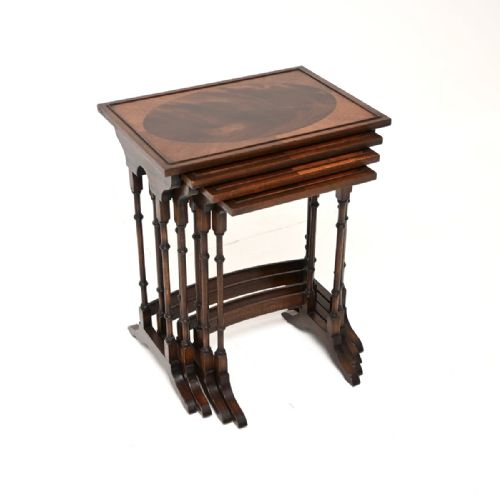
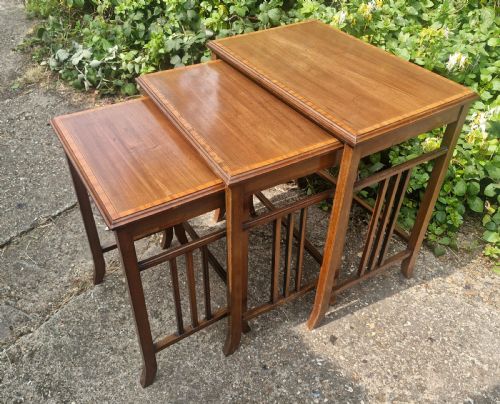
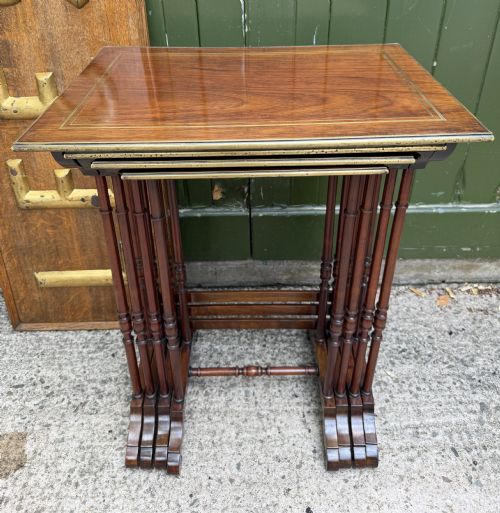
When you search for vintage nesting tables wood, you encounter sets ranging from three to five stacked surfaces designed to pull apart for entertaining or daily use. The most common examples on this page date from the Edwardian period through the 1930s, constructed predominantly in mahogany with occasional appearances of rosewood, walnut, and satinwood.
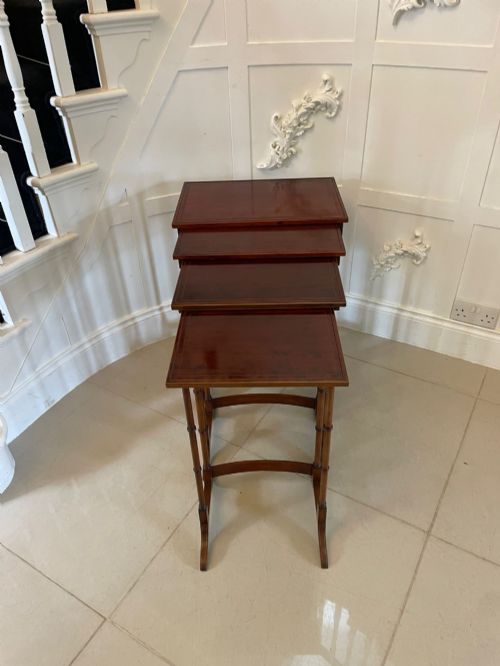
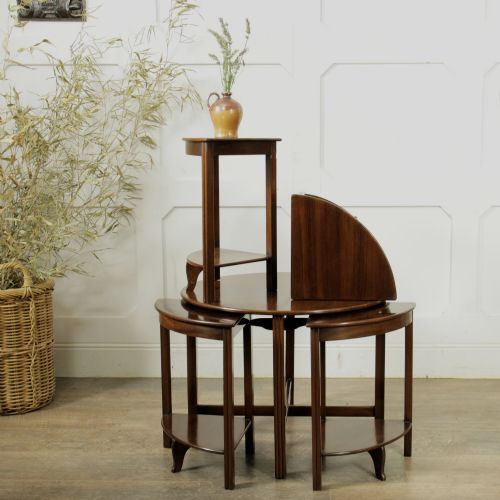
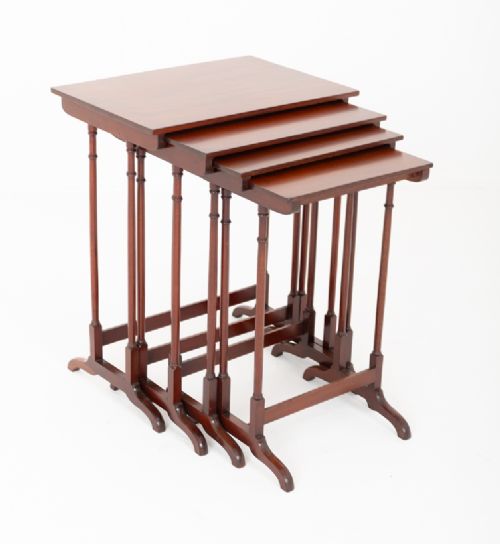
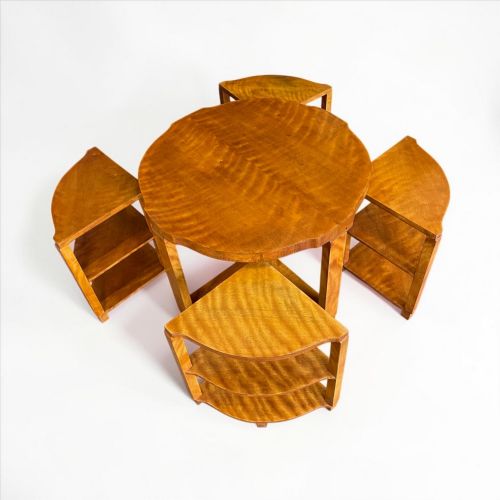
Makers and workshops of the early twentieth century produced these sets in various configurations, including quartetto tables and circular designs. Styles span from Georgian revival and Edwardian inlaid models to Art Deco creations and Chinoiserie lacquered finishes.
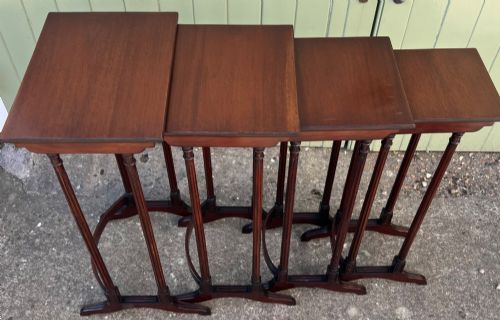
The practical appeal lies in the graduated scale, allowing smaller tables to slide completely under the largest top. This arrangement provides multiple independent surfaces without cluttering a room.
Materials and construction
Cabinetmakers utilised dense hardwoods such as mahogany, rosewood, and walnut for strength, often employing fine grain veneers on the top surfaces. Inlays of boxwood and satinwood frequently decorate the borders of Edwardian and Georgian style examples.
Joinery methods focused on lightweight stability so that individual tables could slide smoothly into position without binding. Specialised variations incorporated brass stringing, hand-carved teak details, or parquetry patterns on the primary tabletops.
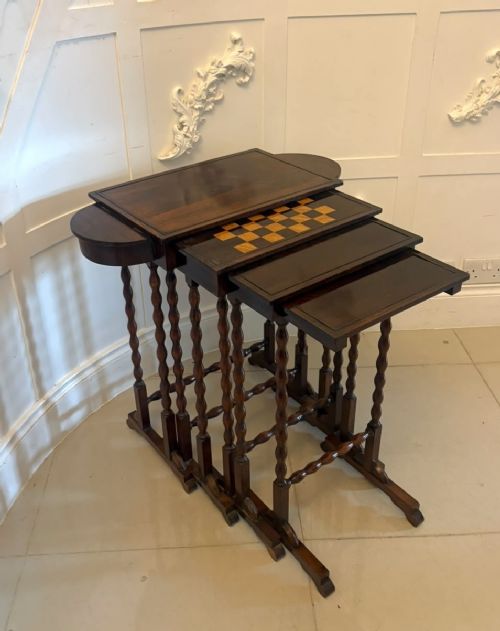
One exceptional nineteenth-century set includes an integrated chess table, proving that victorians enjoyed a quick match inside their stacking furniture.
Assessing quality in tiered tables
Quality rests primarily on the crispness of the timber selection and the precision of the graduated framing. Superior sets maintain structural rigidity across all tables, ensuring the smallest piece fits its designated slot without wobbling.
Fine examples display careful hand-inlay work and consistent French polishing that highlights the natural grain of the wood. Maker attribution, such as pieces produced by established firms, further distinguishes high-end items from standard utilitarian sets.
Émile Gallé·The Hille Furniture Company·Heal's
The Vintage Nesting Tables Wood Glossary
- Quartetto
- A set of four graduating tables designed to nest together. This term appears frequently in nineteenth-century and Edwardian cataloguing.
- Inlay
- A technique where contrasting materials such as boxwood or satinwood are embedded into the wood surface to create decorative patterns. It defines many Edwardian pieces.
- Parquetry
- Geometric mosaic woodwork formed by small veneer pieces laid down in repeating patterns. This technique surfaces on selected walnut tops.
- Chinoiserie
- European decorative style reflecting Chinese artistic traditions, often featuring lacquered finishes and hand-painted motifs. Such surfaces distinguish specialised sets from plain timber versions.
- Stringing
- Thin lines of contrasting wood or brass inlaid into furniture surfaces to form borders. It accentuates the edges of table tops and legs.
Vintage Nesting Tables Wood: Frequently Asked Questions
How were vintage nesting tables used?
These tables served primarily as occasional surfaces for tea, writing, or holding small decorative objects in Victorian and Edwardian drawing rooms. Servants pulled them out individually when guests arrived and stacked them compactly afterwards.
Their modular nature made them adaptable for smaller apartments or sitting rooms where permanent large furniture created congestion.
What woods appear most frequently?
Mahogany forms the majority of surviving examples, often enriched with satinwood or boxwood stringing. Rosewood and walnut also feature prominently in nineteenth-century and Art Deco iterations.
Makers selected these dense timbers to ensure the slender legs of the smaller tables remained rigid under daily loads.
How do I distinguish Edwardian sets from later styles?
Edwardian versions typically rely on traditional mahogany, delicate stringing, and tapered or spade legs. They reflect a revival of eighteenth-century aesthetics.
Later 1930s examples often adopt cleaner geometric lines, simplified walnut surfaces, or distinct maker craftsmanship associated with Art Deco design.
Can I use them as daily coffee tables?
The main table in a set often functions well as a low surface, while the smaller tiers accommodate drinks or books nearby. Distributing the pieces around a seating area utilises the design as intended.
Care should be taken with vintage polishes when placing hot or wet items directly on antique wood surfaces.