




Edwardian Stacking Tables
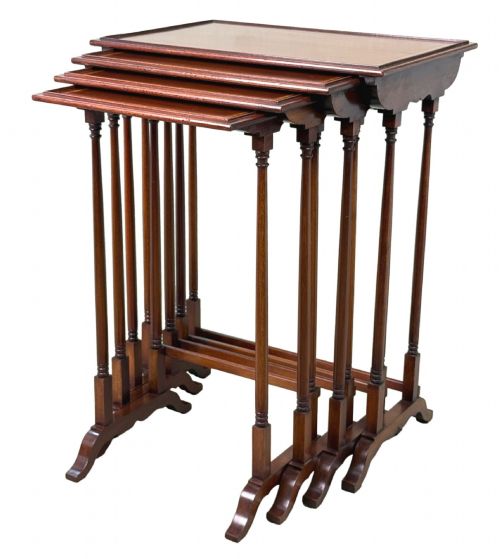
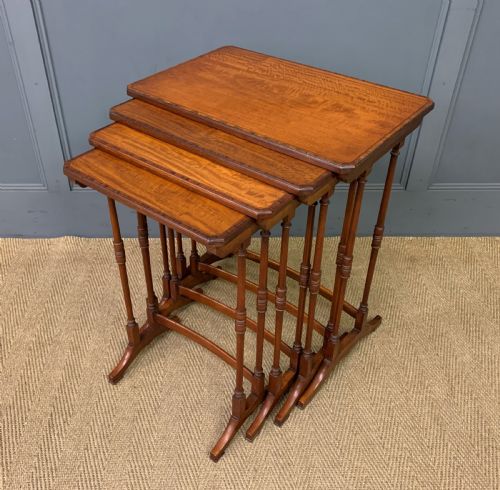
Edwardian stacking tables are clever nests of occasional tables designed to slide together neatly when floor space matters.
Edwardian Stacking Tables
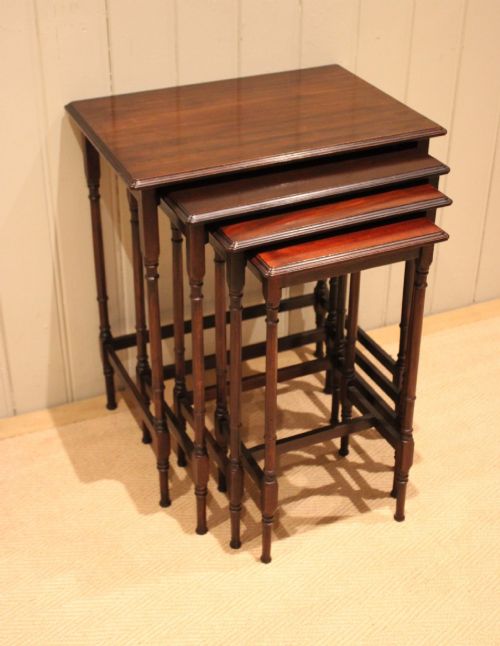
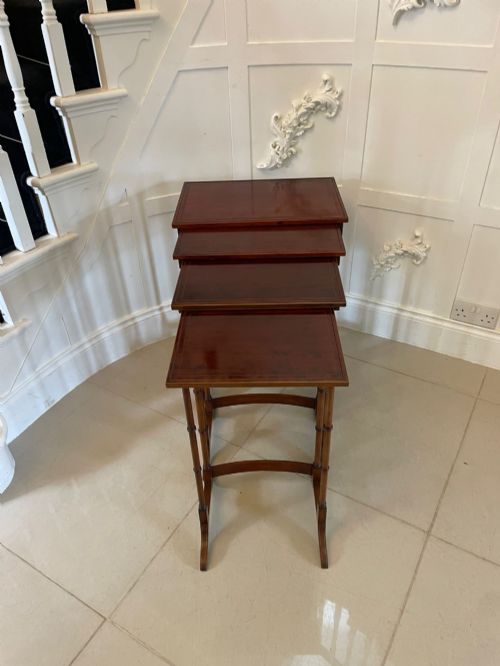
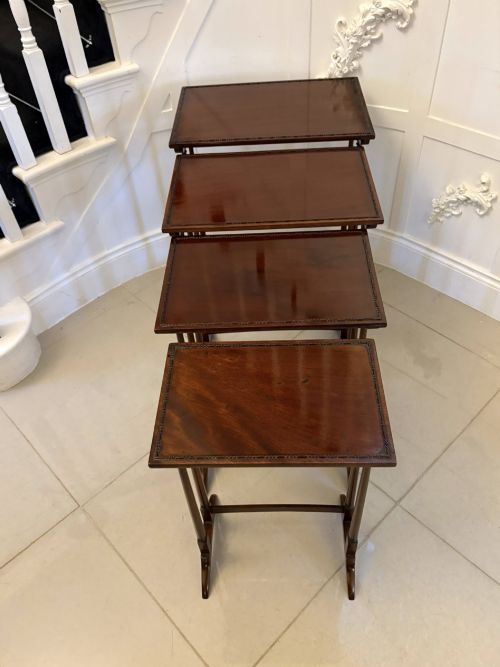
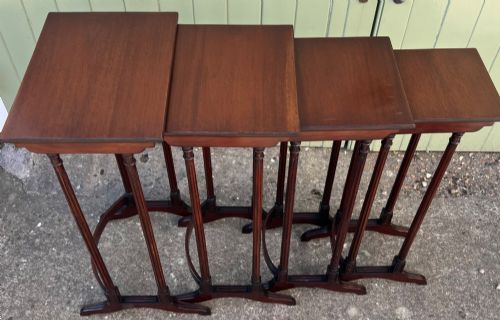
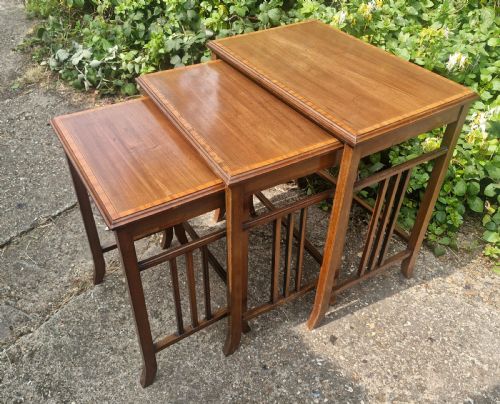
Edwardian stacking tables, also known as nests of tables or quartetto tables, are designed to slide one beneath another into a single compact footprint. This grouping mechanism provides multiple surface areas for lamps, drinks, or books without crowding a room.
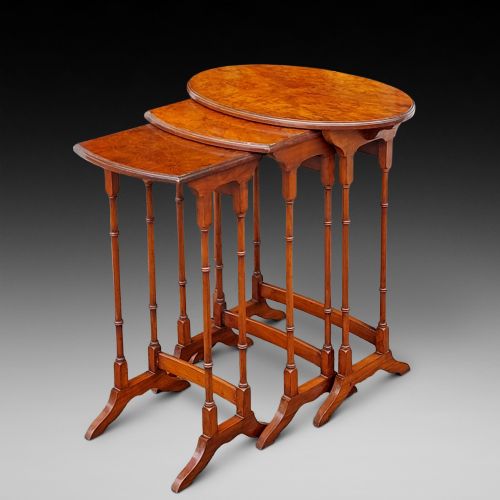
The versions most commonly met on this page date from the Edwardian era, alongside examples spanning the nineteenth century into the 1930s. These pieces appear in configurations of three, four, or five tables, adopting rectangular, circular, oval, and serpentine forms.
Materials and Construction
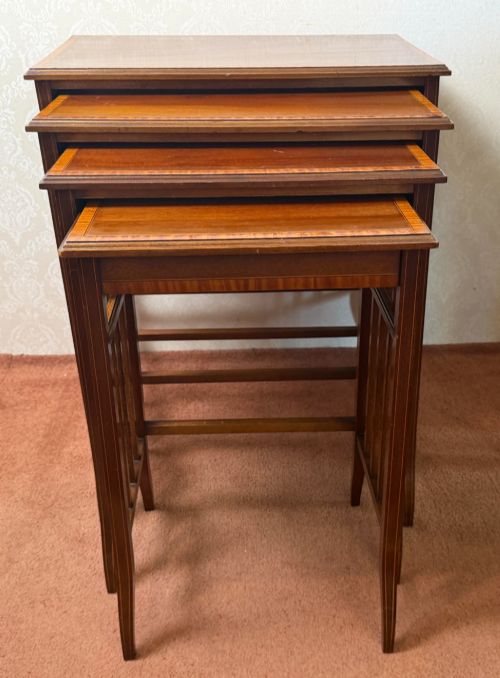
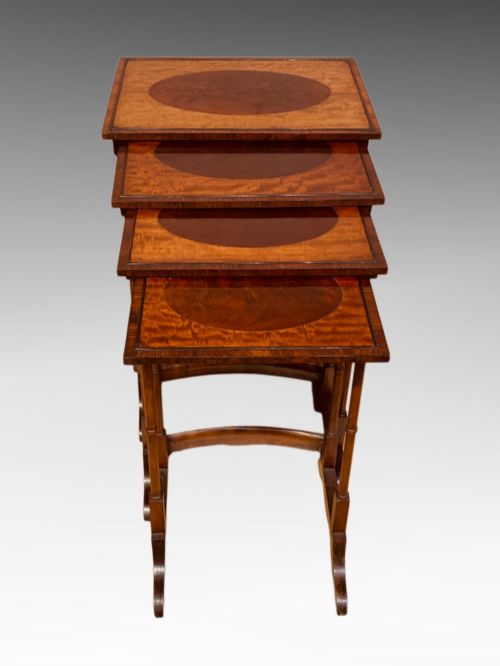
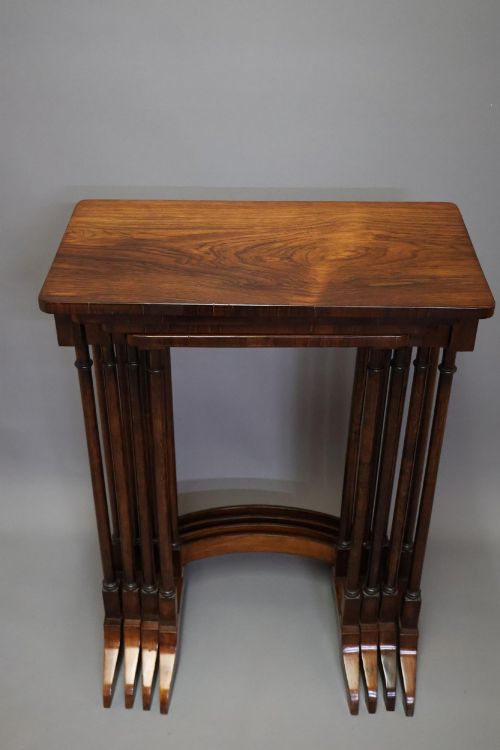
Makers utilised primary timbers including mahogany, walnut, satinwood, oak, and rosewood, frequently incorporating burr walnut or boxwood veneers. Surfaces often feature inlaid banding, satinwood cross-banding, or embossed leather panels to accentuate the grain.
Structural integrity relies on precise joinery to ensure the smaller tables slide smoothly beneath the largest frame without binding. Square tapered legs or shaped supports provide stability while keeping the nested profile slender.
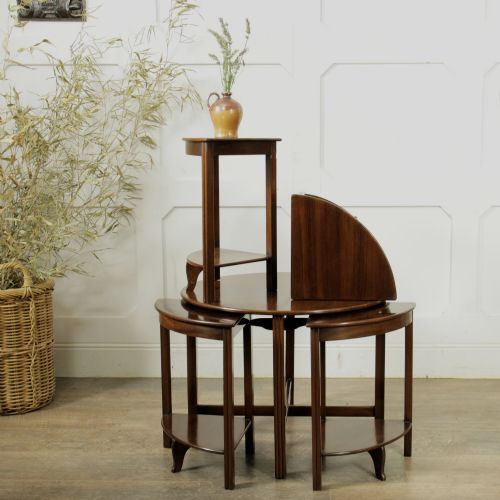
Some sets include a circular table top that spins the nesting convention on its head, offering five tiers ready for tea.
Assessing Quality
Quality in these tables rests upon the selection of timber and the precision of the inlay work. Finer examples display carefully matched wood grains and crisp boxwood or satinwood stringing rather than printed decoration.
The harmony of proportions when the entire set nests together defines the upper tier of manufacture. Superior sets maintain structural rigidity across all individual tables while retaining a lightweight frame that slides effortlessly.
The Edwardian Stacking Tables Glossary
- Quartetto
- A set of four nesting tables designed to slide together. This term appears frequently in descriptions of nineteenth-century and Edwardian stacking tables.
- Cross-banding
- A border of veneer laid around the edge of a table top with the grain running perpendicular to the centre. This decorative technique frames the primary timber.
- Inlay
- Material such as satinwood or boxwood set into depressions in the surface of the wood to form patterns. It adds visual contrast to mahogany and walnut backgrounds.
- Serpentine
- A curved line that is convex in the middle and concave at the ends, often seen on table tops. This shape requires skilled carpentry to execute cleanly.
Edwardian Stacking Tables: Frequently Asked Questions
How were stacking tables used?
These tables served primarily as occasional furniture in drawing rooms and parlours during the Edwardian period. Individual tables were pulled out to hold tea cups, writing materials, or lamps when guests visited.
Once the gathering ended, the smaller tables slid neatly back beneath the main frame to save floor space. This adaptable design made them practical for smaller entertaining areas.
What is a quartetto nest?
A quartetto nest consists specifically of four tables graded in size so they fit inside one another. The term derives from musical quartets and gained popularity during the Victorian and Edwardian eras for sets of four.
While many nests contain three or five tables, the quartetto remains the standard four-piece configuration found in mahogany and satinwood.
How do I care for inlaid wood?
Inlaid wooden tables require protection from direct sunlight and excessive changes in temperature to prevent the veneers from lifting. Regular dusting with a soft, dry cloth preserves the polished finish.
Applying a traditional beeswax occasionally helps nourish the timber and protects the delicate boxwood or satinwood stringing from drying out.
Are these tables sturdy enough for daily use?
Most Edwardian stacking tables are surprisingly resilient, though the smallest tables in a nest feature slender legs designed for lightness rather than heavy weight. They suit holding drinks, books, or lamps rather than supporting heavy loads.
Handling the nesting process with care prevents scuffing the inner legs and keeps the sliding mechanism running smoothly over time.