






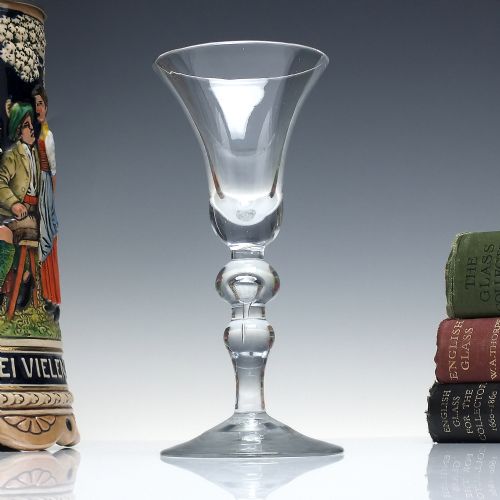


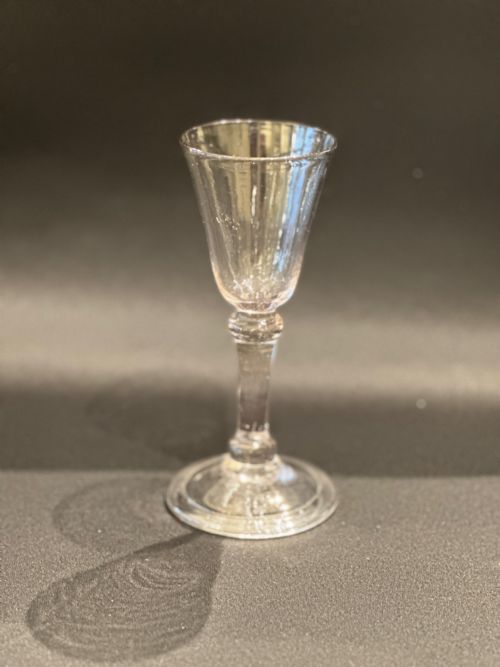

Balustroid Glass Goblet
These balustroid glass goblet examples are 18th-century Georgian pieces that bring tactile weight and historical substance to any table.
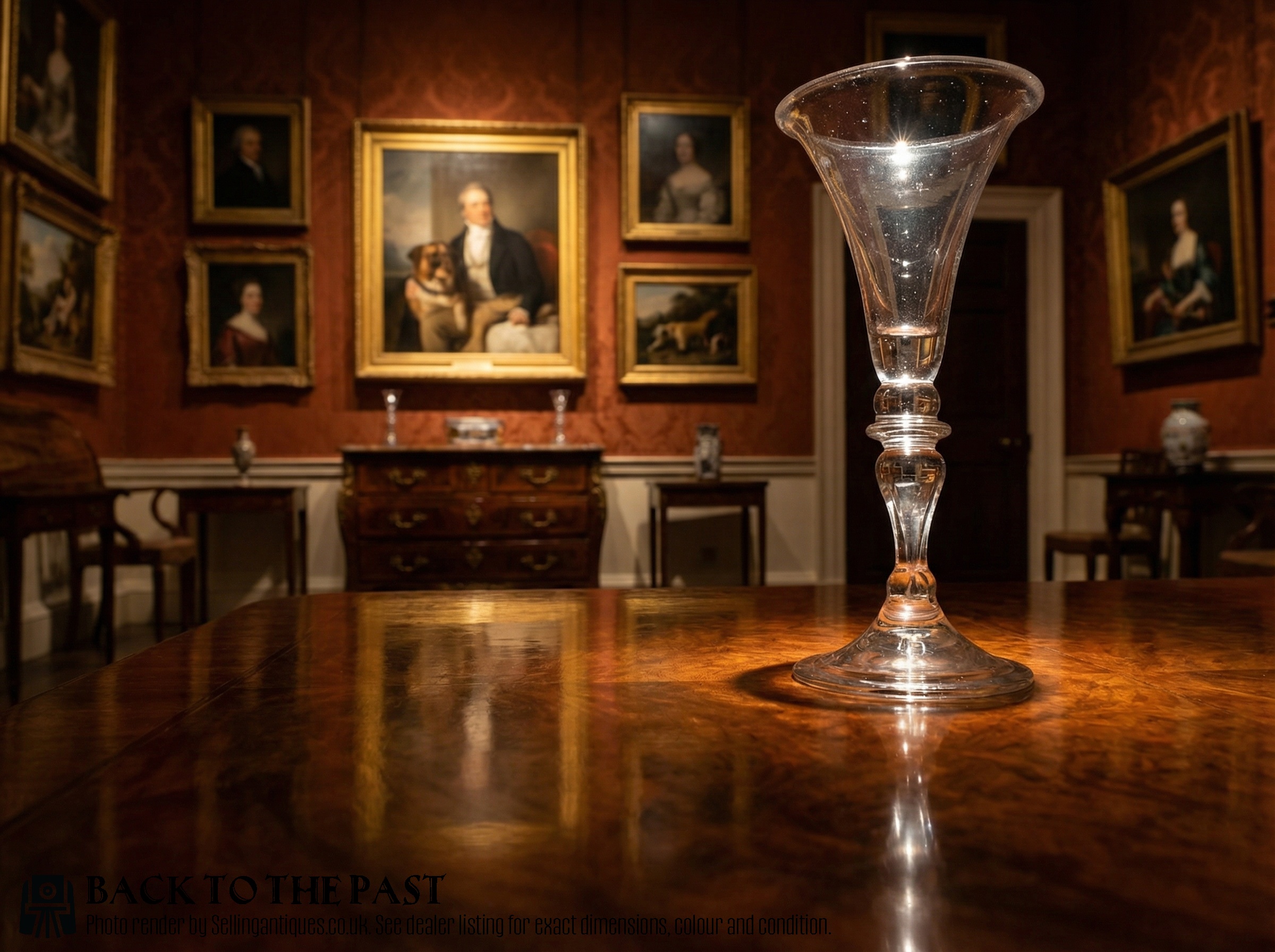
Balustroid Glass Goblet
When you search for a balustroid glass goblet, you are looking at drinking vessels dating from the Georgian era, specifically the 18th century. These items encompass wine glasses and stemware shaped with distinctive stems that bridge the heavier baluster form and the lighter drawn trumpet style.
The versions you are most likely to meet on this page hail from English makers working around the 1730s and 1740s. They appear in forms such as Kit Kat glasses, alongside pieces featuring engraved details or domed feet.
These glasses represent a pivotal shift in drinking vessel design during the reigns of the early Georges. Collectors seek them out for their authentic period presence and the characteristic handling weight of early English glasshouse production.
How they were made
The makers of these items worked primarily in lead glass, lead crystal, flint glass, and clear glass. These heavy metal compositions allowed the craftsmen to pull and shape sturdy stems with thick nodal sections.
Techniques included hand-forming the stems and feet, sometimes incorporating domed bases for extra stability. Surface decoration relied on delicate engraving, such as swag and tail motifs, applied to the clear bowls.
Balustroid Glass Goblet Retail Price Guide 2026
Typical asking prices for balustroid glass goblet among the pieces listed under this phrase on Sellingantiques today, from the lower quarter to the upper quarter. They describe what is for sale here now, not the wider market.
Some glasses feature delicate swag and tail engravings, proving that 18th-century drinkers liked a bit of flourish with their wine.
What varies in quality
The distinction between standard examples and the finest pieces often rests on the complexity of the stem formation and the crispness of any engraved decoration. Heavier lead content and well-proportioned domed feet elevate certain specimens above simpler counterparts.
Overall visual balance and clarity of the clear glass set the better-executed items apart. The precision with which the balustroid node is centred defines the visual success of the piece.
The Balustroid Glass Goblet Glossary
- Lead glass
- A heavy, brilliant glass composition containing lead oxide, developed in England to increase refractive index and workability. It forms the material basis for nearly all pieces from this era.
- Domed foot
- A foot base raised into a dome shape towards the centre where it meets the stem. This feature provides both aesthetic elevation and structural reinforcement.
- Kit Kat
- A specific proportion and style of stemware associated with the Georgian period. It refers to glasses of a certain slender build popular during the early eighteenth century.
Balustroid Glass Goblet: Frequently Asked Questions
What is a balustroid glass goblet?
It is an 18th-century drinking vessel featuring a distinctive stem configuration that sits between a heavy baluster and a simple drawn stem. These pieces date from the Georgian era and were produced in English glasshouses.
The form bridges earlier, heavier styles with later lighter stemware. They serve as tangible examples of early English lead glass manufacturing.
How were these glasses used?
These vessels functioned primarily as wine glasses and stemware for formal dining and social gatherings during the Georgian period. Their sturdy construction suited the vigorous toasts of the 18th century.
Today, collectors appreciate them as historical artefacts of dining culture. They are generally kept for display or very careful handling rather than everyday use.
What materials make up these glasses?
The listings show items made from lead glass, lead crystal, flint glass, and clear glass. These heavy metal compositions give the objects their characteristic heft and clarity.
The introduction of lead oxide transformed English glass production during this period. It allowed makers to fashion sturdier stems and brilliant, clear bowls.