

Period Wine Glass
A period wine glass brings the weight of the eighteenth and nineteenth centuries to the table through lead glass and crystal.
Period Wine Glass
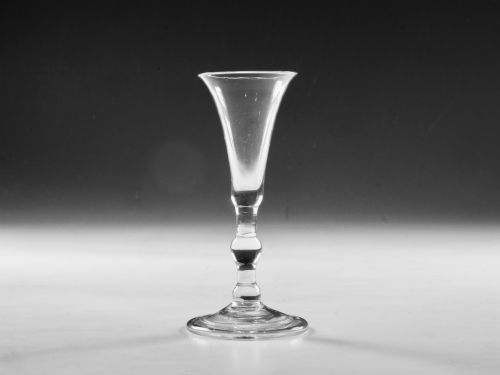
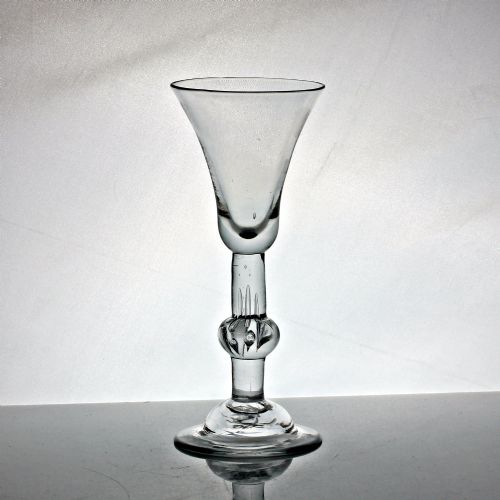
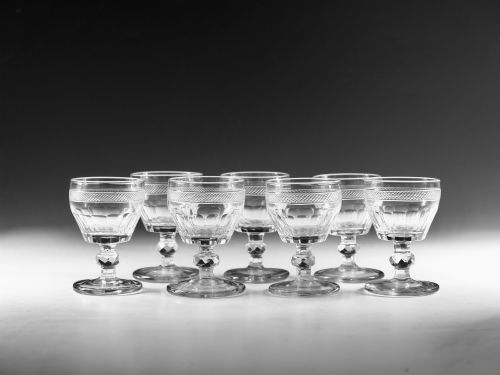
A period wine glass encompasses drinking vessels from the eighteenth century through the Regency era and into the nineteenth century. When you search for a period wine glass, you encounter forms shaped by Georgian and Regency hands, ranging from early baluster stems to opaque twists and cut crystal.
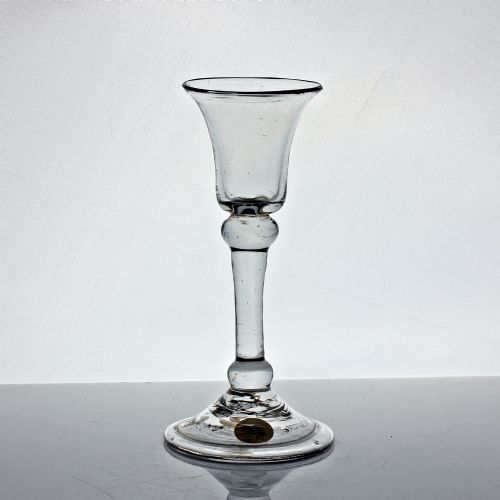
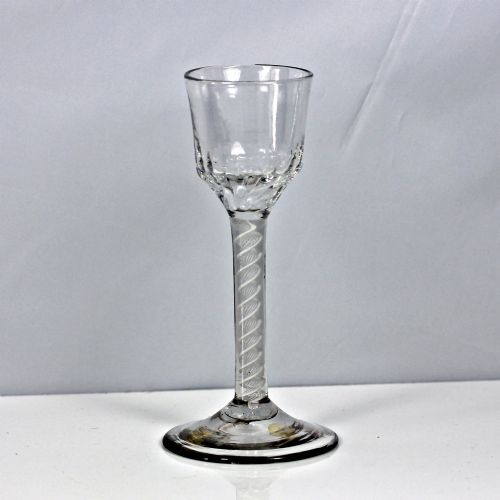
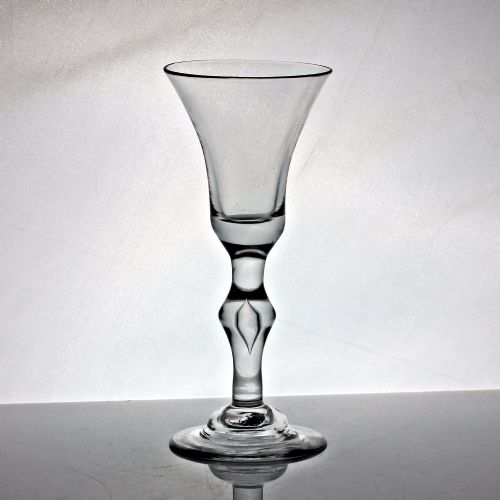
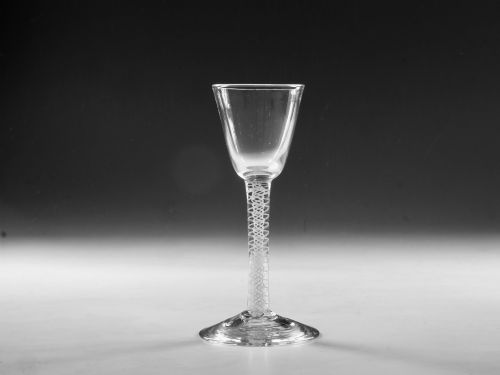
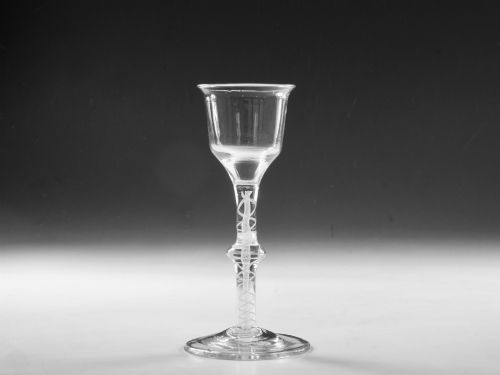
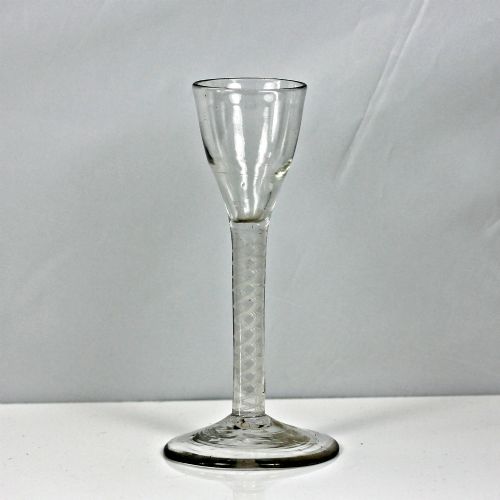
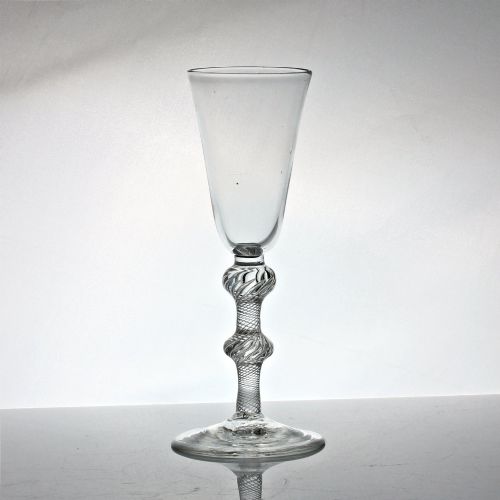
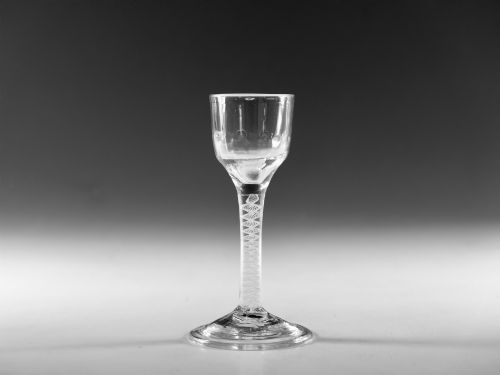
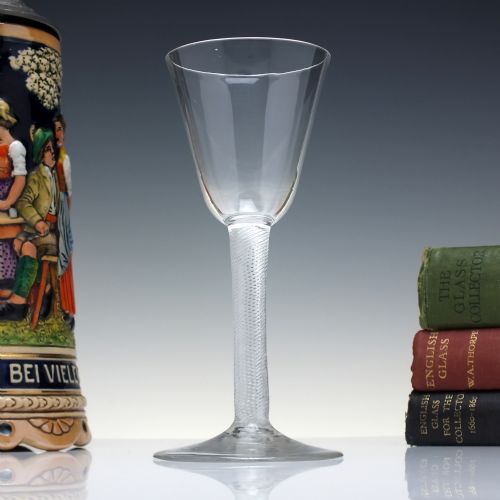
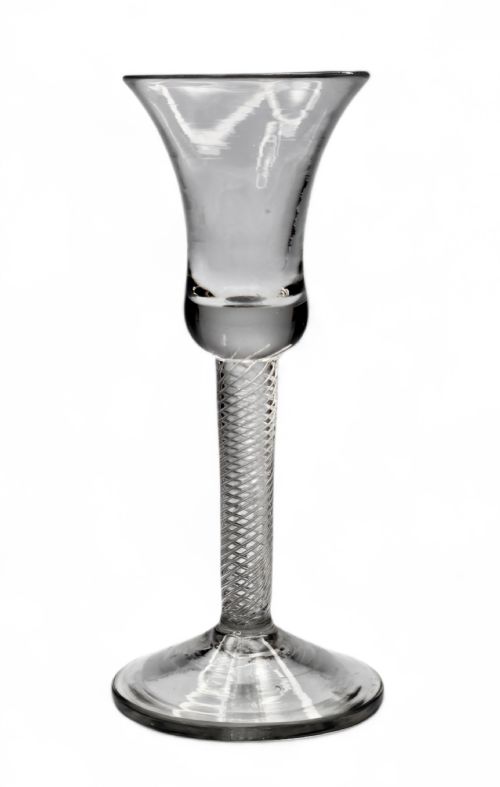
The most common examples on this page belong to the Georgian period, particularly the middle and later decades of the eighteenth century. These feature distinctive stem formations such as air twists, opaque twists, and balustroid profiles supporting bell or ogee bowls.
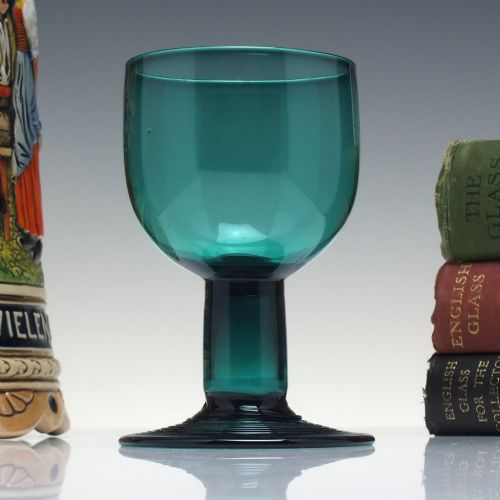
Beyond standard wine glasses, the selection includes related drinking vessels and table items such as gin glasses, port glasses, ale glasses, rummers, and decanters. Alongside clear lead glass, occasional coloured examples in green, amber, and peacock blue appear from English and continental workshops.
Materials and methods of manufacture
These vessels are formed primarily from lead glass and lead crystal, which allowed glassmakers to pull slender stems and achieve clarity. Hand-blown techniques created the natural variations and small air tears visible within the metal of eighteenth-century stems.
Stems were fashioned using specialised internal thread techniques, trapping air bubbles to draw out spiral and multi-spiral twists, or embedding white enamel threads to form opaque twists. Later Regency pieces often utilised wheel-cutting to apply hobnail patterns and facets across the body and stem.
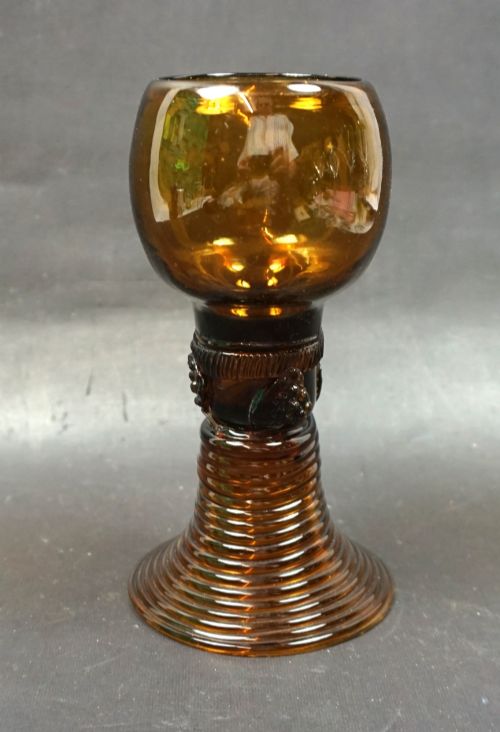
A dark amber roemer brings a sixteenth-century German tavern aesthetic straight onto the Georgian dining table.
Distinctions in quality
Quality rests upon the proportion of the vessel, the clarity of the lead metal, and the precision of the stem formation. An expertly pulled air twist or evenly spaced opaque twist displays deliberate control by the glasshouse.
The crispness of facet cutting and the stability of formed feet, whether folded, domed, or plain, separate standard utility vessels from those produced with finer artistic intent.
The Period Wine Glass Glossary
- Baluster stem
- A heavy, swelling stem form popular in early eighteenth-century glassware, often featuring a knop or node.
- Opaque twist
- A stem containing threads of white enamel glass drawn into a spiral configuration inside clear metal. This technique reached popularity in English glasshouses during the mid-eighteenth century.
- Air twist
- A stem featuring elongated internal air bubbles pulled and twisted into a helical pattern. The effect relies entirely on the skill of the glassblower.
- Ogee bowl
- A double-curved drinking vessel bowl that flares outward at the rim, characteristic of many Georgian wine glasses.
- Folded foot
- A glass foot created by folding the outer rim back underneath to add weight and strength. This feature is frequently observed on earlier baluster and balustroid forms.
Period Wine Glass: Frequently Asked Questions
What is a period wine glass?
A period wine glass is a hand-formed drinking vessel originating from the eighteenth or early nineteenth century. These pieces showcase historical manufacturing techniques and distinct stem styles unique to the Georgian and Regency eras.
They reflect the shifting tastes of dining culture across these centuries, moving from heavy baluster stems toward lighter twisted threads and cut crystal designs.
How do I identify a Georgian wine glass?
Identification relies on examining the bowl form, stem construction, and foot style together. Eighteenth-century examples often feature lead glass with characteristic weight, pontil marks underneath the foot, and specific stem configurations like air or opaque twists.
Looking closely at the metal clarity and the formation of the knops helps distinguish these genuine period pieces from later reproductions.
Were these glasses used for wine?
While designated as wine glasses, eighteenth and nineteenth-century forms served various alcoholic beverages depending on capacity and regional custom. Smaller bowls accommodated strong ports and gins, while taller or wider vessels held ales and stronger wines.
Their sizing reflects historical drinking capacities and the progression of dining habits from the 1730s through the Regency period.
Can I use period wine glasses today?
Many collectors choose to use eighteenth and Regency wine glasses for special occasions, appreciating the tactile connection to the past. Hand washing is essential to preserve the fragile lead glass and historical surfaces.
Careful handling ensures these durable yet delicate artefacts survive for daily enjoyment or display within a cabinet.