


Ball and Claw Settee
A ball and claw settee grounds a room with carved wooden strength and generous seating, bringing centuries of cabinet-making history into the home.
Ball and Claw Settee
A ball and claw settee is a substantial seat designed for the principal rooms of a house, combining wooden frames with upholstered comfort. The search phrase covers forms from the eighteenth century up through nineteenth-century revivals and early twentieth-century interpretations.
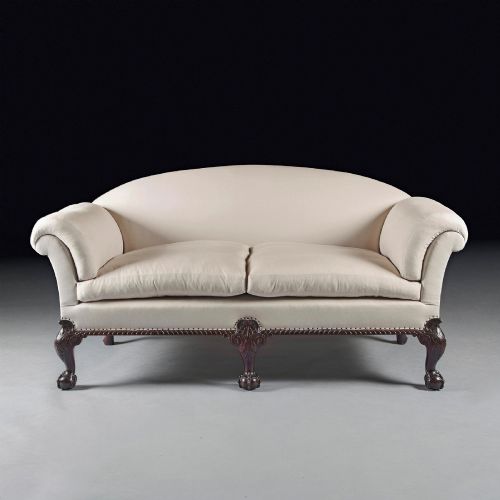
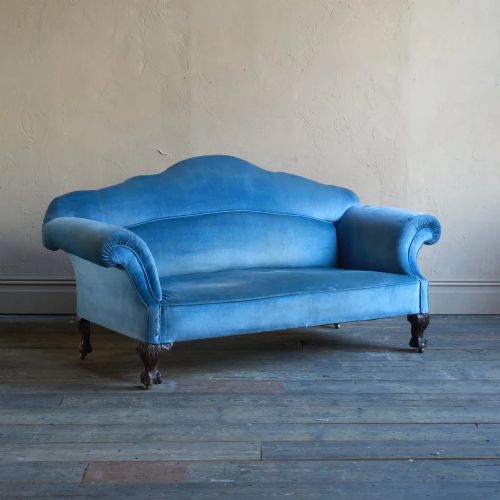
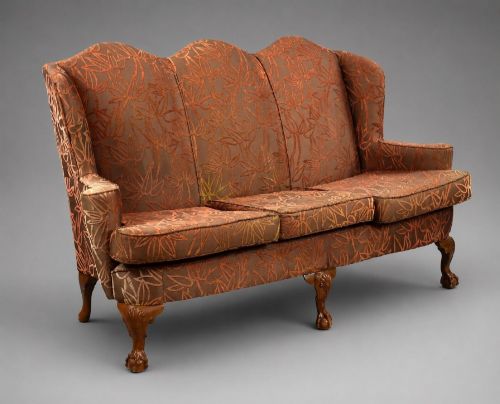
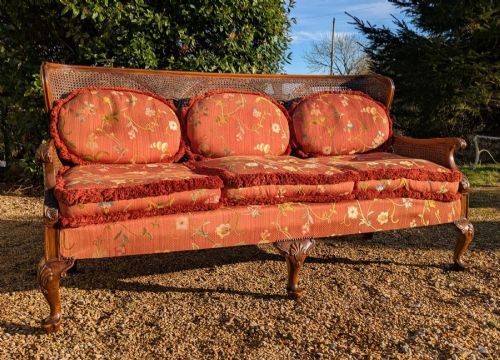
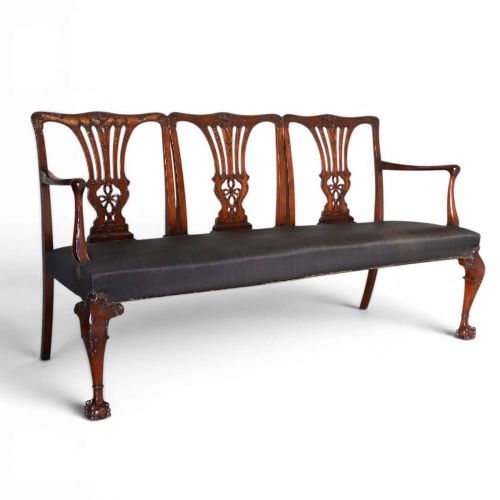
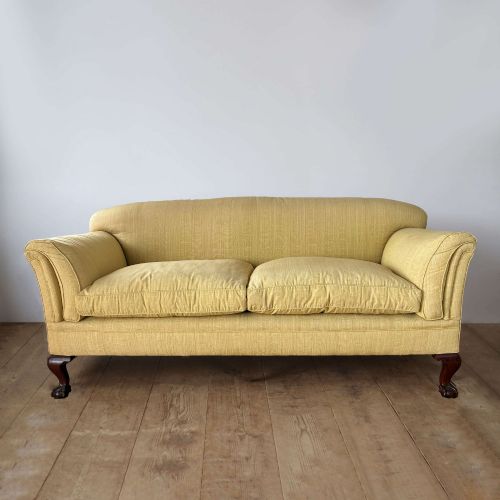
Most pieces encountered here emerge from the Victorian, Edwardian, and later revival periods, adopting eighteenth-century motifs. The frameworks range from camel-backed silhouettes and triple-back designs to deep-seated lounge suites resting on characteristic carved feet.
Makers and workshops across these eras interpreted the style using mahogany or walnut, dressing the frames in leather, cotton calico, and patterned fabric. These seats function today as statement pieces in studies, libraries, and drawing rooms.
Timber and Upholstery Construction
The primary structural frames rely on dense hardwoods, predominantly mahogany and walnut, chosen for their ability to hold intricate hand-carved details. Craftsmen shaped these timbers into cabriole legs terminating in the distinctive foot motif.
Upholstery methods varied from traditional horsehair stuffing and feather cushions to contemporary cotton calico and leather coverings. Brass details sometimes supplemented the woodwork, while exposed wooden frames displayed careful joinery and carving.
Listings span multiple decades, incorporating Victorian and Edwardian revival periods alongside eighteenth-century examples in mahogany and walnut.
Judging the Carving and Materials
Quality rests primarily in the crispness and depth of the hand-carving on the frame, particularly the execution of the wooden foot gripping its ball. Superior examples show muscular tension in the talons and clean separation from the ball underneath.
The selection of the timber grain and the integrity of the underlying frame construction further separate standard production from finer workshop output. Original upholstery foundations and well-preserved secondary timbers elevate the standing of any given piece.
The Ball and Claw Settee Glossary
- Cabriole leg
- A furniture leg that bends outward in a convex curve and tapers inward in a concave arc to a ornamental foot. This shape mimics the natural leg of an animal.
- Chippendale style
- A decorative design based on the mid-eighteenth-century pattern books of Thomas Chippendale. It frequently incorporates ornate carved mahogany and Gothic or Chinese influences.
- Camel back
- A sofa or settee back featuring a smooth, undulating convex curve resembling a camel's hump. This profile provides continuous upholstered support across the length of the seat.
- Bergere
- An enclosed upholstered armchair or sofa with wooden frames and exposed woodwork. The sides are typically filled with cane or upholstered panels.
- Chair-back settee
- A multi-seat frame constructed with two or three distinct chair backs joined together in a single row. This form reflects earlier dining chair designs adapted for seating furniture.
Ball and Claw Settee: Frequently Asked Questions
What is a ball and claw settee?
A ball and claw settee is an upholstered seat supported by carved wooden legs that terminate in a foot shaped like a taloned bird grasping a sphere. These pieces range from eighteenth-century originals to later nineteenth and twentieth-century revival interpretations.
They serve as formal seating furniture, utilising dense timbers like mahogany and walnut to support padded cushions and upholstered backs.
How do I date a settee?
Dating a settee involves examining the timber species, the tool marks on internal framing, and the specific style of the revival period. Eighteenth-century pieces display different construction joinery compared to Victorian or Edwardian reproductions.
Looking at secondary woods, upholstery webbing methods, and the sharpness of the hand-carved details helps determine whether a piece belongs to the original era or a later revival.
Where should I place a settee?
These settees suit principal reception rooms, libraries, and studies where their carved wooden frames and generous upholstery can be viewed from multiple angles. They anchor large living spaces and provide functional seating.
Purchasers often position them away from direct sunlight and heat sources to protect the polished wood surfaces and sensitive fabrics like leather or cotton calico.
What woods were used?
Makers relied primarily on sturdy hardwoods capable of supporting intricate joinery and deep relief carving. Mahogany and walnut appear most frequently across the available inventory.
Secondary timbers inside the frames sometimes include pine or oak, depending on the workshop origin and the specific decade of production.