




Austrian Regulator Wall Clock
An austrian regulator wall clock brings precise timekeeping and striking architectural presence to a room, offering the serious collector refined movement work housed in polished timber.
Austrian Regulator Wall Clock
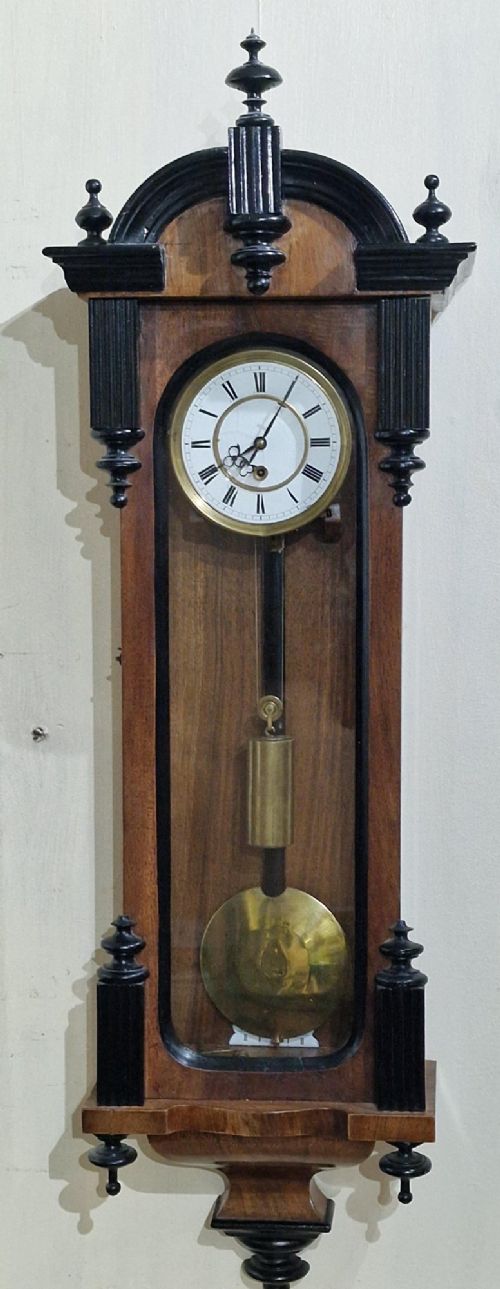
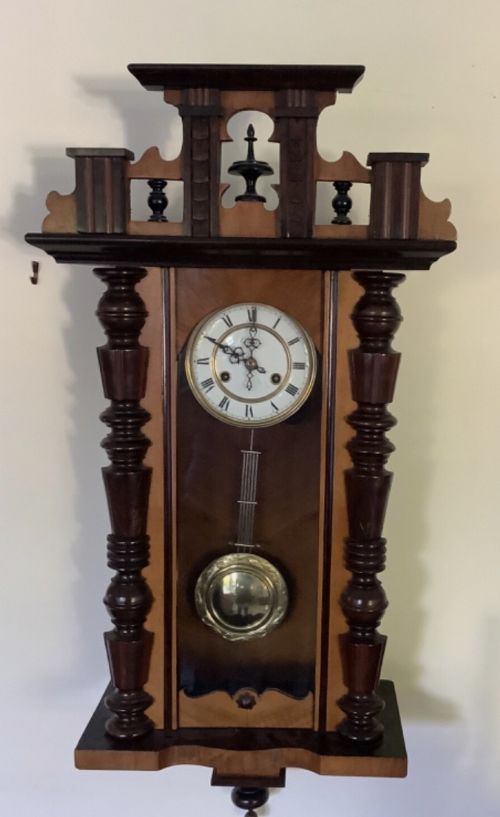
When you search for an austrian regulator wall clock, you encounter precision timepiece and striking mechanisms developed across the nineteenth century. These clocks served as accurate timekeepers in formal rooms, driven by suspended weights that demand careful wall mounting. Most examples on this page date from the Victorian era and the broader nineteenth century, reflecting the peak of Central European clockmaking.
The styles range from restrained Biedermeier designs to elaborate Vienna regulator forms involving multiple weights. You find both small eight-day timepieces and grander models equipped with Grande Sonnerie striking capabilities. The timber cases typically display glass side panels and large front doors to showcase the pendulum and movement inside.
How they were made
Cabinetmakers constructed the cases using walnut, mahogany, and ebonised wood to create tall, glass-fronted housings that protected the delicate mechanisms. Brass components formed the intricate gear trains, plates, and framing for the movements, while metal rods supported heavy pendulums. Dials were predominantly finished in white enamel with black painted numerals, often protected behind a brass bezel and glass door.
Makers incorporated month-duration movements alongside standard eight-day systems, requiring expert machining to maintain reliable timekeeping over long intervals. Weight-driven power demanded sturdy case construction, with backboards designed to bear the substantial load of the suspended weights and pulleys. Triple weight configurations governed complex striking trains, distributing tension evenly across the brass arbors and escape wheels.
Austrian Regulator Wall Clock Retail Price Guide 2026
Typical asking prices for austrian regulator wall clock among the pieces listed under this phrase on Sellingantiques today, from the lower quarter to the upper quarter. They describe what is for sale here now, not the wider market.
What varies in quality
The distinction between standard production and top-tier execution lies in the sophistication of the movement and the crispness of the case joinery. Finer pieces employ month-duration capabilities and Grande Sonnerie striking complications rather than simple time-only gear trains. Superior examples maintain original finish on walnut or mahogany veneers, preserving the subtle grain patterns selected by the original cabinetmaker.
Enamel dials show variation in the fineness of the hand-painted chapter rings and the absence of hairline cracks across the white surface. The quality of the brass casting in the bezel, pendulum bob, and movement plates dictates how well the mechanism holds adjustment over decades. Well-proportioned miniature and Dachluhr formats demonstrate exceptional miniaturisation skill from the workshop.
Gustav Becker
The Austrian Regulator Wall Clock Glossary
- Vienna Regulator
- A high-precision weight-driven wall clock developed in Austria during the nineteenth century. These clocks are celebrated for their accurate timekeeping and visible pendulums.
- Biedermeier
- An influential Central European design style spanning the mid-nineteenth century. It prioritises clean lines, functional forms, and the natural beauty of veneers.
- Grande Sonnerie
- A complex striking mechanism that chimes the hours and quarters automatically on every quarter-hour. This complication requires sophisticated gear train architecture within the brass movement.
- Dachluhr
- An early nineteenth-century Austrian wall clock style featuring a long, narrow glazed trunk reminiscent of a roof dormer window. This form represents the precursors to the later Vienna regulator.
- Month Duration
- A movement capability allowing the clock to run for thirty days on a single weight drop. This engineering feat demands precise gear ratios and low friction across the brass plates.
Austrian Regulator Wall Clock: Frequently Asked Questions
How do I wind the clock?
You pull the chains or cords to draw the hanging weights back to the top of the case. Ensure you support the weight slightly to relieve tension on the movement during winding.
Take care not to overwind the mechanism if it uses a key-wound spring rather than a weight drop. Refer to the specific weight duration of your model to establish a regular winding routine.
Where should I hang my clock?
Mount the clock securely to a solid wall stud using appropriate fixings to support the substantial weight of the timber case and internal movement. Avoid exterior walls subject to dampness or significant temperature fluctuations.
Position the clock at eye level so you can easily view the dial and observe the swing of the pendulum. Ensure the floor beneath is level to help the pendulum beat in an even rhythm.
How do I tell Biedermeier from later Victorian styles?
Biedermeier pieces date from the mid-nineteenth century and display restrained, architectural walnut or mahogany cases with minimal ornamentation. They focus on clean wood grain and simple geometric proportions.
Later Victorian examples often incorporate more elaborate carvings, darker ebonised wood elements, and complex multi-weight movements. The transition reflects changing domestic tastes toward heavier, more decorative furnishings.