
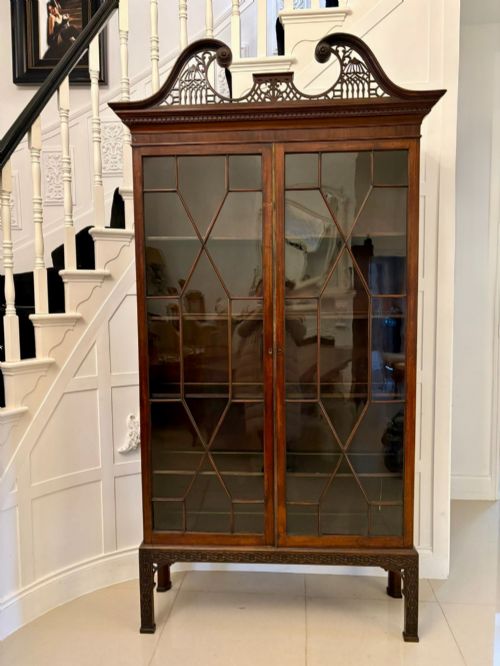
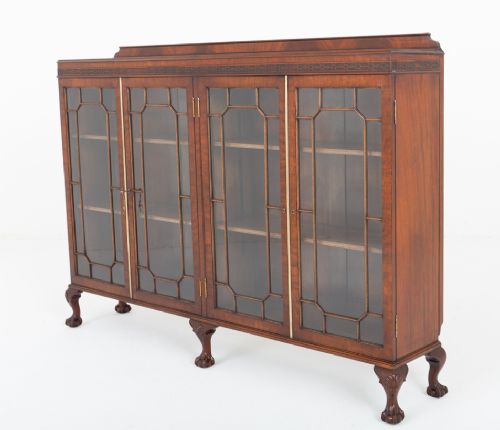
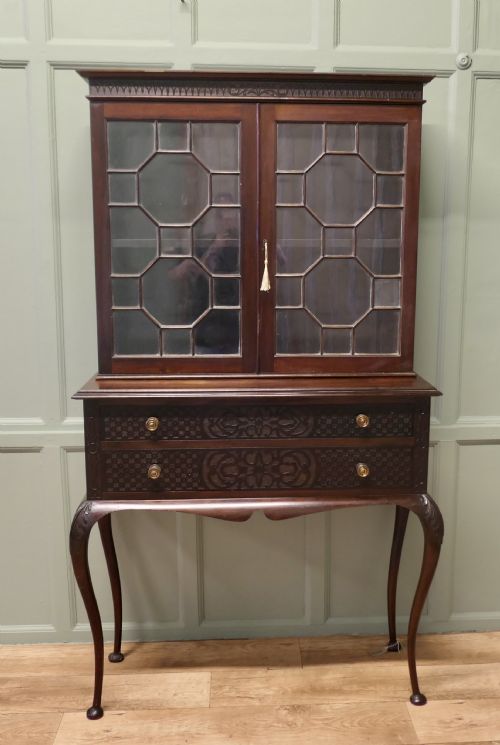
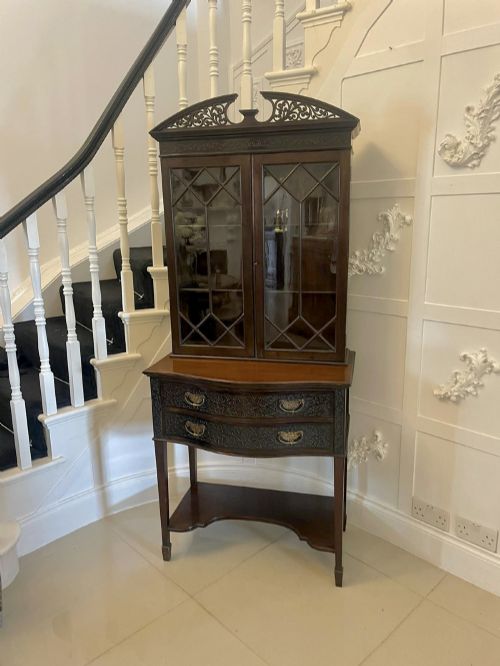
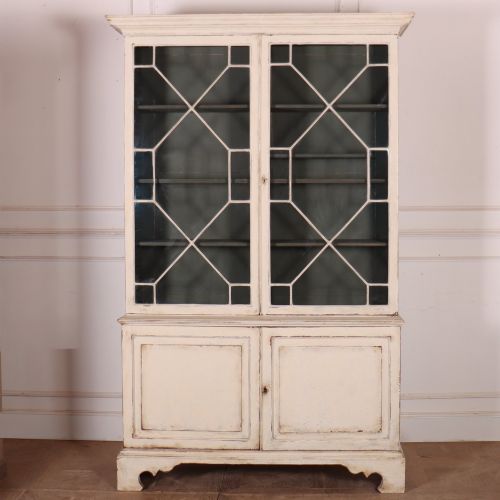
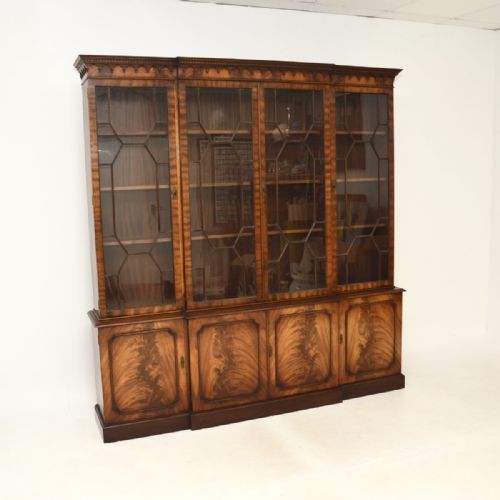
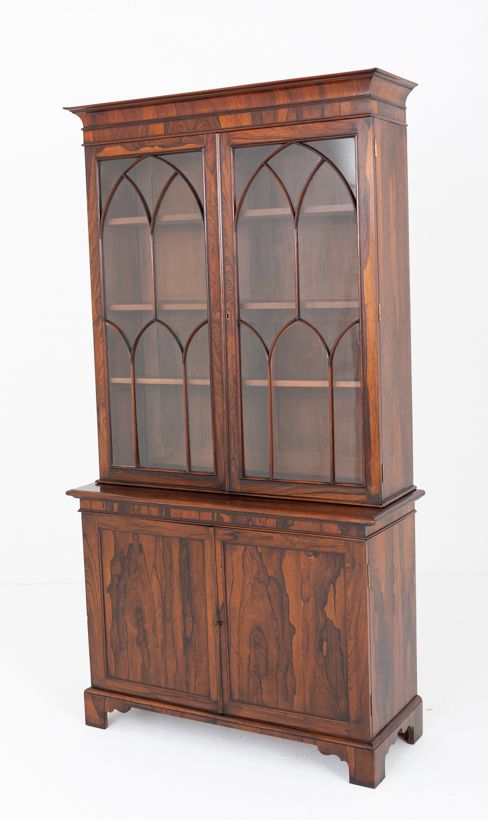
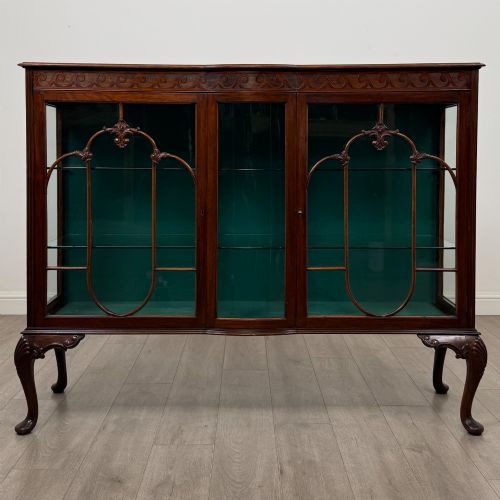
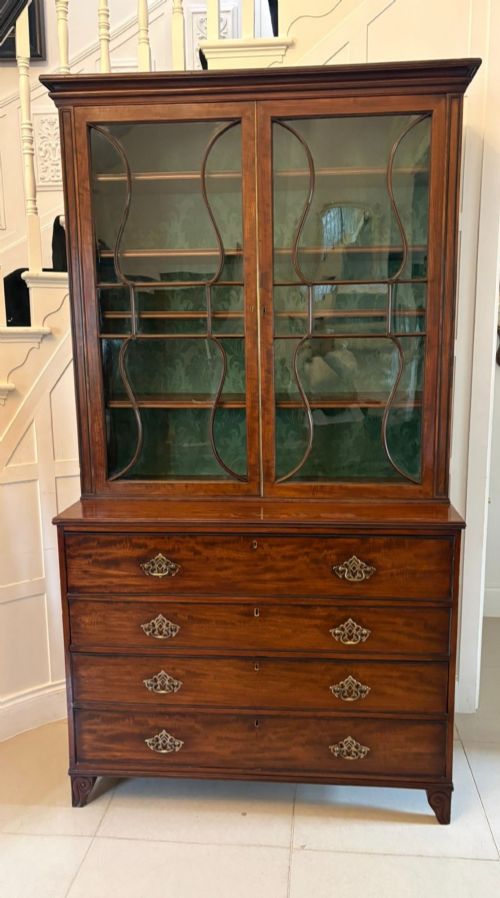
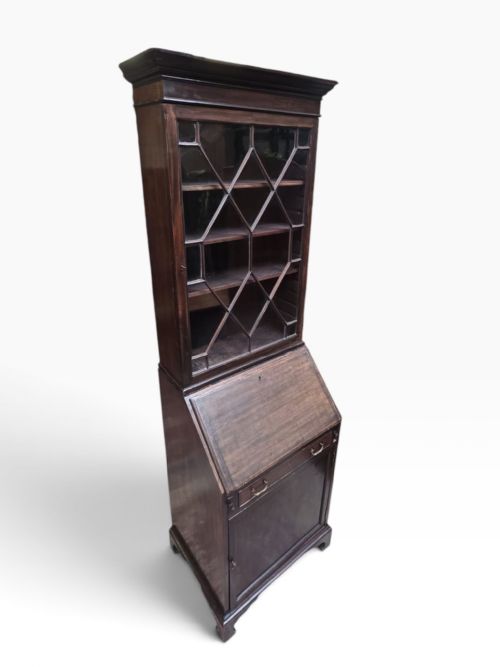
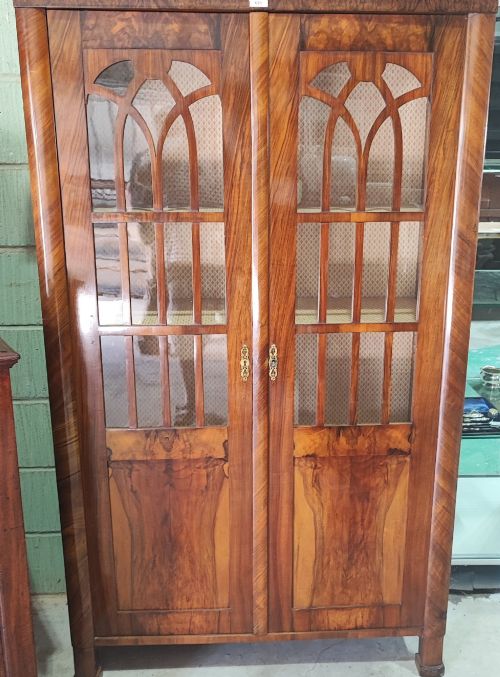
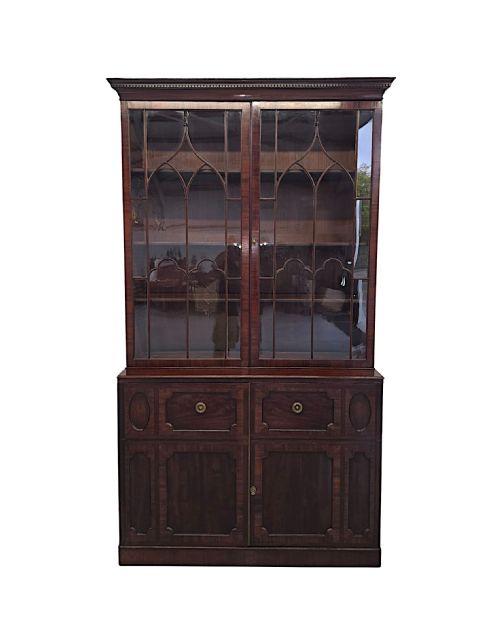
Astragal Door Bookcase
An astragal door bookcase brings together glazed compartments and slender timber bars, offering a practical home for a library.
Astragal Door Bookcase
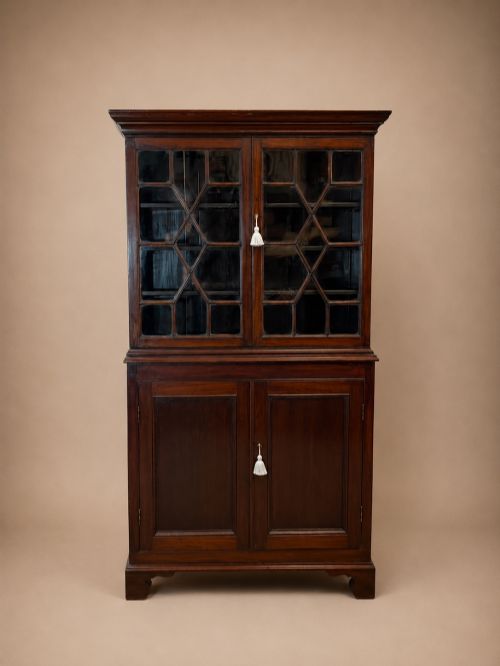
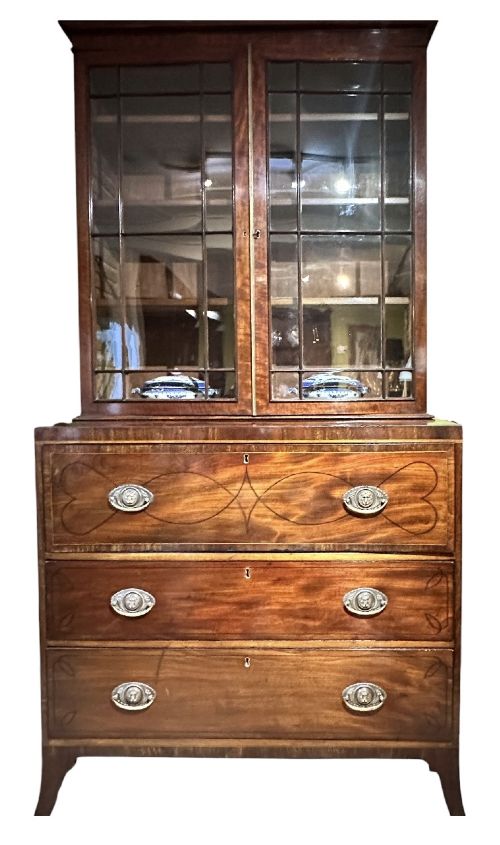
An astragal door bookcase is a piece of furniture designed to house books behind glazed doors divided by wooden glazing bars. These bars form geometric patterns across the glass, protecting the volumes within while keeping titles visible.
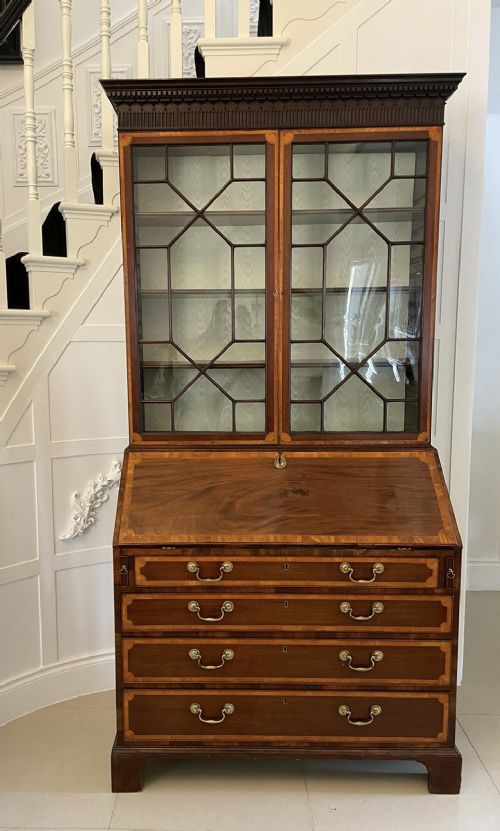
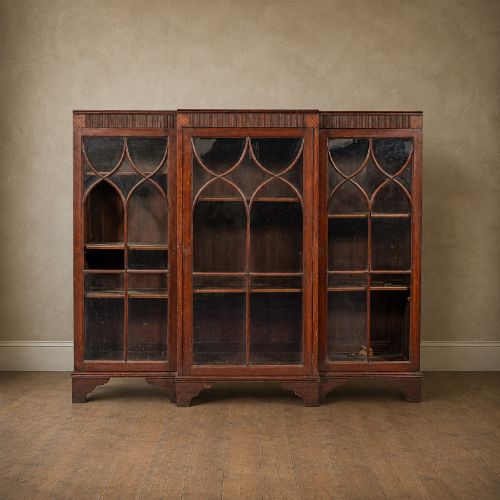
The most common examples on this page date from the Georgian, Victorian and Edwardian periods, rendered primarily in mahogany. They appear in forms ranging from tall breakfront library units to compact bureau bookcases with fitted writing interiors.
Materials and construction
Cabinet makers relied heavily on solid and veneered mahogany, alongside occasional accents of satinwood, oak and rosewood. Timber frames were constructed with traditional joinery, housing individual panes of glass held in place by wooden glazing bars.
Brass fittings, inlaid stringing and hand-carved details frequently adorn the exterior surfaces. Bureau sections often incorporate pigeonholes and small drawers built from secondary timbers.
Some bureau versions hide tiny secret drawers behind pigeonholes, built to keep love letters safe from curious housemaids.
What distinguishes quality
Quality rests in the precision of the glazing bars and the choice of timber figure. Finer cabinets display slender, uniform woodwork holding the glass panes, paired with well-matched mahogany veneers on the facades.
The depth of carved ornamentation, the integrity of internal fittings such as adjustable shelving, and the balance of proportions between upper glazed sections and lower cupboards separate standard production from superior cabinet work.
Tudor and Burrey·Wylie and Lochhead·Maple and Co.
The Astragal Door Bookcase Glossary
- Astragal
- A moulding profile, often convex, used here for the thin wooden bars that divide glass panels in a door.
- Breakfront
- A cabinet design where the central section projects forward from the flanking wings.
- Secretaire
- A desk form featuring a pull-down flap that conceals a fitted interior of small drawers and pigeonholes.
- Inlay
- A decorative technique where contrasting woods or materials are set flush into the surface of the primary timber.
Astragal Door Bookcase: Frequently Asked Questions
How do I date an astragal door bookcase?
Dating relies on timber choice, construction methods, and stylistic cues present in the cornices and feet. Georgian pieces often show deep mahogany figure and hand-cut dovetails, whereas Edwardian examples exhibit lighter framing and machine-made elements.
Examining the glass panes can also help, as older bubbles and slight thickness variations point towards earlier manufacturing dates.
Can I adjust the shelves inside?
Many period bookcases feature adjustable wooden shelving supported by traditional wooden racks or metal pins. This system allowed owners to alter shelf heights to accommodate different book sizes.
Fixed shelving is more common in earlier iterations, while later Victorian and Edwardian cabinets often include movable options.
How should I care for the mahogany?
Mahogany benefits from consistent indoor humidity levels away from direct heat sources and strong sunlight, which can fade the finish. Regular dusting with a dry, soft cloth preserves the polished surface.
Occasional application of suitable wax helps nourish the timber without building up heavy residue.