
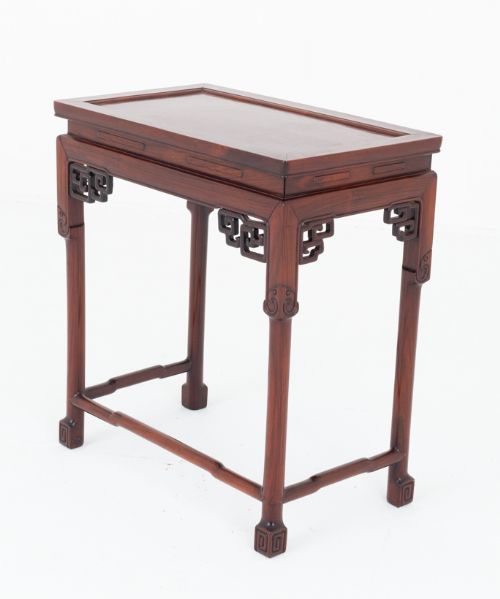


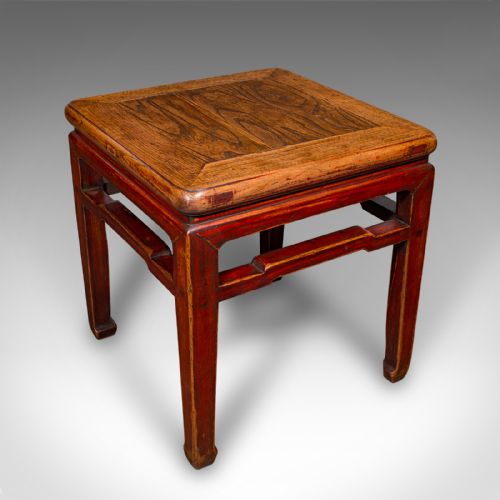

Asian Occasional Tables
These asian occasional tables bring hand-carved hardwoods and contrasting marble inserts into daily rooms.
Asian Occasional Tables
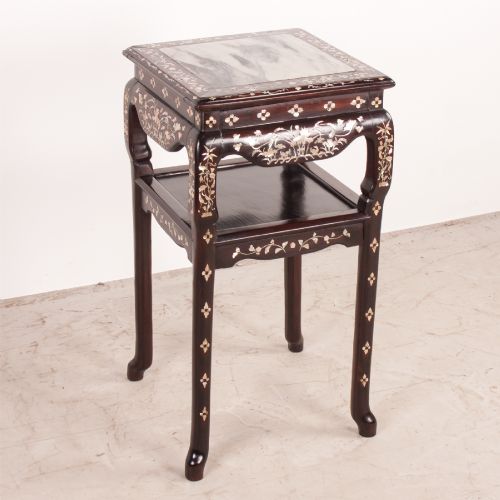
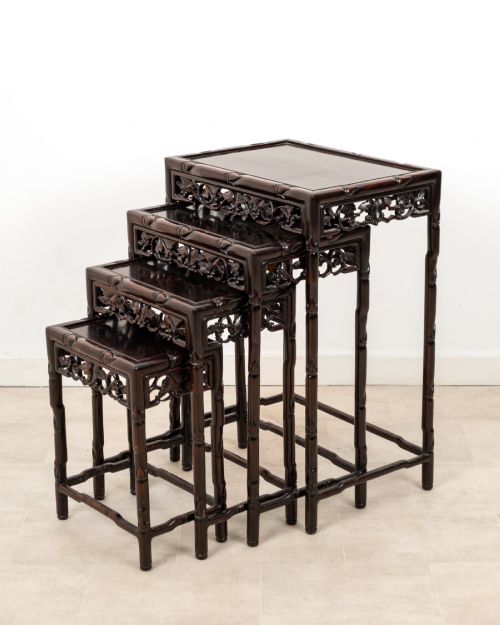
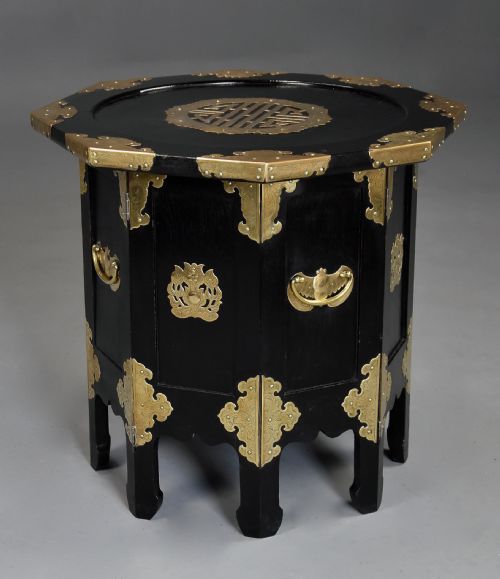
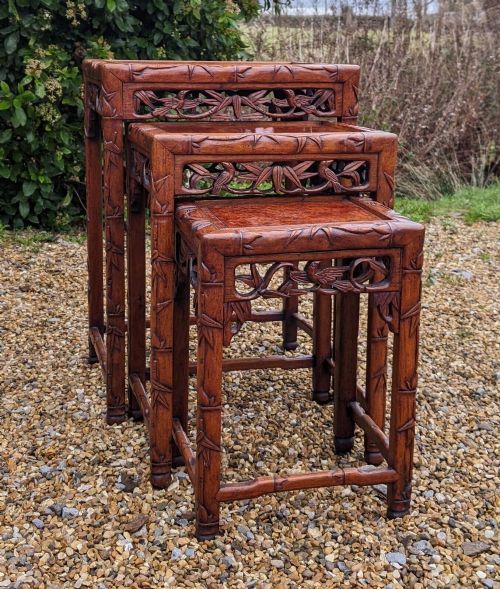
When you search for asian occasional tables, you encounter compact side furniture designed for display or serving. The selection on this page leans heavily toward Chinese export pieces and nests of four, alongside Japanese and Burmese forms.
The materials span dense tropical hardwoods and indigenous softwoods like elm, often accented with stone or mother of pearl. Forms range from low tea tables and octagonal stands to folding tray tables.
Most examples originate from the nineteenth and early twentieth centuries, reflecting both traditional domestic workshop traditions and pieces tailored for Western export markets.
Materials and construction methods
Joinery relies on traditional interlocking wooden joints that accommodate the natural movement of timber without metal fixings. Hardwoods such as hongmu, huanghuali and rosewood provide the structural strength needed for carved relief work.
Surfaces frequently feature deep hand-carving depicting dragons, foliage or geometric borders, while others employ smooth lacquer finishes or inset marble and quartz tops. Ebonised timber and brass mounts appear on specific decorative export variations.
Listings span multiple decades, incorporating nineteenth century craftsmanship alongside early twentieth century export production in elm, rosewood and lacquer.
Assessing quality and craftsmanship
The distinction between ordinary and superior pieces rests on the crispness of the hand-carved detail and the selection of timber grain. Superior examples display dense, well-figured rosewood or hardwood with tight, precise joinery that remains stable across the frame.
Inlaid elements such as marble, quartz or mother of pearl indicate higher workshop standards when they sit flush and secure within the timber surround. Lesser pieces show coarser carving depths and more visible timber repairs or shrinkage cracks.
The Asian Occasional Tables Glossary
- Nest of tables
- A set of graduated tables designed to fit neatly beneath one another when not in use. They became particularly popular in Chinese export production during the late nineteenth century.
- Huanghuali
- A prized aromatic hardwood native to China, known for its rich colour and distinctive grain patterns. Craftsmen utilised it for high-status furniture.
- Hongmu
- A translation meaning red wood, applied to various dense tropical hardwoods used in traditional Chinese cabinetmaking. It offers heavy weight and deep colour.
- Chabudai
- A short-legged traditional Japanese table used while sitting on tatami mats for meals or tea. They often feature simple elm or ebonised construction.
- Cinnabar
- A carved lacquer technique involving numerous layers of red pigment applied to a core and subsequently carved with intricate motifs. It provides a dense, tactile surface.
Asian Occasional Tables: Frequently Asked Questions
What are asian occasional tables used for?
These pieces function as versatile surface stands for lamps, plants, and decorative items within a room. Their compact proportions allow them to fit easily beside seating.
Nests of tables offer the practical advantage of expanding surface area when entertaining guests before sliding back into a single footprint.
How do I care for antique hardwood tables?
Maintain the timber by keeping pieces away from direct heat sources and sudden temperature fluctuations that cause wood to split. Regular dusting with a dry, soft cloth preserves the finish without chemical buildup.
Apply occasional appropriate wax polish to nourish dense hardwoods like rosewood and elm, avoiding silicone-based sprays.
How do I identify a nest of four tables?
A nest of four typically comprises descending sizes designed so each smaller table slides completely under the one immediately larger. They frequently appear in Chinese hardwood or carved rosewood.
Inspect the framework under each top to check for corresponding numbering marks or matching grain continuity from the original workshop assembly.
What is the difference between elm and rosewood pieces?
Elm provides a lighter, more fibrous grain structure that accepts simple regional carving and serves as a dependable native timber. It often appears in domestic side tables and traditional Japanese forms.
Rosewood and hongmu represent denser, heavier timbers capable of holding extremely sharp, deep relief carving. They display darker colouration and higher natural lustre.