





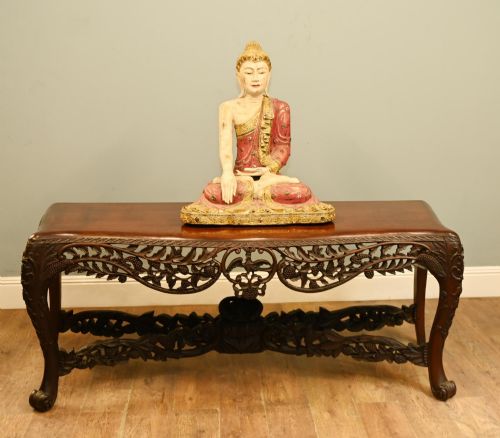
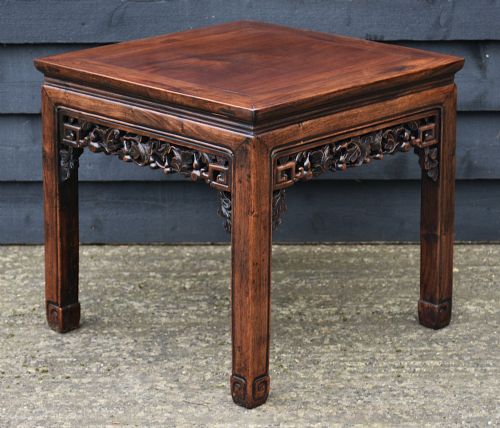

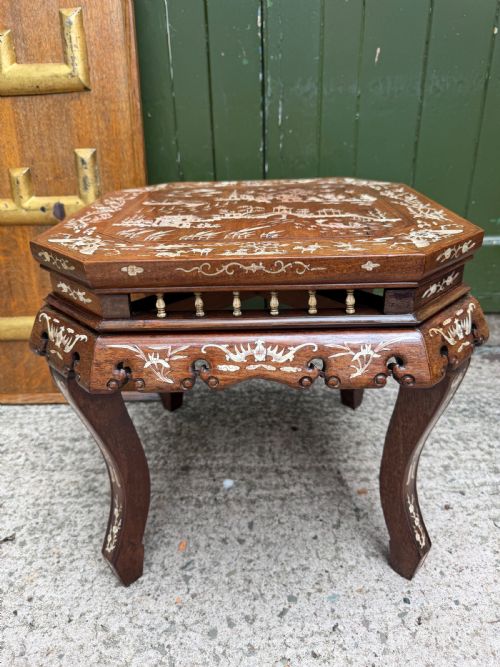

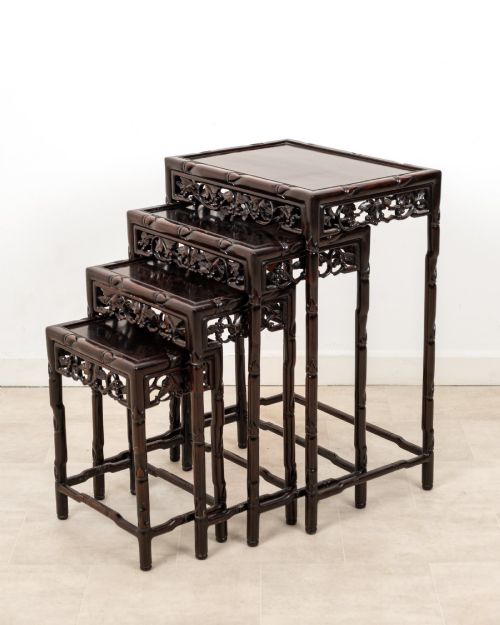

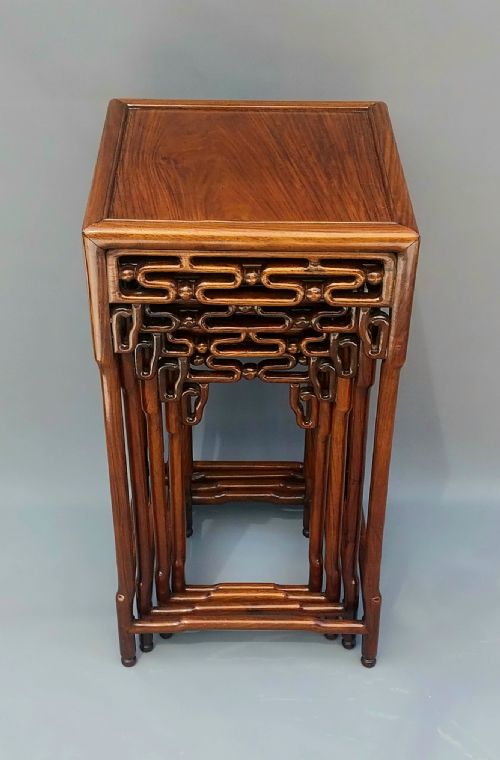
Asian Carved Side Table
These asian carved side table examples span from compact plant stands to low occasional tables, bringing dense regional carving and dense timbers into domestic spaces.
Asian Carved Side Table
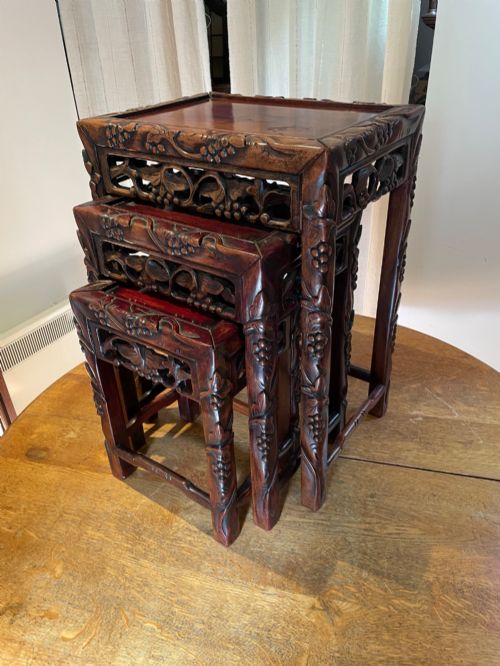
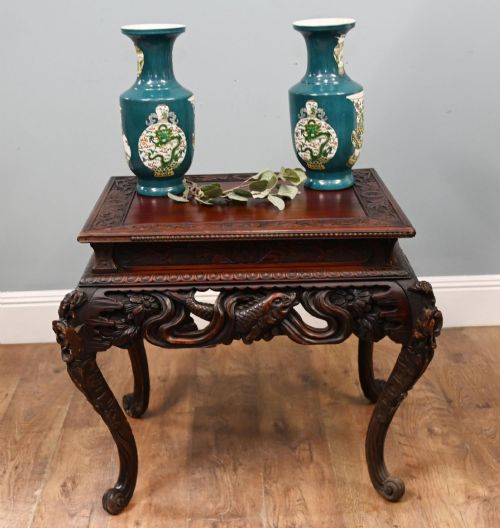
An asian carved side table typically encompasses low tables, nests, plant stands, and altar tables originating from China, Japan, and Burma, largely dating from the nineteenth and early twentieth centuries.
The buyer frequently encounters pieces linked to the Qing Dynasty alongside Chinese export and traditional designs, which range from round occasional tables to tiered nests of four.
Makers utilised various regional furniture forms, from tall pedestal stands designed for vases to long console tables and writing desks intended for utilitarian and display purposes.
Craftsmanship and Material Depth
Quality rests in the crispness of the hand carving and the selection of timber, where tightly figured grain and heavy rosewood indicate superior workshop standards.
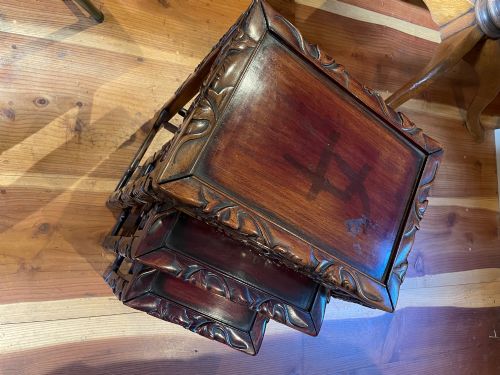
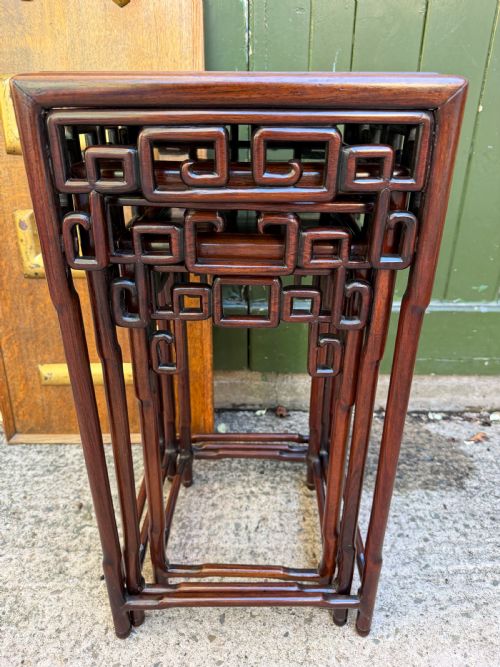
The integrity of inset stone tops, such as marble or quartz, and the precision of joinery in nested sets separate everyday utility pieces from finer examples.
Asian Carved Side Table Retail Price Guide 2026
Typical asking prices for asian carved side table among the pieces listed under this phrase on Sellingantiques today, from the lower quarter to the upper quarter. They describe what is for sale here now, not the wider market.
Several items incorporate sculpted elephants with fully formed tusks, turning utilitarian stands into miniature menageries.
The Asian Carved Side Table Glossary
- Hongmu
- A traditional Chinese term for dense hardwoods, literally translating to red wood. It encompasses several heavy, dark timbers used in high-status furniture.
- Altar table
- A long, narrow table traditionally placed against a wall for ceremonial use, characterised by upturned flange ends and dense structural carving.
- Jardiniere stand
- A tall pedestal or small table specifically designed to support heavy plant pots or floral arrangements. These often feature inset marble tops to protect against moisture.
- Huali
- A prized aromatic hardwood from the rosewood family utilised in traditional Chinese furniture. It displays rich colouration and pronounced grain patterns.
- Mother of pearl
- An iridescent inner shell layer used by craftsmen for inlay work. Artisans embedded small cut pieces into wood surfaces to create contrasting floral or geometric designs.
Asian Carved Side Table: Frequently Asked Questions
How do I care for a marble top table?
Clean inset marble surfaces with a damp cloth and mild soap, avoiding acidic cleaners that etch the polished stone. Keep the surrounding hardwood conditioned with appropriate wax.
Place protective pads beneath heavy decorative objects to prevent scratching both the stone and the delicate wood framing around it.
Where should I place a nest of tables?
Nests of tables function well beside seating areas where surface space needs to expand and contract. They stack compactly when floor space is at a premium.
Spread the graduated tables across a room to create a cohesive look while maintaining independent surfaces for drinks or books.
What is an altar table used for?
Historic altar tables served ceremonial functions in domestic settings before transitioning into architectural console and hall tables. Their elongated proportions suit narrow hallways.
Today, they act as statement display pieces against walls, supporting lamps, sculptures, or ceramics without dominating the room's circulation.
How do I identify Qing Dynasty furniture?
Qing Dynasty pieces often exhibit heavy proportions, dark dense hardwoods like hongmu, and deep relief carving depicting dragons or traditional foliage. Construction relies on traditional joinery without metal nails.
Look for signs of age in the patina of the wood and the wear patterns around the feet and edges where daily use occurred over centuries.