




Ash Rush Seat Chairs
Ash rush seat chairs bring honest English country style into a room through natural materials and enduring vernacular forms.
Ash Rush Seat Chairs
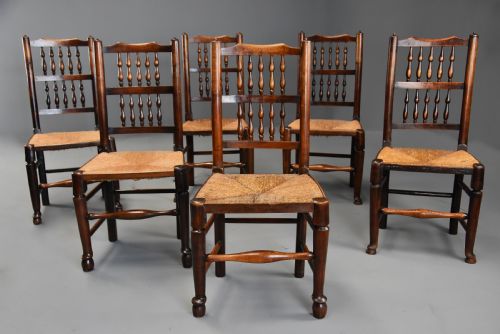
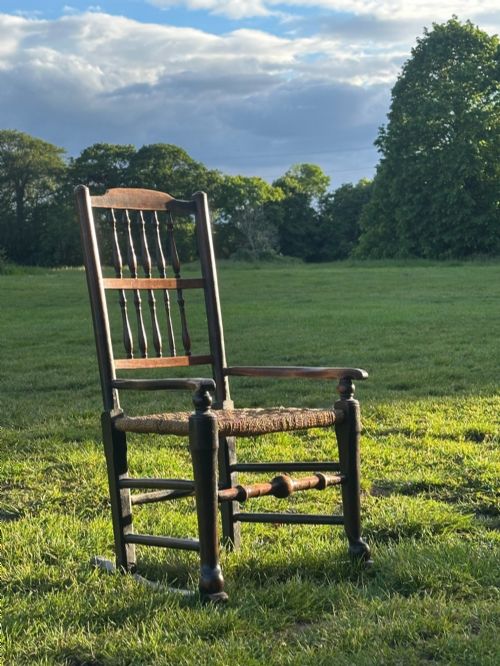
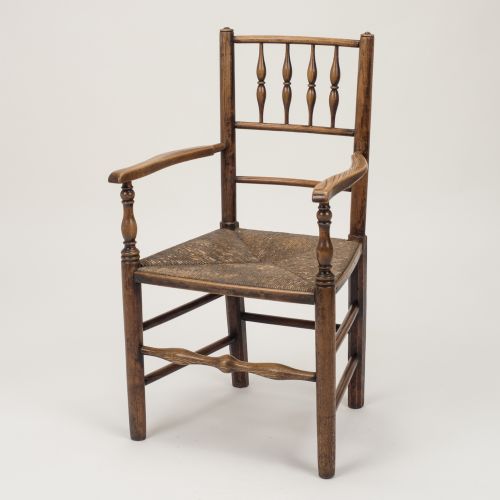
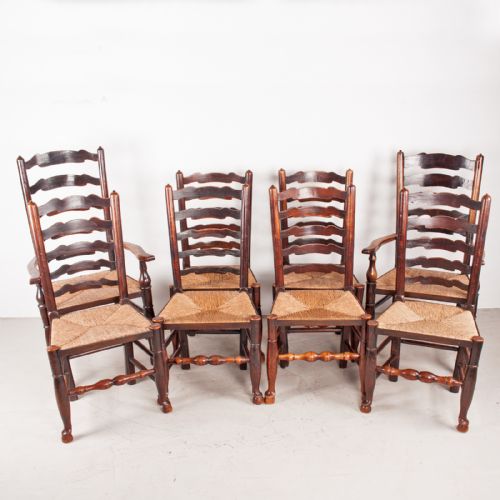
Ash rush seat chairs are practical country furniture designed for everyday use in farmhouses, kitchens, and vernacular interiors. When you search for ash rush seat chairs, you encounter sturdy dining chairs, armchairs, and rocking chairs built to withstand heavy daily wear. The examples seen on this page span from the Georgian period through the Victorian era and into the early twentieth century.
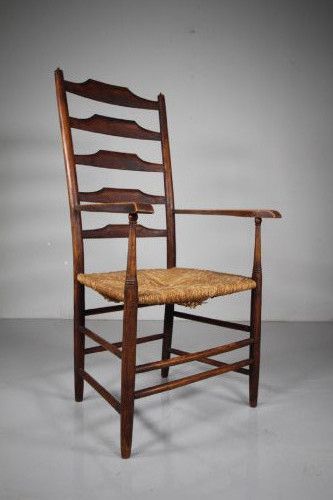
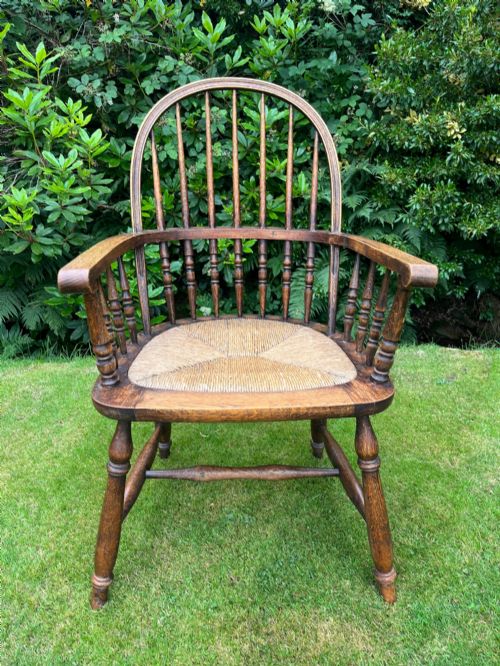
Most pieces combine ash frames with woven natural rush seats, often incorporating elm for seats or secondary timbers. The forms include ladderbacks, spindle backs, and Windsor designs originating from regional traditions across England, Ireland, and the Netherlands. These chairs range from single side chairs to large matched sets intended for family dining tables.
How they were made
Local chairmakers utilised tough native timbers like ash for its flexibility and strength in turned spindles, ladder backs, and frames. Elm frequently provided a durable, solid seat or structural support alongside the lighter ash components.
Rush was twisted and woven tightly by hand to form supportive, resilient seats that yielded comfortably to the user. Some regional pieces received coats of paint over the ash frame to protect the wood and alter its appearance.
Many chairs bear the subtle indentations of generations leaning back against farmhouse kitchen walls.
What varies in quality
The degree of original surface preservation and patina distinguishes superior examples from heavily restored pieces. Chairs that retain their early or original painted finishes, or unblemished aged timber surfaces, command greater interest among collectors.
Completeness within a set alters the character of the seating group, particularly when dealing with large sets of matching chairs rather than assembled pairs. The crispness of the original wood turning on spindles and ladder backs also reveals the skill of the regional maker.
Philip Clissett·Lawrence Neal
The Ash Rush Seat Chairs Glossary
- Rush
- A marsh plant dried and twisted into cordage to weave traditional chair seats. This material provides a strong, flexible surface that breaks down gradually over decades of heavy use.
- Ladderback
- A chair back constructed with horizontal arched slats between two upright posts. This regional form appears frequently in English country vernacular seating.
- Spindle back
- A chair featuring numerous slender turned vertical wooden bars supporting the backrest. Makers utilised this lightweight construction method across many rural English counties.
- Windsor chair
- A seat built with a solid wooden saddle-shaped seat into which the legs and back spindles are wedged directly. These robust chairs developed distinct regional variations in shape and bow construction.
- Súgán
- An Irish term for a twisted straw or rush seat woven onto vernacular chairs. This technique mirrors the rush-seating traditions found across rural British farming communities.
Ash Rush Seat Chairs: Frequently Asked Questions
How do I clean rush seats?
Wipe the woven rush gently with a barely damp cloth to remove surface dust without soaking the natural fibres. Avoid harsh chemical cleaners that can dry out the plant material.
Keep the room at a moderate humidity level to prevent the dried rush from becoming brittle over time. Regular light dusting is all that is required for daily maintenance.
Are these chairs comfortable?
The woven rush seat yields slightly to the body, offering natural flexibility during long periods of sitting at a table. Upright ladder backs and spindle backs provide firm support for the spine.
Adding loose squab cushions can increase comfort without altering the historic appearance of the chair frame. Most country models were built with practical human posture firmly in mind.
Can I use them daily?
Ash and elm frames possess immense structural strength, making these chairs well suited for everyday dining use. Their long survival through generations proves their robust construction.
Check the joints periodically to ensure the turned components remain tight within their sockets. With sensible care, they handle daily family life just as they did centuries ago.
How do I date an ash chair?
Examine the tool marks, construction methods, and timber weathering to establish the period of manufacture. Hand-turned spindles and regional variations offer strong clues to the decade and district of origin.
Compare the style of the ladder slats or back posts against documented examples from specific areas like Lancashire or Cheshire. Subtle changes in turning thickness often help separate eighteenth-century work from later Victorian interpretations.