
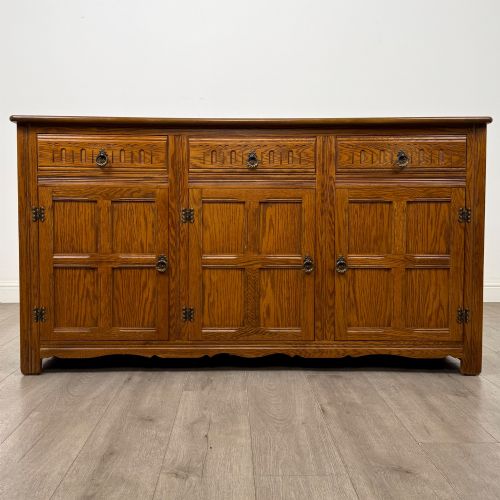
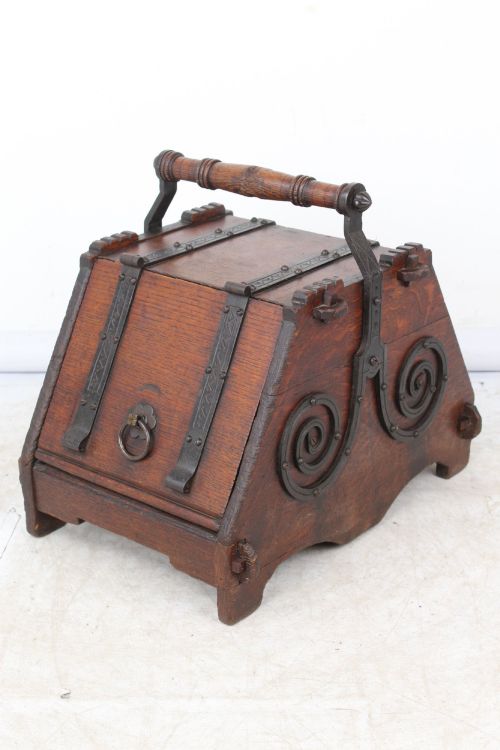
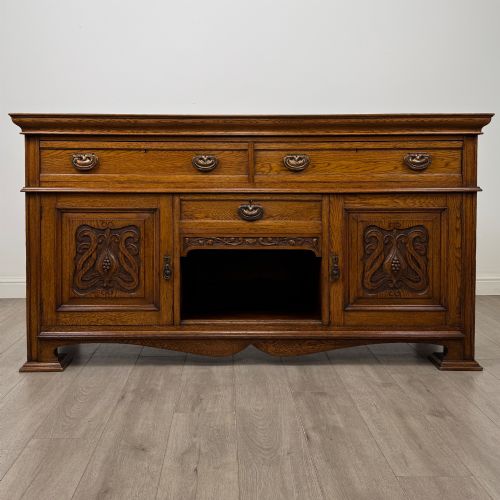
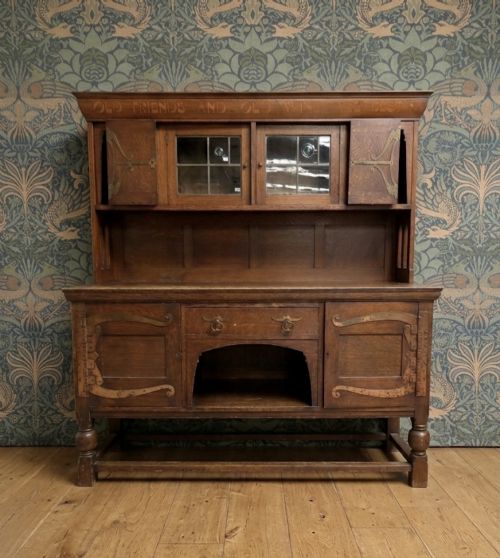
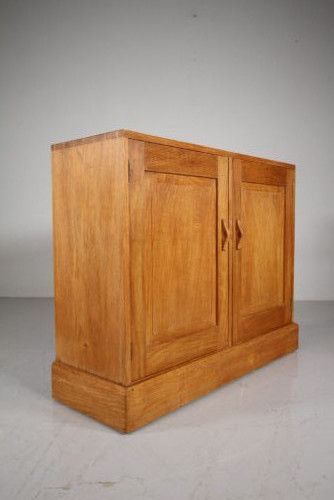
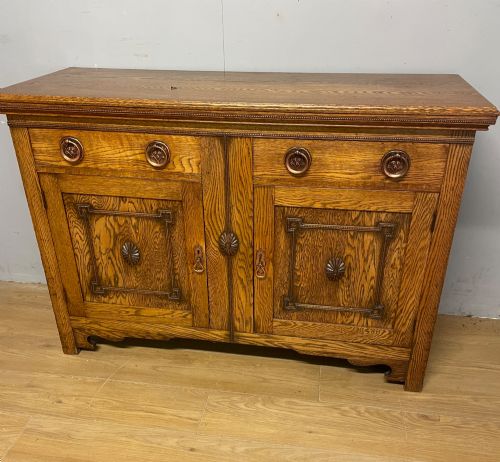
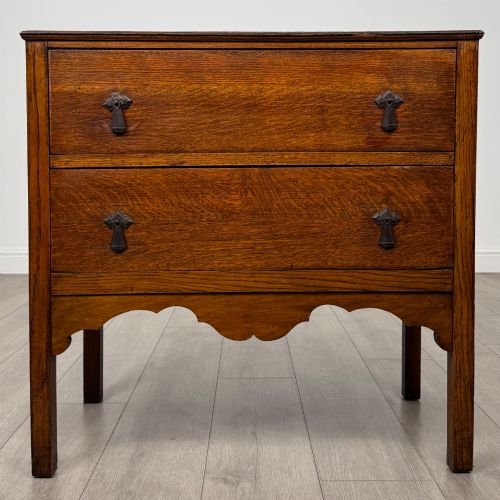
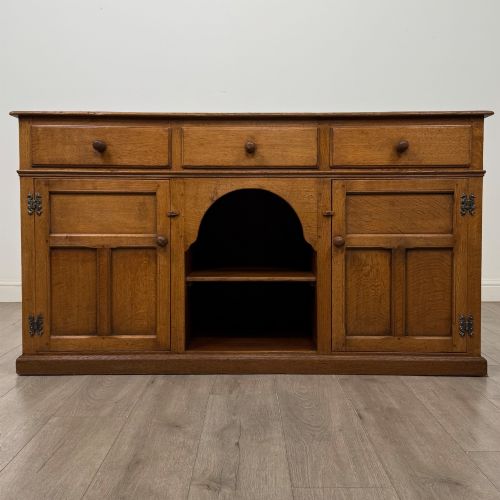
Arts and Crafts Oak Dresser
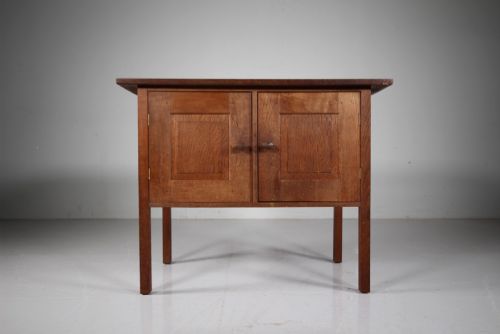
When you search for an arts and crafts oak dresser, you are looking at solid utility elevated by honest construction and restrained design.
Arts and Crafts Oak Dresser
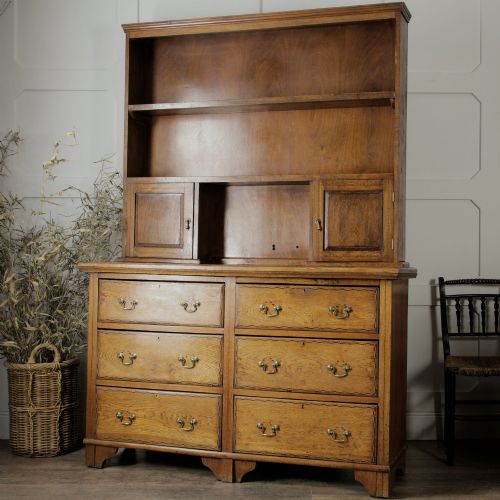
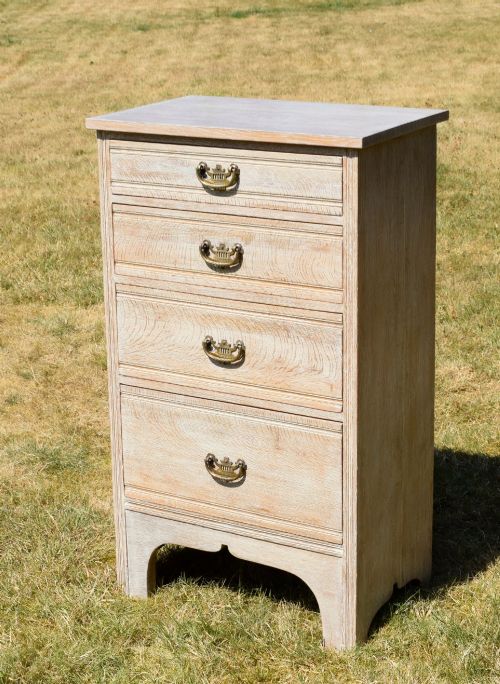
An arts and crafts oak dresser represents a specific shift in British furniture making away from Victorian mass production towards simpler, hand-finished forms. These pieces serve practical functions in dining rooms, kitchens and living spaces as sideboards, dresser bases, cabinets and bookshelves.
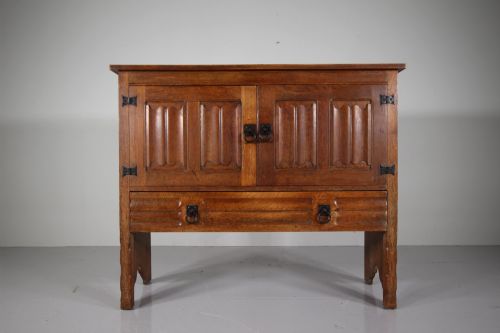
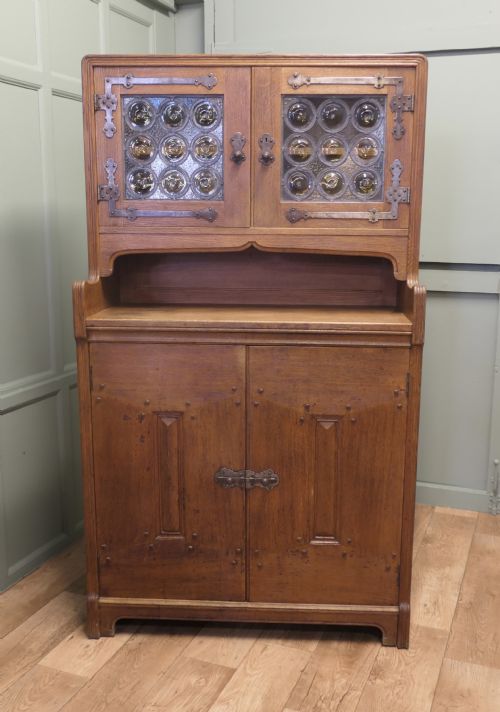
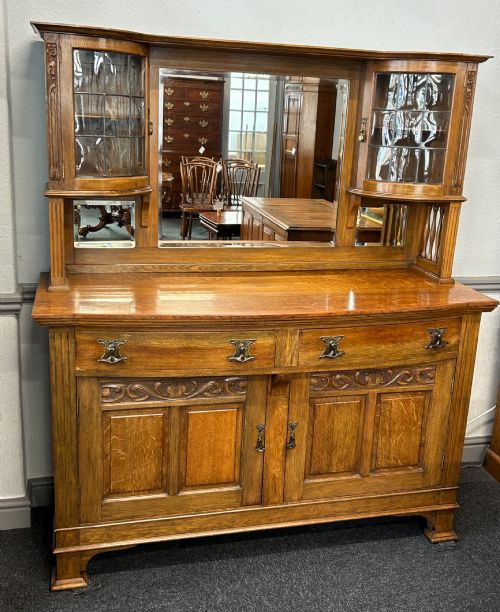
The version most commonly met on this page dates from the late nineteenth century through to the Edwardian period and the nineteen-thirties, reflecting the movement's peak and subsequent Cotswold school interpretations. They range from unpretentious golden oak cupboards to architectural pieces with leaded glass doors and integrated shelving.
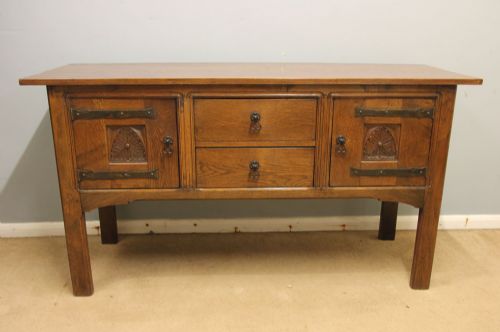
Makers working within this idiom utilised heavy timber, visible tenon joints and metal hardware in brass, copper or iron to celebrate the material rather than mask it under heavy varnish. Buyers encounter them as versatile storage items that anchor a room through straightforward gravity and grain.
How They Were Made
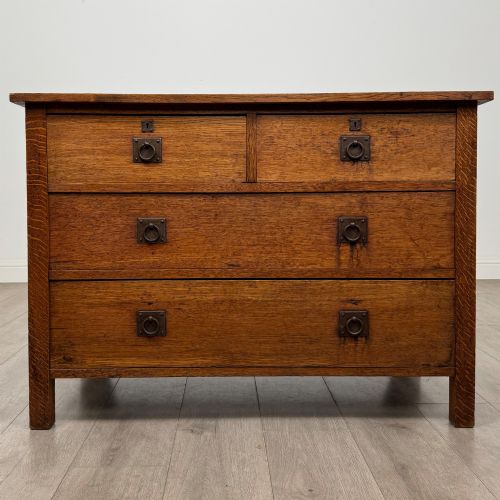
Constructed predominantly from solid oak, these pieces rely on quarter-sawn boards that display distinct medullary rays, often left in a natural golden tone, stripped and limed, or darkened to a rich brown. Workshops employed traditional joinery such as pegged mortise and tenon joints to ensure structural integrity without relying on hidden metal fasteners.
Surface decoration is restrained, depending instead on subtle wood inlay, carved strapwork, or chamfered panels rather than applied machine mouldings. Metal fittings in hammered copper, patinated brass and cast iron provide functional contrast on hinges, drop handles and backplates.
Glazed elements frequently incorporate leaded glass panes, sometimes arranged in geometric or stylized organic patterns typical of the period. Finishing processes involved wax polishing or fuming the timber with ammonia to darken the oak naturally, highlighting the grain structure.
Materials documented across the inventory include solid oak, brass, copper, iron, leaded glass, and occasional wood inlay.
What Varies in Quality
Quality rests upon the selection of timber and the precision of the joinery, distinguishing standard provincial workshop output from pieces designed by prominent architects or retailing through major London stores. Superior examples show careful matching of oak grain across large expanses and robust drawer construction using hand-cut dovetails.
The integrity of the hardware dictates another tier of distinction, where handmade copper handles and strap hinges designed specifically for the piece outclass mass-produced stamped brass. Proportion and architectural balance also divide ordinary utility cabinets from those bearing the refined proportions associated with the Cotswold school or Liberty designs.
The presence of maker stamps, paper labels or signature construction traits elevates a piece from a generic regional sideboard to a documented collector's item. Original surface patination, preserved through careful maintenance rather than aggressive modern stripping, maintains the visual depth intended by the maker.
Ambrose Heal·Leonard Wyburd·Shapland and Petter·John Moyr Smith·Peter Waals·Wolfe and Hollander·Maple and Co·Liberty and Co
The Arts and Crafts Oak Dresser Glossary
- Limed oak
- Timber treated with a white pigment rubbed into the open grain to create a pale, frosted appearance. This finish was particularly popular during the Edwardian period for lightening heavy dark furniture.
- Cotswold school
- A twentieth-century design grouping rooted in the ideals of Ernest Gimson and Sidney Barnsley, emphasising hand-tooling and traditional craftsmanship. Pieces from this tradition often display exposed pegging and adzed surfaces.
- Fumed oak
- A process of darkening timber by exposing it to ammonia fumes, which react with the natural tannins in the oak. This technique achieves an even, deep brown tone without staining the wood.
- Quarter-sawn
- Timber cut radially from the log rather than tangentially, producing boards with a stable structure and a prominent decorative flake pattern known as medullary rays. It was favoured for high-quality arts and crafts panels.
- Tenon
- The projecting end of a piece of timber shaped to fit into a mortise hole to form a secure joint. Exposed tenons pinned with wooden wedges are a visual hallmark of honest construction in this style.
Arts and Crafts Oak Dresser: Frequently Asked Questions
What defines an arts and crafts oak dresser?
An arts and crafts oak dresser is defined by its emphasis on plain utility, visible construction methods like pegged joints, and solid timber construction. These pieces reject fussy Victorian ornamentation in favour of honest materials and restrained functional design.
They frequently incorporate metal hardware in copper or brass, quarter-sawn oak grain, and simple geometric forms that prioritize the natural character of the wood over applied decoration.
How do I tell an original piece from a revival?
Original pieces display period construction techniques, such as hand-cut dovetails in the drawer linings, hand-planed internal surfaces, and timber shrinkage appropriate to a century or more of age. The patination on the oak and the wear on the metal handles develop through genuine use over generations.
Revival furniture often utilises modern mechanical fixings, uniform machine-sawn timber without natural fading, or hardware cast from modern alloys that lack the hand-hammered texture of the period.
Where were these dressers used in period homes?
In period homes, these pieces served multiple functions across dining rooms, hallways, and libraries as sideboards, serving tables, or combined bookcases and cupboards. Their deep drawers and enclosed shelf space provided practical storage for tableware, linens, and books.
Kitchen dressers and sideboard bases were built to withstand daily domestic utility while acting as focal points in the main living spaces of arts and crafts houses.
How should I care for golden oak furniture?
Caring for golden oak requires maintaining a stable indoor environment away from direct heat sources and strong sunlight, which can dry out the timber and fade the finish. Regular dusting with a soft, dry cloth keeps the surface free of abrasive particles.
Applying a traditional beeswax polish periodically helps nourish the wood and maintain the natural lustre of the patinated surface without building up synthetic residues.