
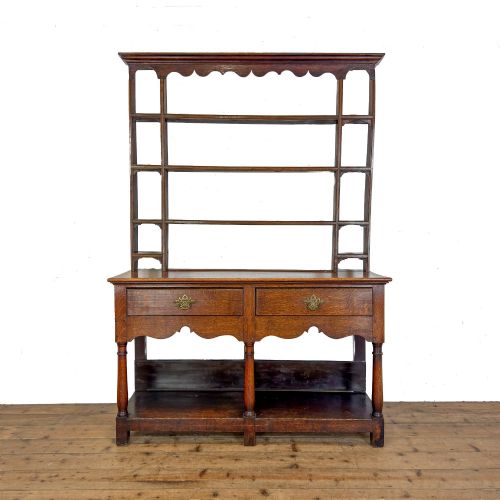
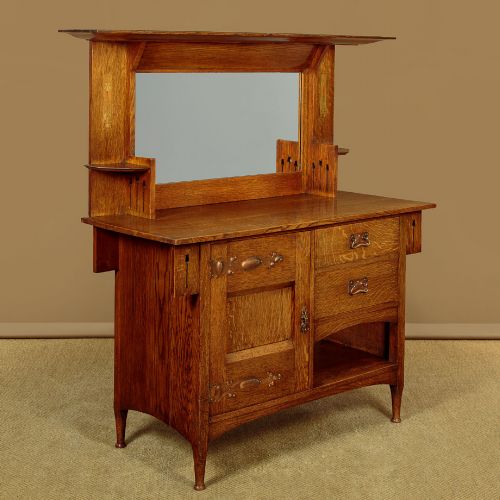
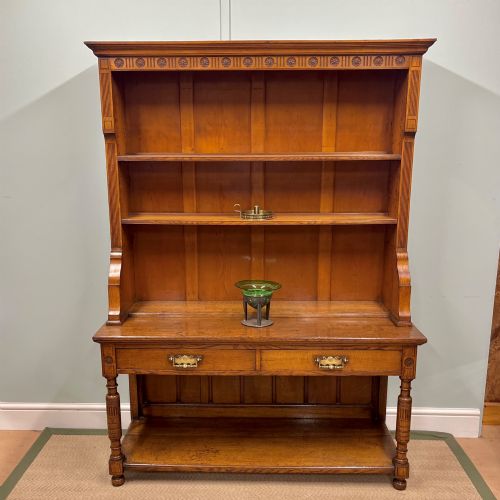


Solid Oak Kitchen Dresser
A solid oak kitchen dresser anchors the room, offering heavy timber storage and open display shelving for everyday use.
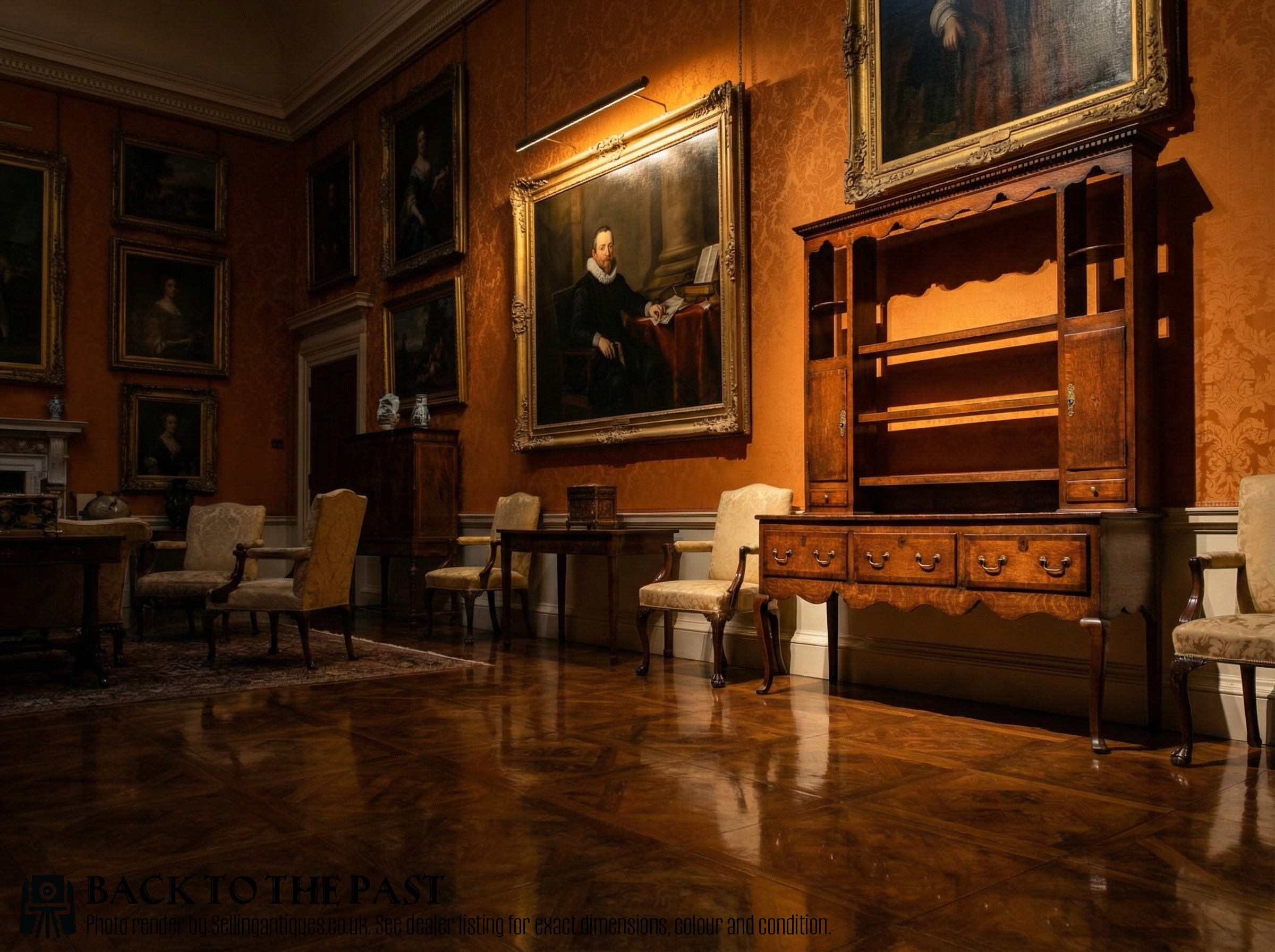
Solid Oak Kitchen Dresser
A solid oak kitchen dresser provides sturdy storage for domestic goods, combining lower cupboards or drawers with upper plate racks or shelving. When you search for a solid oak kitchen dresser, you encounter forms ranging from 17th-century pot boards to Edwardian utility pieces.
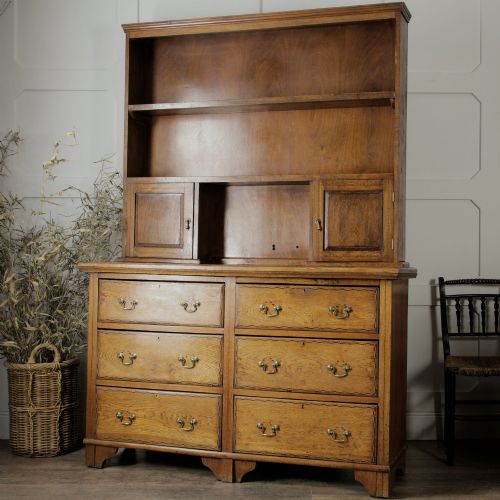
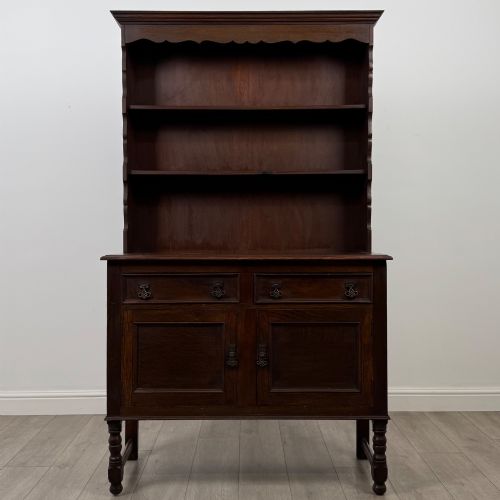
The versions most commonly met on this page span the 18th century and the Edwardian era, alongside Arts and Crafts interpretations. These pieces reflect regional English country traditions and formal Georgian revivals.
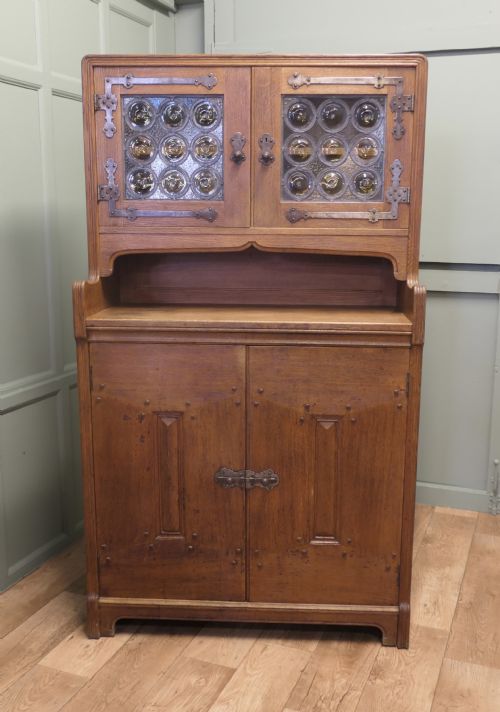
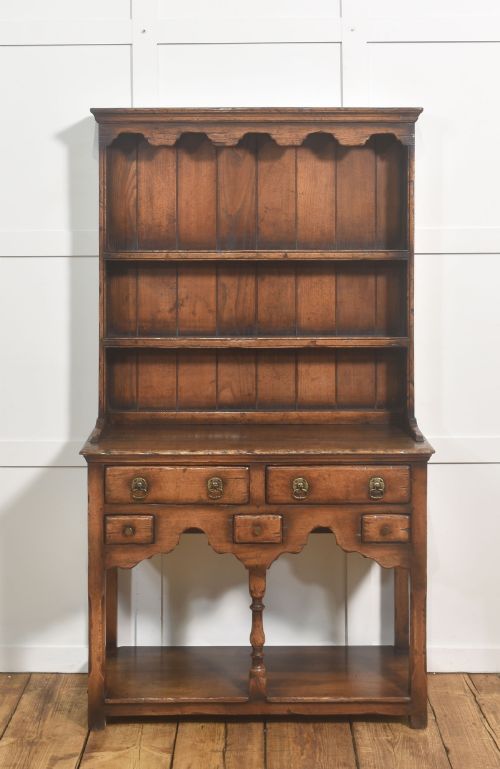
Formations include two-part dressers with open plate racks, enclosed cabinets, and estate housekeepers' cupboards. Each variant serves the fundamental purpose of housing kitchenware while displaying pottery.
Materials and construction
Construction relies heavily on solid oak timbers, paired with brass or iron hardware for hinges and pulls. Glass, leaded glass, and occasionally copper or enamel appear in specific cabinet doors and decorative panels.
Wood inlay and traditional joinery methods define the structural integrity of these items. Workshops utilised sturdy framing techniques to support heavy plate racks and substantial timber bases.
Solid Oak Kitchen Dresser Retail Price Guide 2026
Typical asking prices for solid oak kitchen dresser among the pieces listed under this phrase on Sellingantiques today, from the lower quarter to the upper quarter. They describe what is for sale here now, not the wider market.
Some pot board dressers spent centuries holding heavy pewter tankards before ever meeting a ceramic plate.
Assessing quality and proportion
Quality separates pieces through the selection of timber grain, the crispness of mouldings, and the retention of original hardware such as brass handles and iron hinges. Superior examples display harmonious proportions between the heavy base and the upper rack.
The integrity of the structural joints and the presence of untouched patination dictate the standing of a piece. Earlier examples show hand-carved details and pegged construction that differ from later revival pieces.
Liberty·Heals of London
The Solid Oak Kitchen Dresser Glossary
- Pot board
- A low slatted or solid shelf positioned near the floor between the legs of a dresser. It was traditionally used for storing heavy pots and pans.
- Housekeepers cupboard
- A large tall storage cabinet used in large estates for linen and provisions. It provides enclosed shelving rather than open display space.
- Welsh dresser
- A regional variant traditionally featuring multiple pot board levels or specific drawer arrangements. These pieces originate from Welsh country workshops.
- Arts and Crafts
- A design movement focusing on honest construction and simple forms. Pieces in this style often highlight the natural grain of the oak.
Solid Oak Kitchen Dresser: Frequently Asked Questions
How do I date an oak dresser?
Dating relies on examining construction marks, timber thickness, and overall style cues. Hand-cut joints and pegged frames generally indicate earlier centuries.
Hardware styles and secondary woods also help narrow the period. Revival pieces often combine older forms with later manufacturing techniques.
Are plate racks always original to the base?
Plate racks are frequently separated over long periods of use. Many upper racks are matched to bases from similar periods rather than born together.
Checking timber colour, wear patterns, and mounting points reveals whether the two parts share a unified history.
How should I care for solid oak furniture?
Solid oak benefits from minimal intervention and gentle dusting with a dry cloth. Avoiding direct heat sources prevents the timber from splitting.
Occasional application of traditional beeswax feeds the grain and maintains the surface sheen without building up heavy chemical residue.
What is the difference between a dresser and a sideboard?
A traditional dresser includes an upper plate rack for displaying ceramics above a storage base. A sideboard consists solely of the low base unit.
Sideboards function primarily as serving surfaces or enclosed storage cabinets without the vertical display structure.