
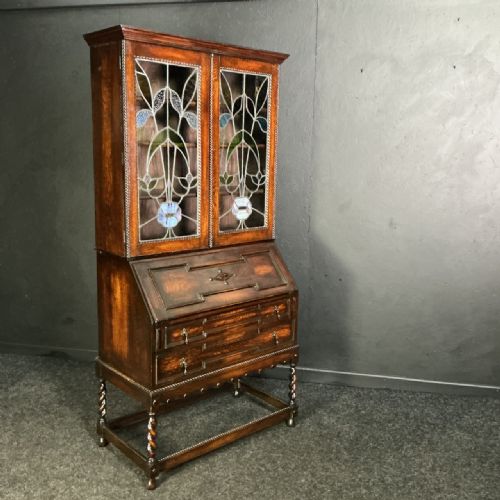
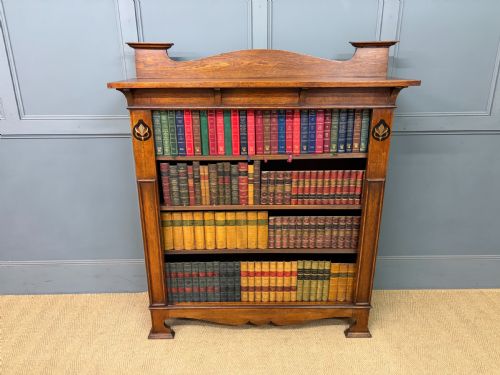

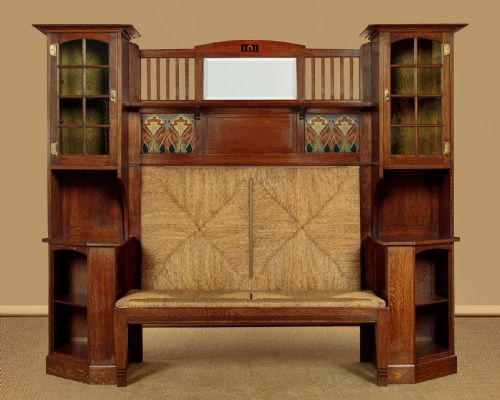


Art Nouveau Oak Cabinet
An art nouveau oak cabinet brings organic line and honest timber into a room, uniting utility with flowing decorative grace.
Art Nouveau Oak Cabinet
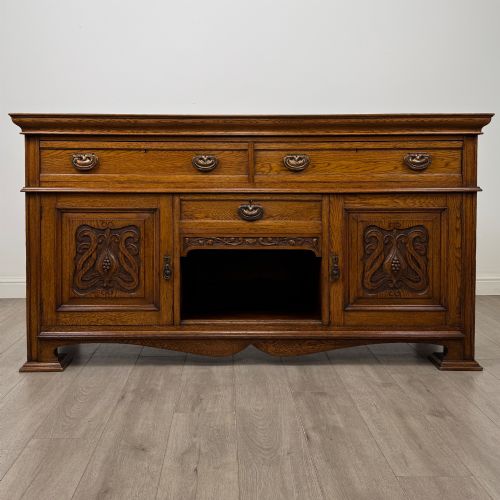
An art nouveau oak cabinet combines robust timber with fluid, nature-inspired design motifs typical of the late nineteenth and early twentieth centuries. These pieces emerge predominantly from the Victorian, Edwardian, and subsequent modernist periods, manifesting in diverse forms from wall-mounted cupboards to grand sideboards.
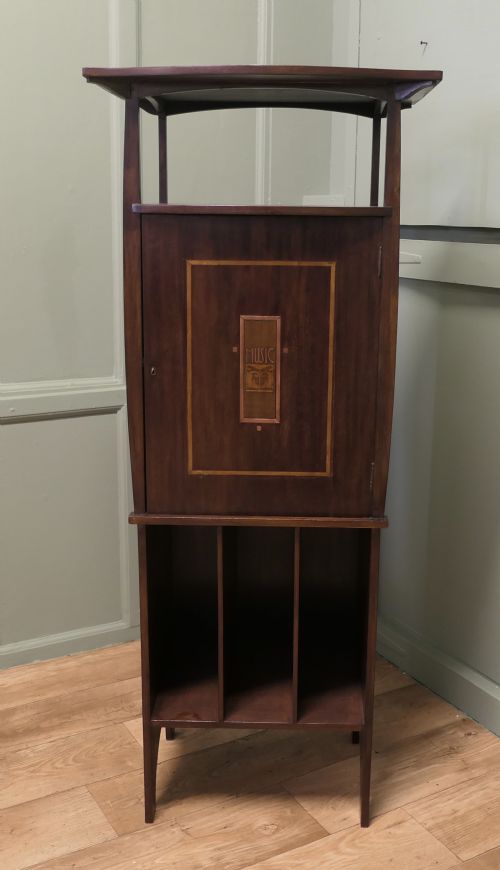
The objects appearing under this category span functional furniture types including bookcases, music cabinets, dressers, and bedside units. Many pieces display a strong kinship with the concurrent Arts and Crafts movement, reflecting a shared valuation of sturdy construction and thoughtful handiwork.
Materials and construction
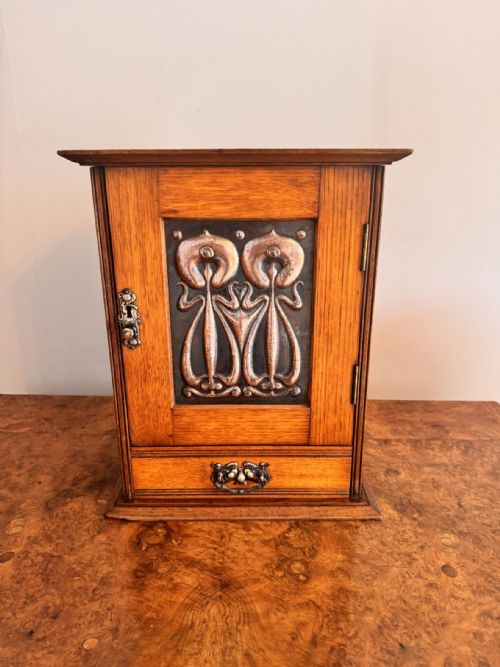
Makers utilised solid oak as the primary structural timber, often selecting golden or fumed varieties to enhance the natural grain. Metal elements such as copper, brass, and lead frequently appear as decorative hinges, handles, and glazing bars, providing metallic contrast to the warm wood.
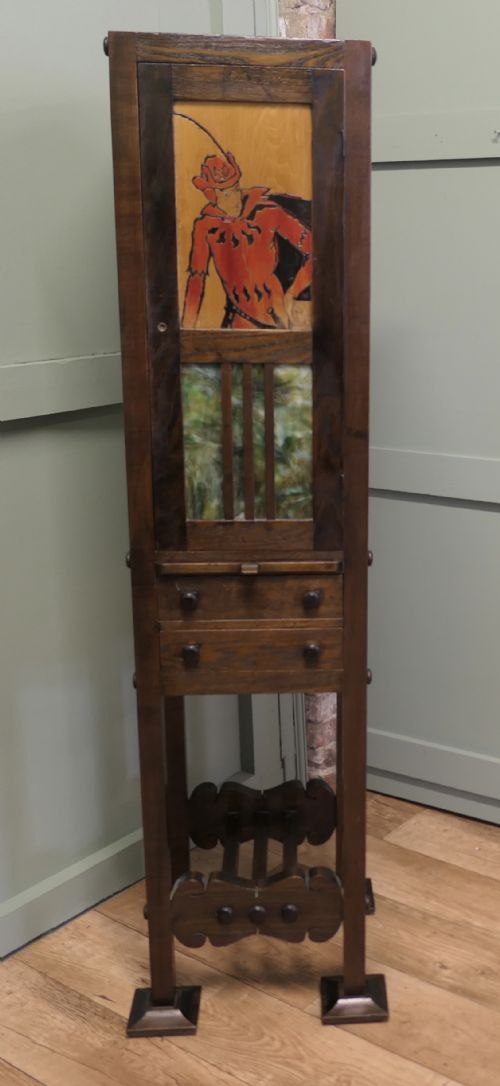
Surface ornamentation relies heavily on contrasting wood inlay, pokerwork pyrography, and carved plant motifs rather than applied plaster or heavy gilding. Glazed doors incorporate leaded glass panels, while mirror backs and marble tops add reflective light and practical utility to sideboards and hall stands.
Listings feature oak combined with glass, copper, brass, and lead, spanning Victorian, Edwardian, and 1920s periods.
Distinctions in craftsmanship
The calibre of an art nouveau oak cabinet rests on the integration of its structural joinery with its decorative hardware. Superior examples feature hand-beaten copper mounts and thoughtfully selected timber grain that complements the organic curvature of the design.
Lower tiers of quality often present standard commercial production where motifs are merely surface-applied rather than fully resolved within the architecture of the piece. The finesse of the carving, the weight of the metalwork, and the integrity of the secondary woods dictate the standing of individual pieces.
GM Elwood for JS Henry·Shapland and Petter·Thomas Gurney
The Art Nouveau Oak Cabinet Glossary
- Arts and Crafts
- A design movement valuing traditional craftsmanship, simple forms, and visible construction methods over mass production. This aesthetic heavily influences the furniture found alongside strict art nouveau pieces.
- Pokerwork
- A decorative technique using heated tools to burn designs into wooden surfaces. It appears frequently on panels and cupboards of this era to create shadowy, organic illustrations.
- Secessionist
- A stylistic branch of Central European modernism characterised by geometric austerity combined with organic plant forms. It represents a more rectilinear approach to the prevailing curving aesthetics.
- Fumed oak
- Timber exposed to ammonia fumes to darken the natural tannins and produce a deep, even brown coloration. Makers used this process to give new wood an aged, rich appearance.
Art Nouveau Oak Cabinet: Frequently Asked Questions
How do I care for an art nouveau oak cabinet?
Keep the timber nourished with appropriate wax polishes and protect the surface from excessive direct sunlight or sudden humidity changes. Avoid commercial silicone sprays that can penetrate the grain and degrade older finishes.
Inspect the brass or copper fittings periodically, ensuring that mounting screws remain secure without over-tightening against the aged oak.
Were these cabinets made by hand?
Most pieces reflect a hybrid of workshop production where primary framing relied on machine assistance while carving, metal beating, and assembly remained manual tasks. Workshops valued individual artistry alongside practical utility.
Distinctive hardware and hand-finished inlay work often indicate the involvement of skilled artisans working within larger cabinet-making firms.
How do I distinguish art nouveau from arts and crafts?
Art nouveau relies primarily on whiplash lines, asymmetrical floral motifs, and sinuous plant forms intended to mimic living growth. Arts and crafts design leans towards structural honesty, rectilinear geometry, and visible functional joinery.
Many pieces bridges these two definitions, incorporating sturdy oak construction alongside flowing organic hardware.
Where should I place a music cabinet?
Music cabinets suit living spaces or studies where their compartmentalised drawers can store sheet music, papers, or small collections. Their modest footprints allow them to function effectively in narrow hallways or beside larger seating arrangements.
Ensure the room maintains stable ambient temperatures to protect internal shelving and delicate veneer work.