

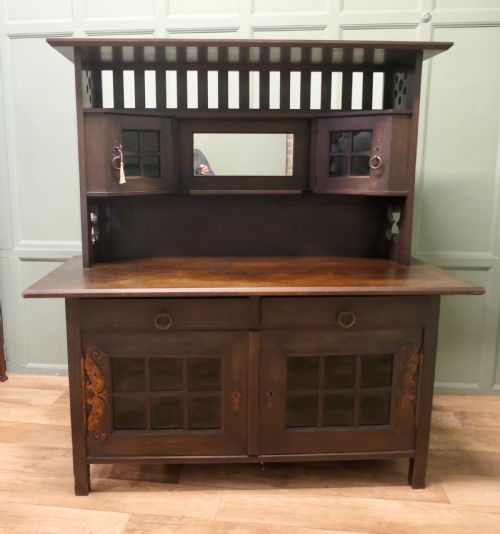
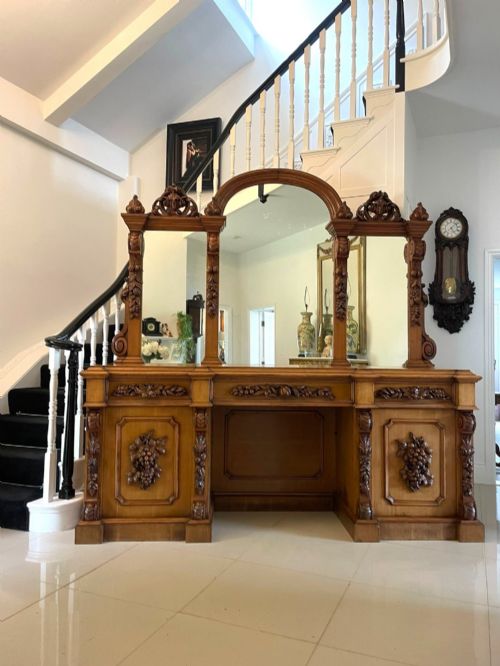
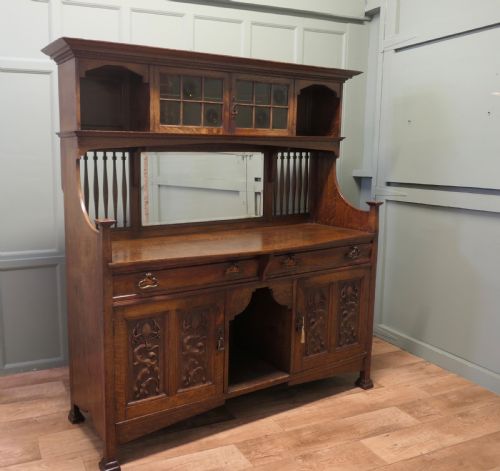
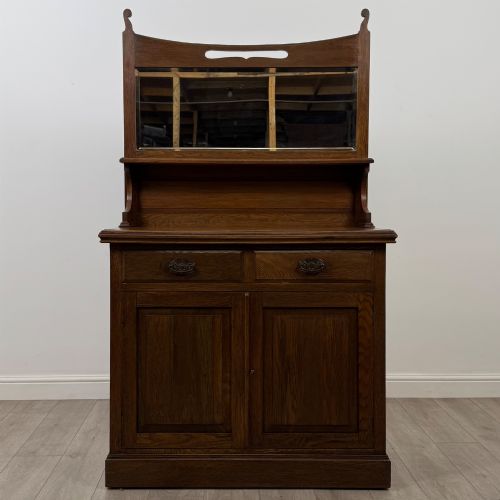



Oak Credenza with Mirror
An oak credenza with mirror is a substantial timber sideboard combining storage and glass, chosen to anchor a dining room or hall with presence.
Oak Credenza with Mirror
When you search for an oak credenza with mirror, you encounter heavy timber storage units principally recorded as sideboards, mirror back sideboards, and cocktail cabinets. These pieces span the Victorian, Edwardian, and early twentieth century periods, dating from roughly 1880 through to 1920.
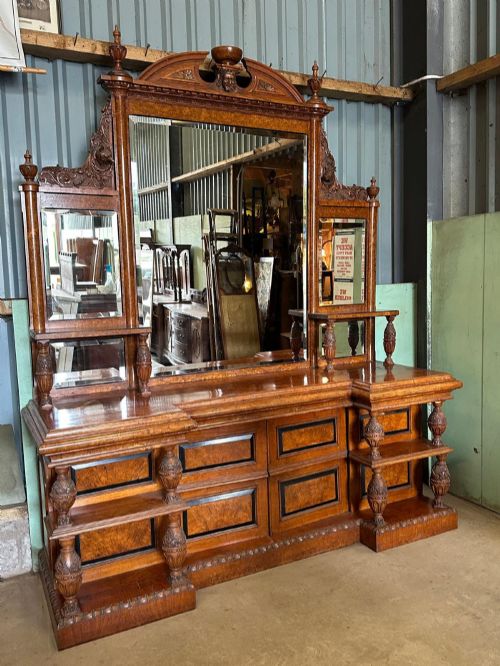
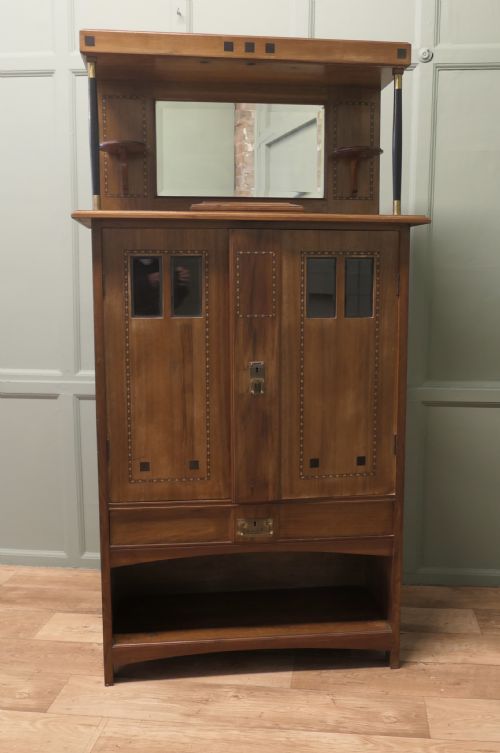
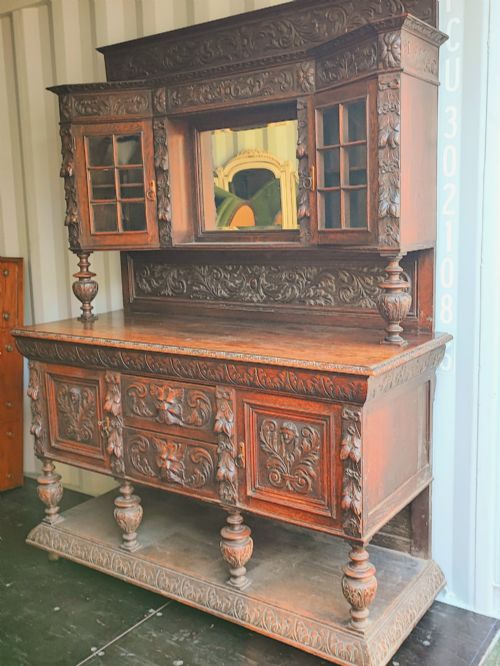
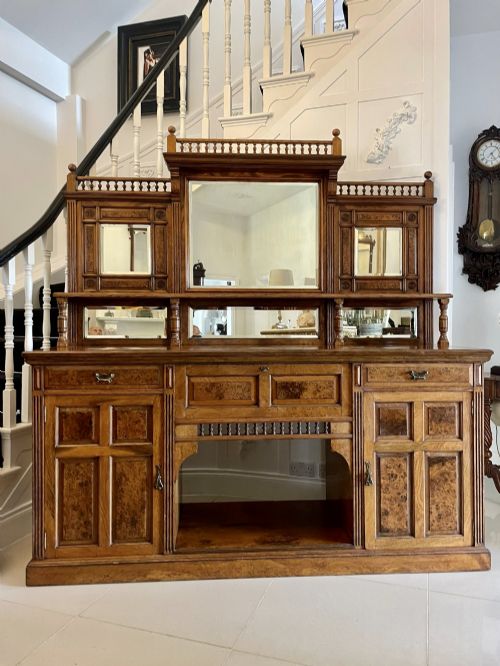
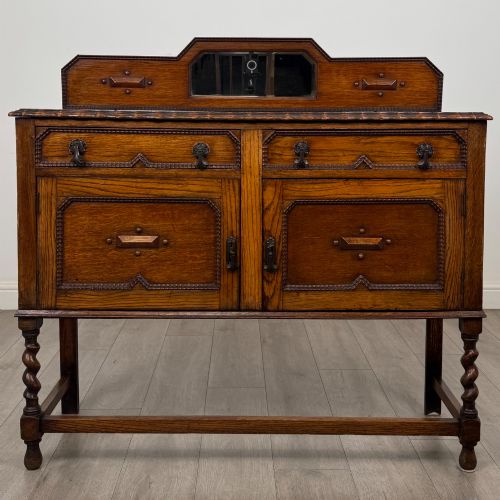
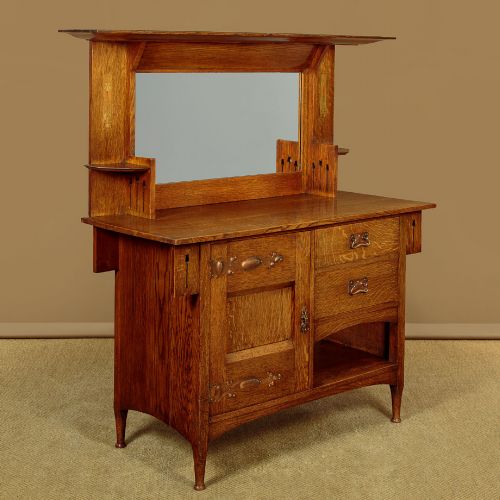
The versions you are most likely to meet on this page include carved Victorian iterations, Arts and Crafts designs from 1900, and light oak Edwardian examples featuring integrated mirror glass. Styles range from Jacobean Revival and Victorian Renaissance Revival to Secessionist and Arts and Crafts influences.
Makers and workshops utilised robust construction methods, combining oak with pollard oak, pine, brass hardware, and ceramic details. The form functions primarily as a sideboard or display cabinet, uniting lower cupboards and drawers with an upper mirror back.
How they were made
Makers built these pieces using solid oak and pollard oak for the structural carcass, framing, and panel work, supplemented by pine in secondary areas such as drawer linings. Surfaces frequently display elaborate carving, fielded panels, and turned elements like barley twist supports.
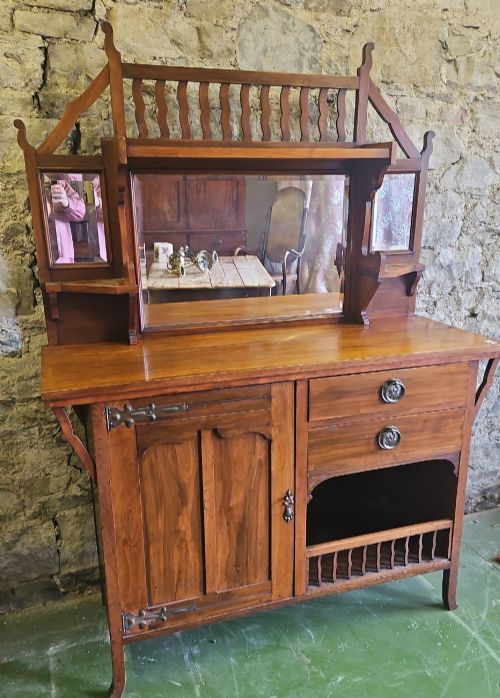
Glass plates form the mirror backs, secured above the sideboard tops to reflect light and display decorative objects. Brass handles, hinges, and occasional ceramic components complete the hardware, fixed firmly to doors and drawers.
Oak Credenza with Mirror Retail Price Guide 2026
Typical asking prices for oak credenza with mirror among the pieces listed under this phrase on Sellingantiques today, from the lower quarter to the upper quarter. They describe what is for sale here now, not the wider market.
Listings feature oak, pollard oak, glass, brass, and ceramic across Victorian, Edwardian, and 1900s periods.
What varies in quality
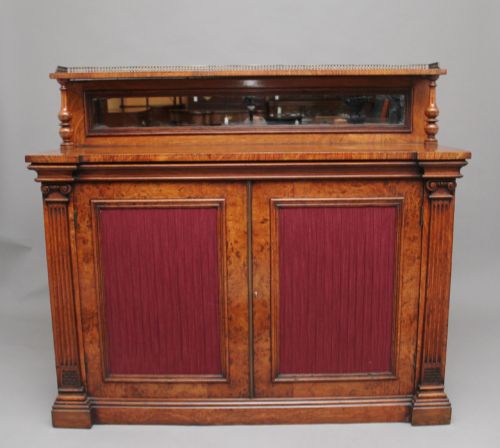
The standard of carving and timber selection dictates the distinction between ordinary and superior pieces. Deep relief work, well-figured pollard oak veneers, and harmonious proportions elevate certain Arts and Crafts and Victorian examples above plain production items.
Construction integrity and the quality of the integrated mirror glass further separate the range. Heavy timber joints, original brass fittings, and intact mirrored plates indicate a higher grade of workshop production across the Victorian and Edwardian periods.
The Oak Credenza with Mirror Glossary
- Pollard oak
- A timber taken from trees that have been pollarded, producing dense wood with distinctive, clustered knot patterns. This decorative grain appears on select Victorian sideboard fronts.
- Mirror back
- An upright wooden superstructure holding a glass mirror, attached to the rear of a sideboard. It serves to brighten rooms and display porcelain or silver.
- Barley twist
- A turned wooden furniture leg or support resembling a spiral twist of barley. This decorative woodworking technique is found on Edwardian and later twentieth-century pieces.
- Secessionist
- An early twentieth-century design movement favouring geometric forms and simplified ornamentation. Pieces in this style move away from heavy Victorian revivalism.
Oak Credenza with Mirror: Frequently Asked Questions
What rooms suit an oak credenza with mirror?
These substantial timber pieces work well in traditional dining rooms, large hallways, or spacious living areas where generous surface space and storage are required.
The integrated mirror helps bounce light around darker corners while providing a focal point for displaying decorative ceramics or glassware.
How do I care for antique oak furniture?
Maintain the timber by keeping it away from direct heat sources and sudden humidity changes that can dry out or crack the wood.
Apply a traditional beeswax polish occasionally to nourish the oak and protect the surface from everyday dust and moisture.
Are these sideboards difficult to move?
Because they are constructed from solid oak and incorporate large mirror glass frames, these pieces are heavy and typically require two people to transport safely.
Many examples feature a detachable mirror top that lifts off the base cabinet to make moving through doorways significantly easier.
How do I tell Victorian from Edwardian styles?
Victorian examples tend to feature heavier carving, darker finishes, and dense ornamentation rooted in Renaissance or Jacobean revivals.
Edwardian pieces often display lighter oak tones, simpler lines, and influences from the Arts and Crafts movement or Secessionist design.