
Carved Oak Server Cabinet
A carved oak server cabinet brings robust construction and rich grain into a room, offering practical storage with timeless architectural presence.
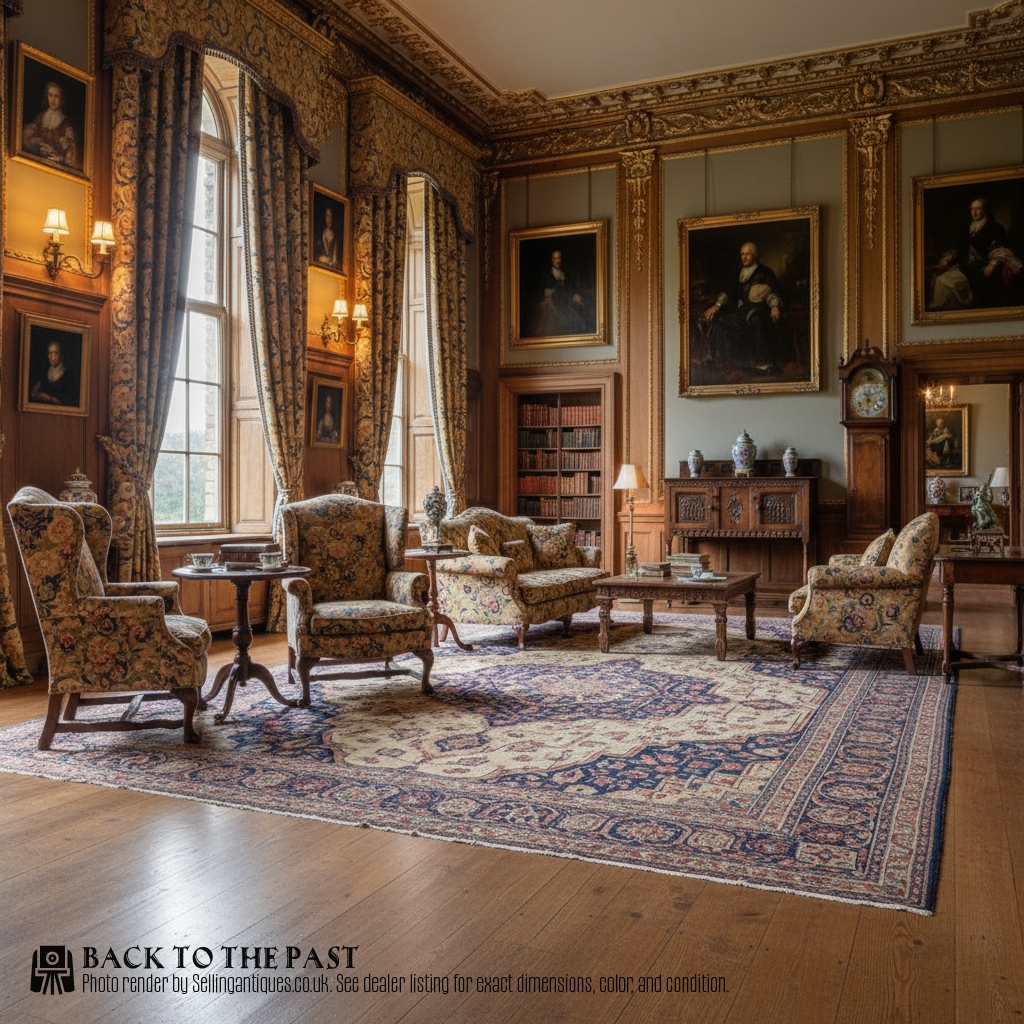
What these pieces are
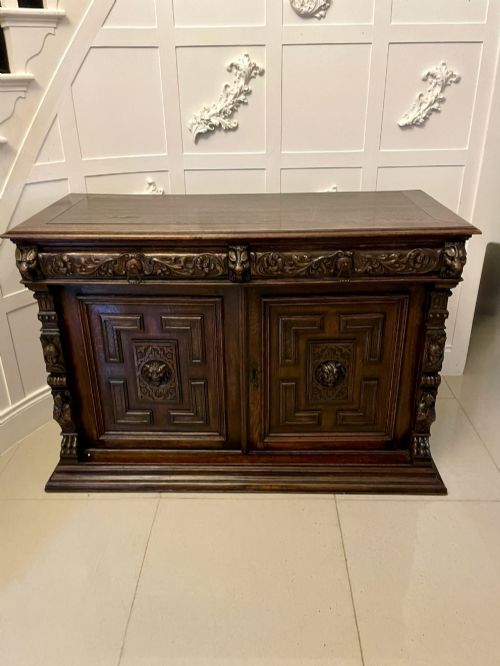
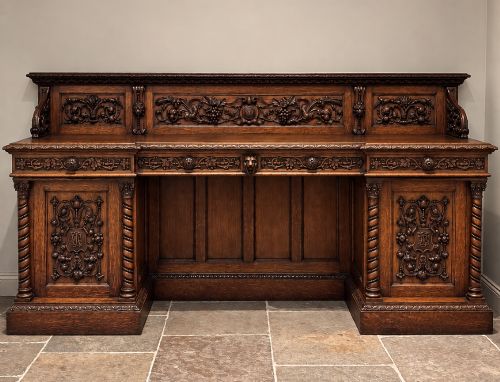
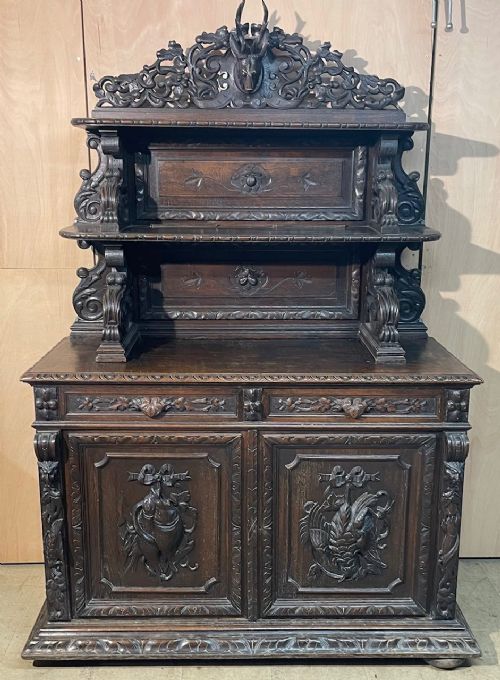
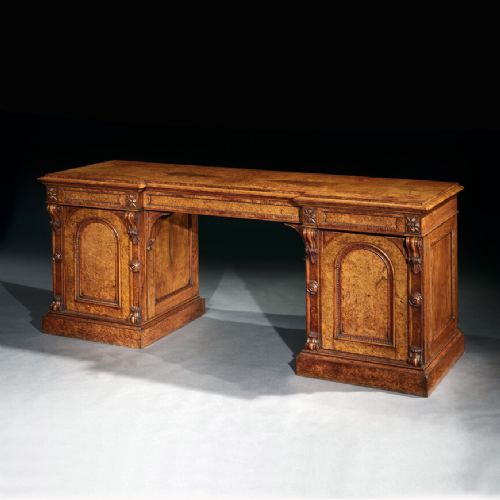
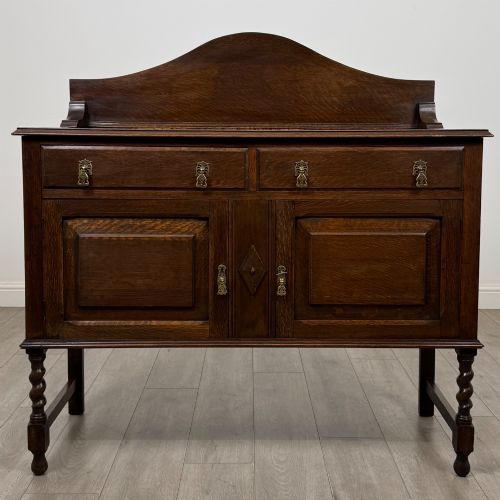
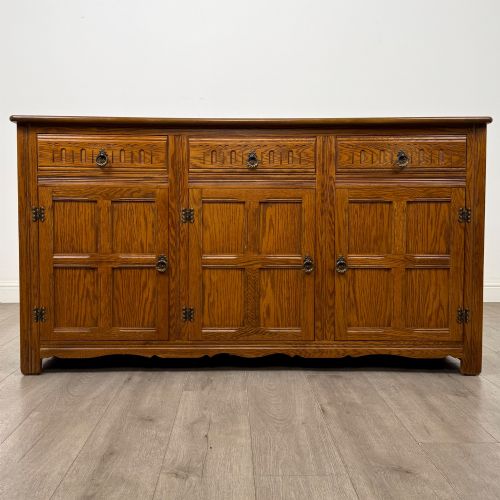
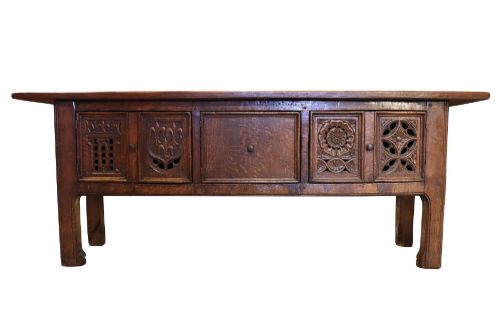
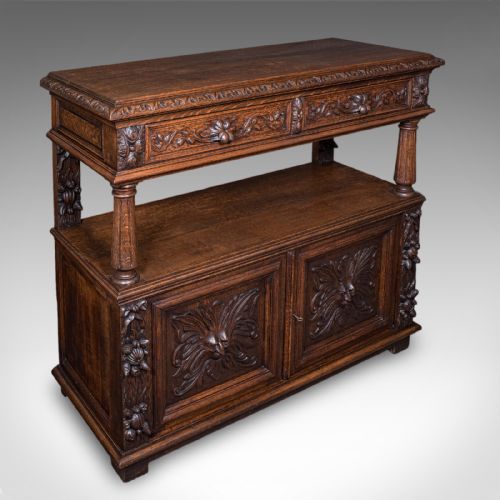
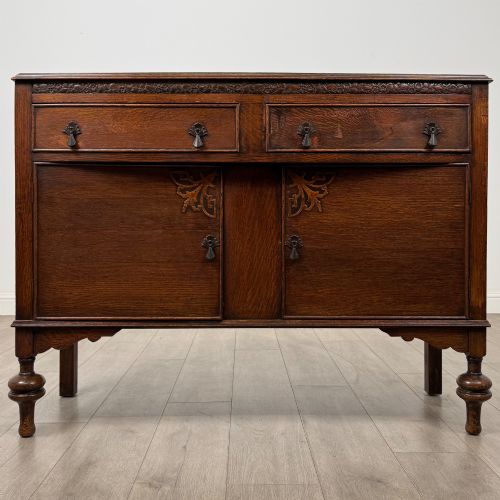
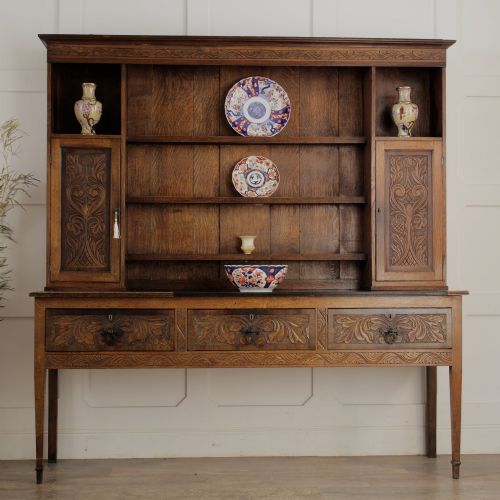
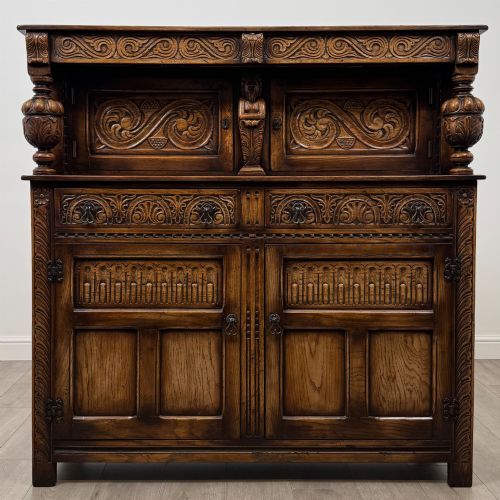
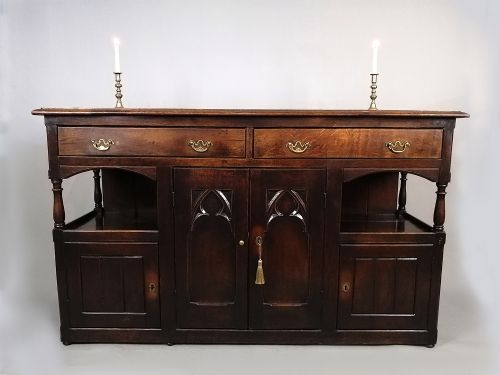
A carved oak server cabinet encompasses robust sideboards, court cupboards, and hall cupboards spanning the Victorian, Edwardian, and early twentieth-century periods. These heavy storage pieces provide deep internal shelving and surface display space, anchoring a dining room or hallway with substantial weight.
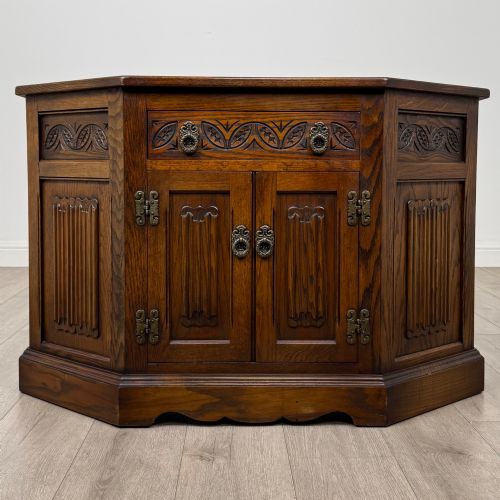
The selections encountered here lean heavily into revivalist aesthetics and functional domestic utility. Pieces range from grand Victorian Gothic statements to smaller twentieth-century proportions designed for compact modern rooms.
How they were made
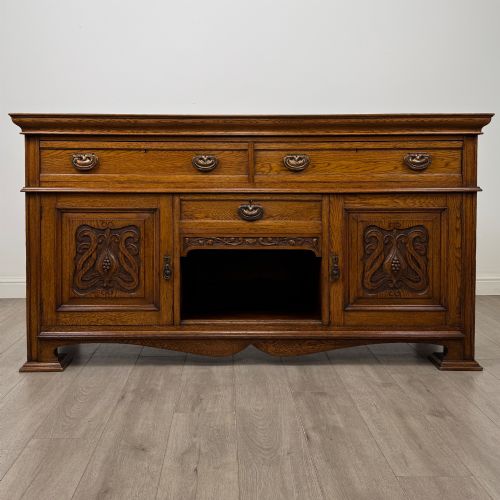
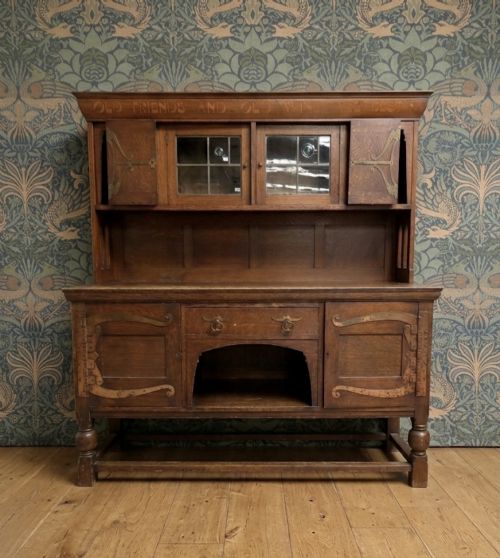
Joiners built these cabinets using solid timber framing, frequently incorporating oak alongside contrasting details in fruitwood marquetry inlay, iron, and copper. Glazed doors and carved panels demonstrate traditional cabinet-making methods passed down through generations of workshops.
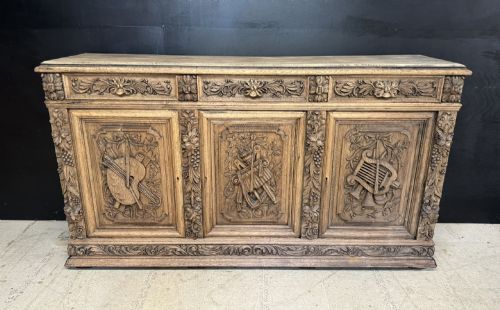
Surface decoration relies on deep chisel work and relief carving rather than applied veneer, highlighting the natural grain and texture of the wood.
Retail Price Guide 2026
Typical UK retail prices for carved oak server cabinet, calculated from the Sellingantiques database of over a million retail prices indexed since 2003. This retail price guide relies exclusively on Sellingantiques data; no external sources or auction records are used, so the figures do not describe the wider market.
Current selections span the Victorian, Edwardian, and 1920s periods, featuring oak alongside iron, copper, and fruitwood marquetry inlay.
What varies in quality
Quality rests in the depth and crispness of the carving, the selection of figured timber, and the integrity of the original joinery. Superior examples maintain balanced proportions and harmonious hardware, while lesser pieces rely on mechanical repetition or later alterations.
The presence of documented design attribution or integrated marquetry elevates a piece above standard regional production, separating ordinary utility furniture from considered artistic output.
Leonard Wyburd
The Carved Oak Server Cabinet Glossary
- Court cupboard
- A traditional enclosed piece of furniture featuring stacked tiers or cupboards, often heavily carved with architectural motifs. These serve as prominent storage units for dining rooms and hallways.
- Marquetry
- A decorative technique where small pieces of tinted wood, such as fruitwood, are fitted into a veneer to form pictorial patterns. This inlay work creates subtle contrasts against the darker oak background.
- Jacobean Revival
- A nineteenth-century design style imitating seventeenth-century English motifs, characterised by heavy turnings, geometric paneling, and sombre oak tones. It brings a deliberate historical weight to domestic interiors.
- Arts and Crafts
- A movement prioritising honest construction, visible handcraft, and simple materials over industrial mass production. Pieces from this tradition often feature unadorned surfaces or subtle metalwork accents in copper and iron.
Frequently Asked Questions
What is a carved oak server cabinet?
A carved oak server cabinet is a heavy storage furniture piece, such as a sideboard or hall cupboard, made from solid oak and decorated with relief carving.
These items provide deep internal shelving and a sturdy top surface, functioning primarily in dining spaces and entrance halls.
How do I date a carved oak cabinet?
Dating relies on examining the construction methods, hardware materials, and stylistic motifs present in the piece. Victorian, Edwardian, and 1920s versions each display distinct decorative choices ranging from Gothic Revival to Arts and Crafts.
Comparing the depth of the carving and the presence of secondary woods like fruitwood inlay helps establish the likely period of manufacture.
How should I care for oak furniture?
Maintain oak furniture by keeping it away from direct heat sources and sudden humidity changes to prevent the solid timber from splitting. Regular dusting with a soft cloth preserves the natural finish without requiring heavy polishes.
Applying a traditional beeswax occasionally helps nourish the grain and protects the carved surfaces over time.
Where did these cabinets originate?
These cabinets stem from British workshops and design traditions active during the late nineteenth and early twentieth centuries. Makers drew inspiration from earlier historic periods like the Jacobean era while adapting forms for contemporary domestic use.
Some pieces reflect specific aesthetic movements, such as the Arts and Crafts philosophy or high Victorian Gothic revivals.