
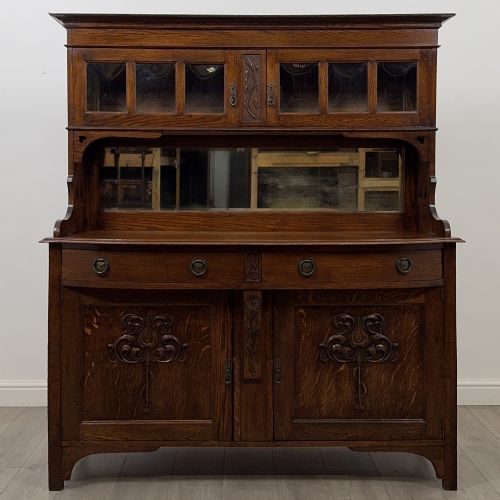


Carved Oak Credenza Mirror
A carved oak credenza mirror brings weight and presence to a room, framing glass with rich grain and confident nineteenth and twentieth century joinery.
Carved Oak Credenza Mirror
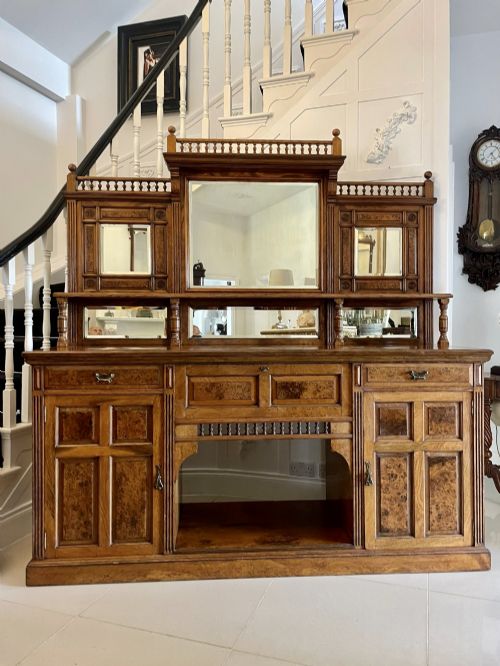
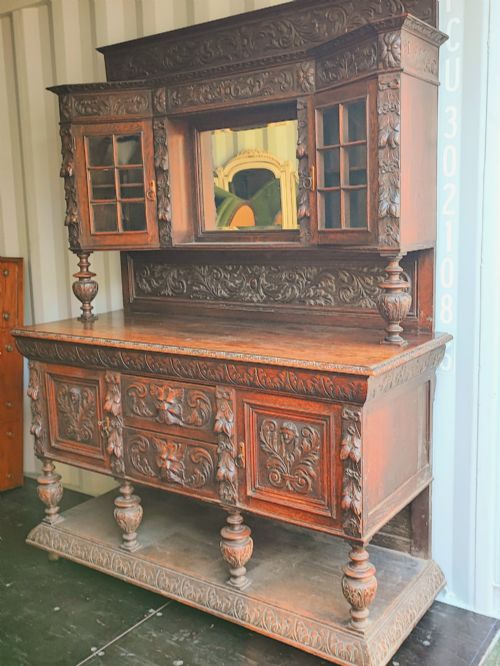
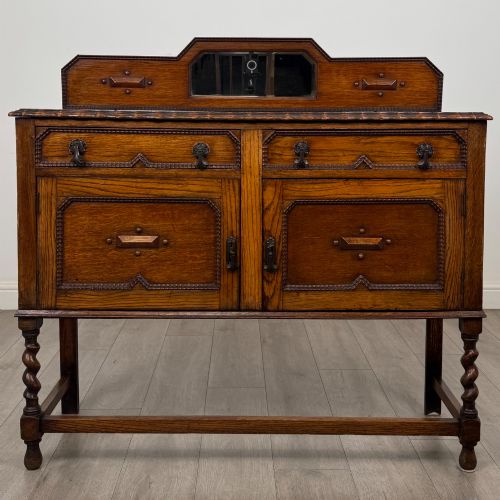
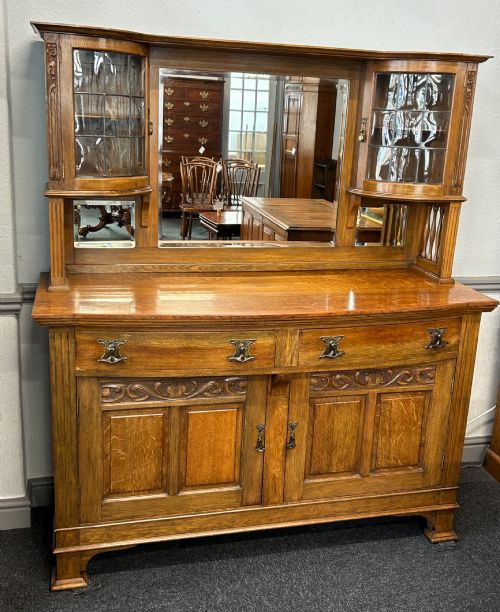
A carved oak credenza mirror search reveals large mirror-backed sideboards, cabinets, and chiffoniers rather than standalone wall glasses. These substantial furniture forms combine storage with an integrated reflective plate, often rising above a buffet or sideboard base.
The pieces you meet most frequently on this page date from the Victorian and Edwardian eras, spanning from the late nineteenth century into the early twentieth century. Makers of this period favoured sturdy oak and pollard oak timber, embellished with carved relief, geometric panels, and occasionally brass fittings.
Stylistically, the selection ranges from ornate Gothic and Renaissance revivals to the cleaner lines of the Arts and Crafts movement and later Art Deco interpretations. Each variant offers a distinct architectural silhouette while maintaining the core utility of a substantial wooden sideboard with an upper mirror.
Distinctions in craftsmanship and finish
Superior examples separate themselves through the crispness of the hand-carved detail and the careful selection of figured pollard oak or quarter-sawn timber. Finer pieces demonstrate tighter joinery in the sideboard base and heavier, clearer mirror glass fixed securely within proportioned frames.
Simpler or later items rely on flatter mechanical cutting and standard plain oak boards without the depth of relief or variety of wood grain found in the more ambitious Victorian and Edwardian productions.
Listings feature oak, pollard oak, and walnut burr alongside brass, copper, and mirror glass across Victorian to Art Deco periods.
T Simpson and Son
The Carved Oak Credenza Mirror Glossary
- Pollard oak
- Timber taken from trees that were pollarded, creating dense, highly figured grain patterns with swirling knots. This decorative wood was favoured for high-end Victorian sideboards.
- Mirror back
- An upright wooden frame containing a glass mirror, attached to the rear of a sideboard or credenza. It reflects light and displays objects placed on the surface below.
- Arts and Crafts
- A design movement prioritising traditional craftsmanship, visible construction, and simple forms over excessive machine-made ornamentation. Pieces in this style often feature minimal carving and honest use of oak.
- Gothic Revival
- An architectural and decorative style drawing inspiration from medieval forms, featuring pointed arches, tracery, and heavy carved details. This style appears frequently on nineteenth-century oak furniture.
- Chiffonier
- A low sideboard or cabinet with shelves and drawers, occasionally fitted with an upper mirror or back panel. It serves as compact storage within a dining room or parlour.
Carved Oak Credenza Mirror: Frequently Asked Questions
How do I date a carved oak credenza mirror?
Dating relies on observing the combination of hardware, timber finishing, and stylistic revival markers present in the construction. Victorian examples often display heavier Gothic or Renaissance relief carving, while Edwardian and later pieces lean toward lighter golden oak tones or Arts and Crafts simplicity.
Examining the backboards, drawer construction, and the silvering on the mirror glass helps narrow the decade of manufacture. Deeper, hand-chiselled details typically point to the nineteenth century, whereas cleaner, plainer surfaces suggest the early twentieth century.
Where should I place a mirror back sideboard?
These large furniture forms suit dining rooms, grand hallways, or spacious living areas where their considerable height and width can anchor a wall. Positioning them opposite a window allows the integrated mirror to bounce natural light around the room.
Ensure the floor surface is level and strong enough to support the combined weight of the oak base and heavy glass mirror. Wall anchoring may be advisable for taller mirror backs to ensure complete stability.
What is the difference between oak and pollard oak?
Standard oak comes from the standard trunk of the tree, displaying straight, consistent grain patterns that provide structural strength and a uniform surface. Pollard oak is harvested from trees that were cut back near the trunk to encourage dense, branching growth, resulting in highly figured, swirling grain.
Furniture makers reserved pollard oak for prominent display surfaces, such as door panels and mirror surrounds, to showcase its decorative visual texture.
How do I care for antique oak furniture?
Maintain antique oak by dusting regularly with a soft, dry cloth and avoiding placement near direct heat sources or strong sunlight. Excessive temperature fluctuations can cause the dense timber to dry out or split.
Apply a traditional beeswax polish sparingly when the wood appears dry, buffing gently to preserve the natural lustre. Keep glass cleaner away from the surrounding wooden frame to protect the polished finish.