
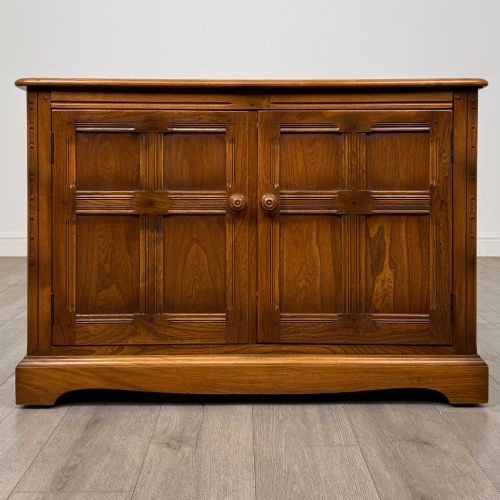
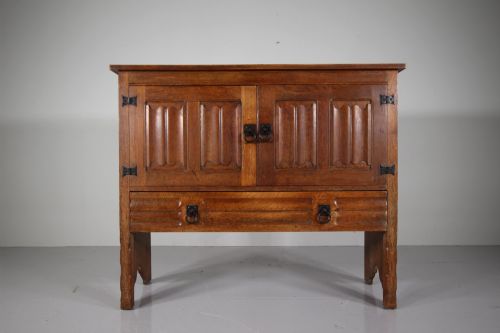
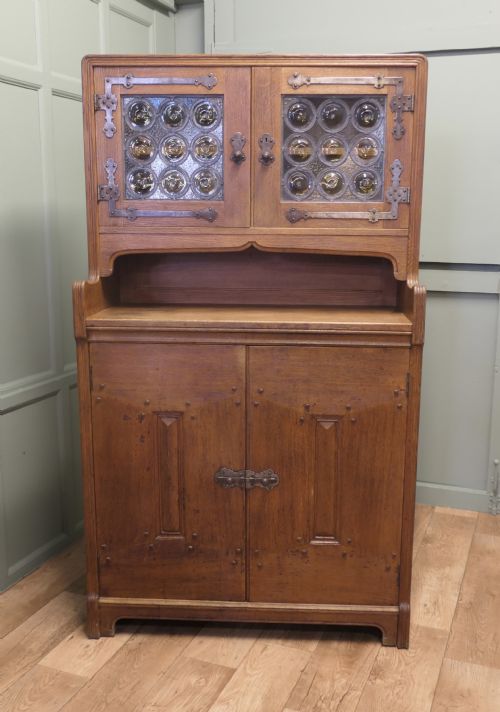
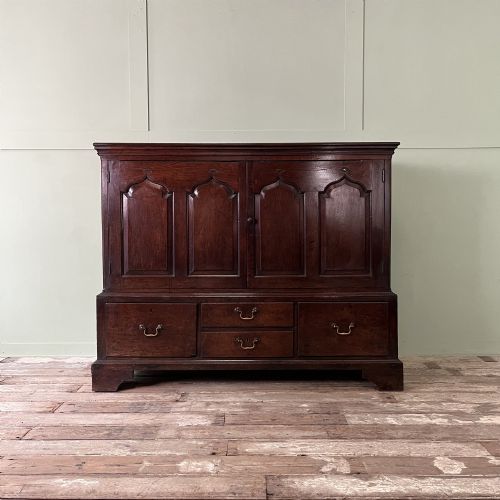
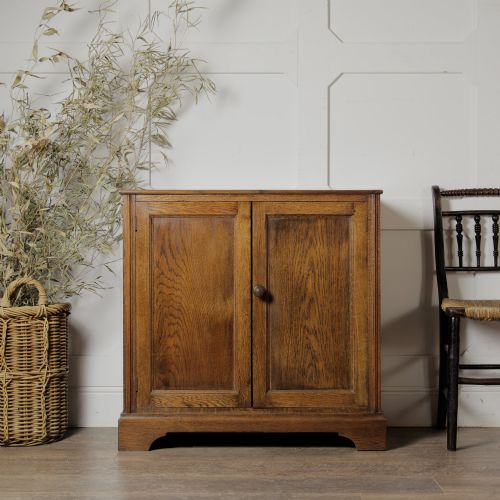
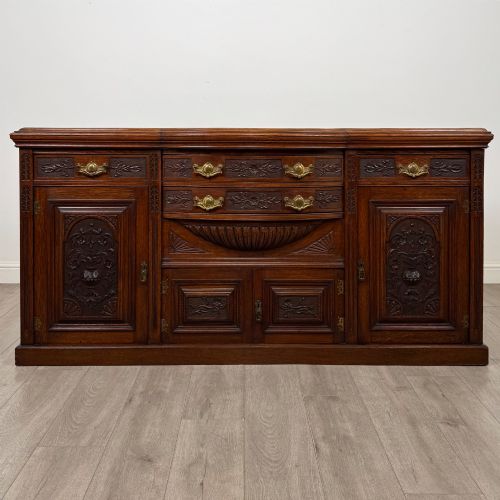
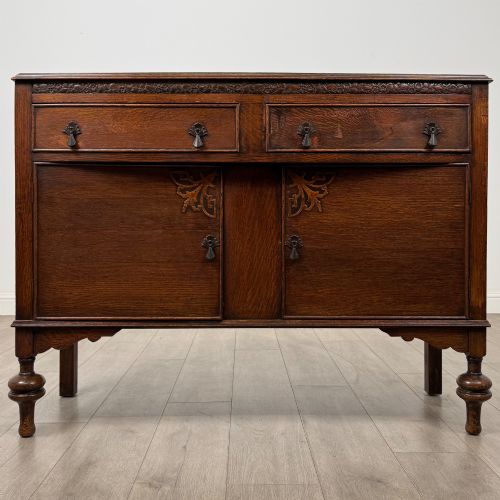
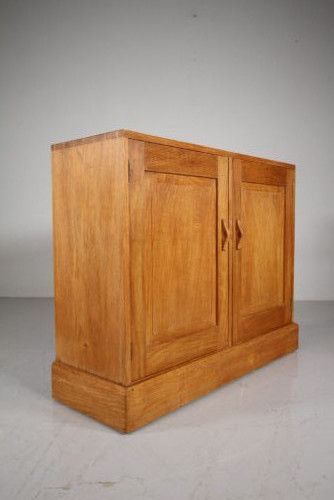
Oak Storage Cupboard Sideboard
These oak storage cupboard sideboard pieces span centuries of practical craftsmanship, offering sturdy storage and classic timber character for any room.
Oak Storage Cupboard Sideboard
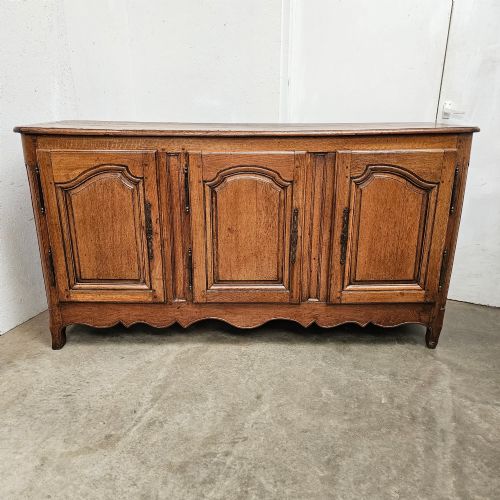
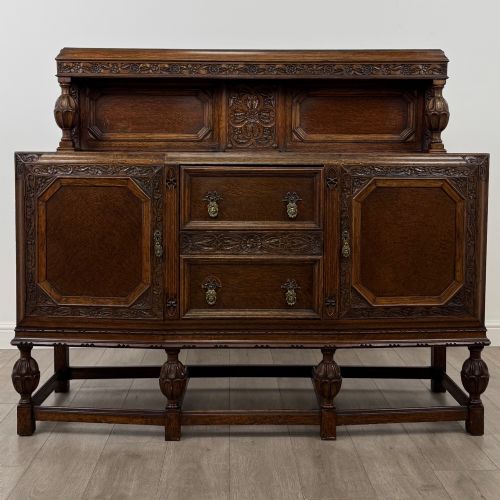
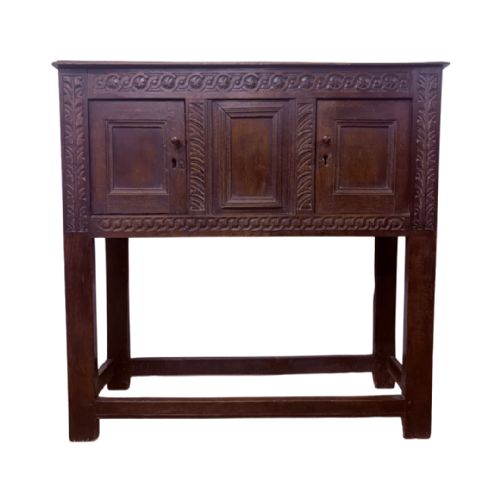
An oak storage cupboard sideboard combines utilitarian utility with traditional timber framing, originating across periods from the seventeenth century through to the 1930s. These items encompass low linen press cupboards, court cupboards, dresser bases, enfilades, and side cabinets designed for domestic storage.
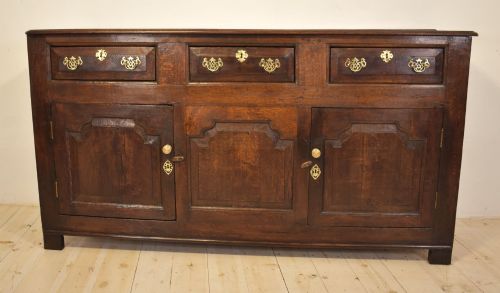
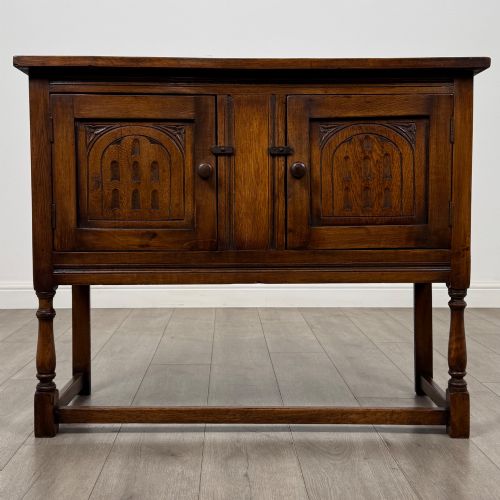
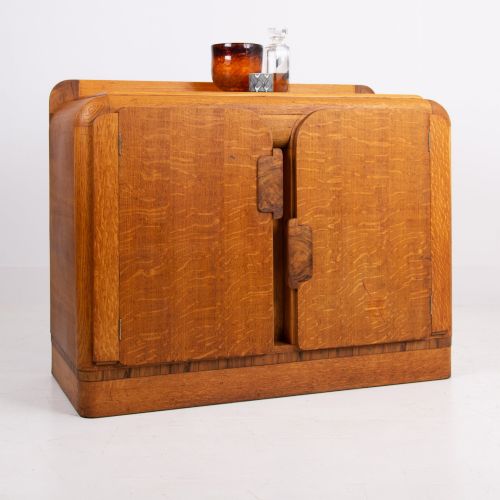
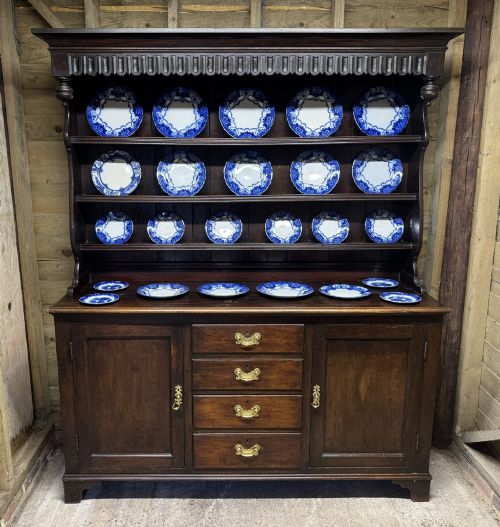
The pieces appearing on this page range from early joined construction examples to Edwardian revival iterations and Arts and Crafts commissions. Buyers will find regional variants such as Welsh dressers and Lancashire dresser bases sitting alongside French provincial house maid cupboards.
Forms vary from solid low cupboards to substantial carved sideboards fitted with breakfront drawers and display surfaces. The selection reflects domestic utility traditions spanning multiple centuries of British and continental woodworking.
Materials and construction methods
The primary material is oak, often specified as English oak or golden oak, complemented by secondary timbers like fruitwood, pine, and walnut in specific regional pieces. Joinery techniques rely heavily on traditional joined frameworks, solid plank construction, and panel framing such as linenfold carving.
Hardware details incorporate brass and iron hinges, handles, and locks that secure doors and drawers. Surface treatments range from natural wax finishes to limed oak applications seen in later twentieth-century studio workshops.
House maid cupboards kept the morning fires burning by hiding kindling safely away from wandering pets.
Factors that define quality
Quality rests in the integrity of the timber selection, the crispness of hand-carved decorative elements, and the retention of original brass or iron hardware. Pieces showing thoughtful proportion, such as well-balanced breakfront drawers and stable joined bases, represent superior craftsmanship.
The pedigree of design execution separates standard commercial production from workshop-attributed pieces associated with notable makers and schools like the Cotswold School or Liberty. Originality of surface finish and the absence of intrusive modern alterations heavily influence the standing of each piece.
Liberty·Gomme·Peter Waals·Heals of London
The Oak Storage Cupboard Sideboard Glossary
- Court cupboard
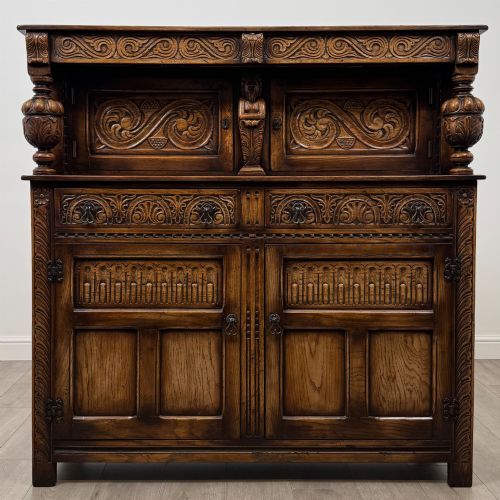
- A traditional heavy storage unit featuring an upper recessed section supported by pillars above a lower cabinet. These items date back to seventeenth-century traditions.
- Enfilade
- A long sideboard or cabinet structure, typically of French origin, featuring multiple doors in a continuous line. This form serves large dining or living spaces.
- Linenfold
- A carved panel motif resembling folded cloth, frequently utilised on cupboard doors during the Tudor revival and Edwardian periods.
- Dresser base
- A low wooden storage cabinet with drawers and a flat top surface, historically used in kitchens for food preparation and tableware storage.
- Limed oak
- A wood finishing technique that fills the open grain of oak with a white or pale substance to create a lighter, textured surface popular in the early twentieth century.
Oak Storage Cupboard Sideboard: Frequently Asked Questions
How do I date an oak sideboard?
Dating relies upon examining construction methods, such as hand-cut dovetails, joined framing, and timber characteristics. Secondary evidence includes tool marks, hardware styles, and regional design traits.
Earlier pieces from the seventeenth and eighteenth centuries often display pegged joints and uneven hand-planed boards. Later Edwardian and 1930s examples incorporate standardised machine fixings and specific stylistic revivals.
Where were these cupboards traditionally used?
These pieces served primarily in dining rooms, kitchens, and halls for storing tableware, linens, and provisions. Larger dresser bases and enfilades functioned as central working surfaces in country houses and farmhouses.
Smaller side cabinets and low cupboards adapted easily to domestic parlours and sitting rooms as storage evolved. Their robust build suited heavy daily use across generations.
What is the difference between a sideboard and a court cupboard?
A sideboard functions primarily as a low serving and storage surface with drawers and cupboards arranged linearly. It prioritizes surface display and accessible lower storage.
A court cupboard incorporates a distinct two-tier architectural silhouette with a recessed upper cabinet. This format derives from earlier centuries and emphasises enclosed vertical storage compartments.
How should I care for antique oak furniture?
Maintain antique oak by keeping it away from direct heat sources and strong sunlight, which can dry out and split the timber. Regular dusting with a soft, dry cloth preserves the surface.
Apply a traditional beeswax polish occasionally to nourish the grain and protect the finish. Avoid silicone-based sprays that can penetrate the wood pores.