

Art Nouveau Urn
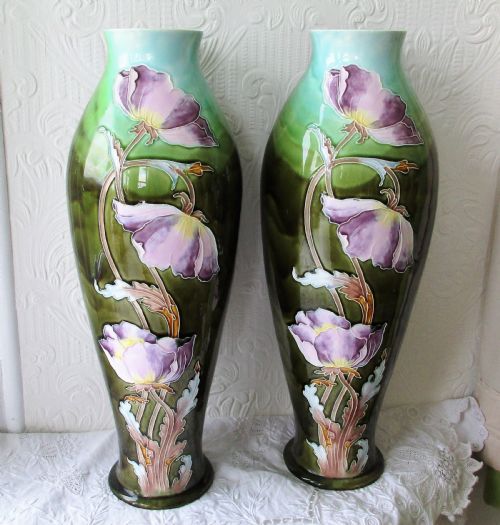
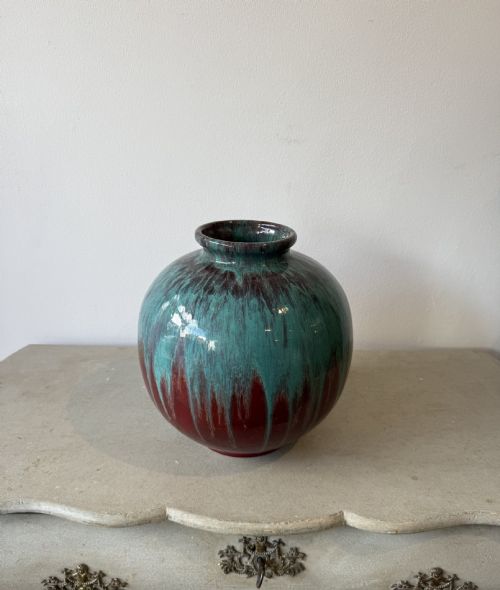
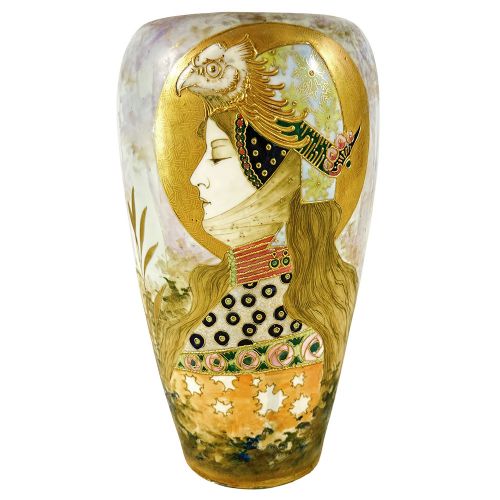
When you search for an art nouveau urn, you look for sculptural vessels of the organic, flowing style that defined the turn of the twentieth century.
Art Nouveau Urn
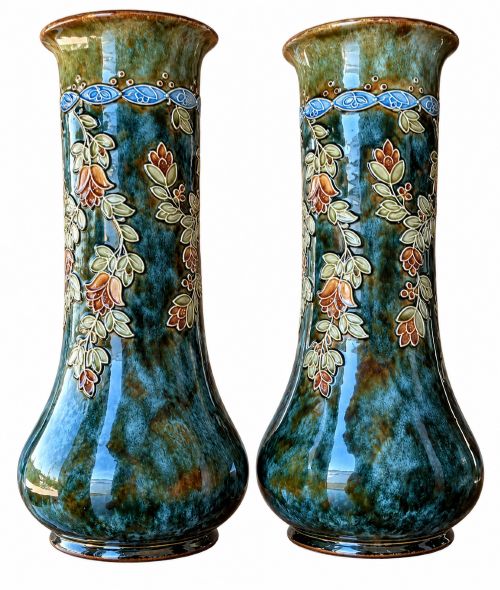
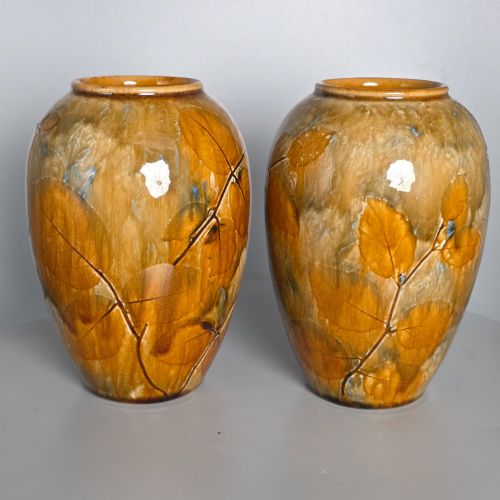
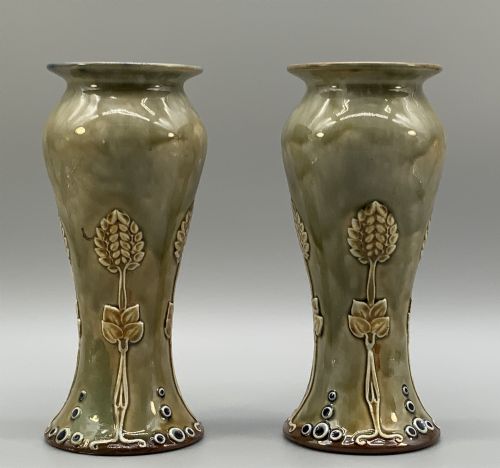
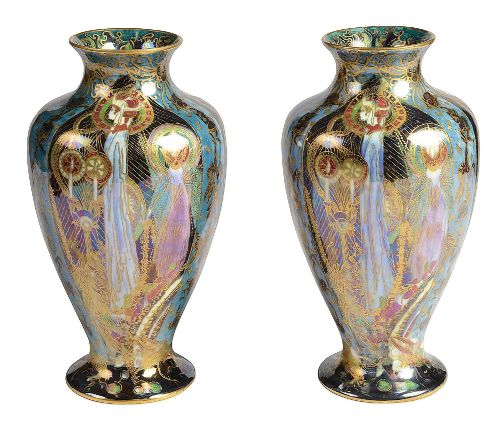
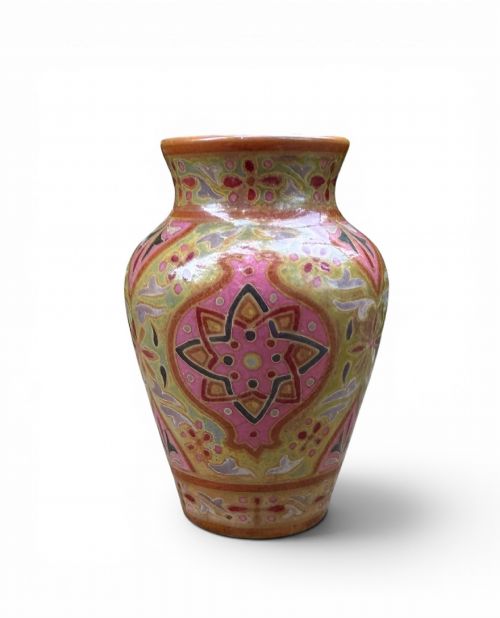
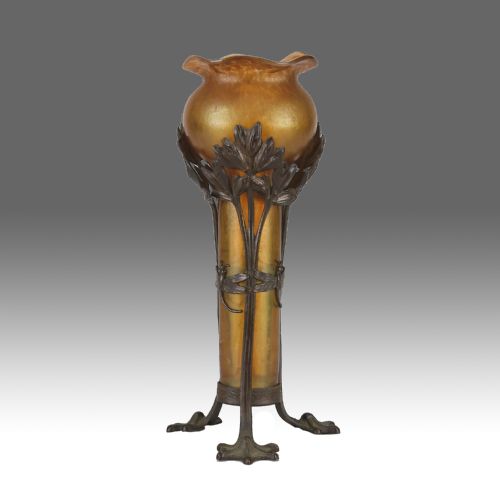
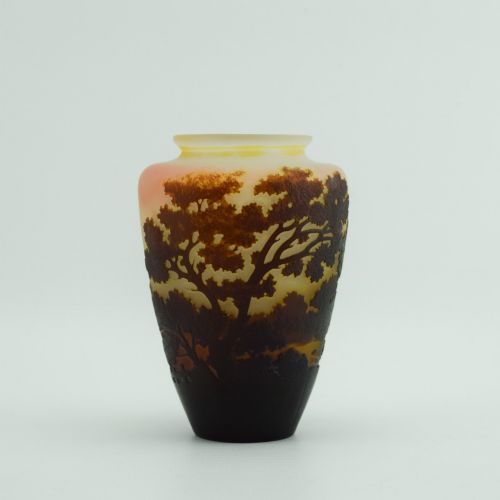
An art nouveau urn encompasses vessels primarily shaped as vases, jardiniere stands, and decorative containers designed during the late nineteenth and early twentieth centuries. These pieces reflect the sinuous lines and botanical motifs typical of the period, ranging from domestic ceramics to monumental cast metal creations.
The objects appearing in these selections span diverse European centres, including British art potteries, French ceramic studios, and Bohemian glassworks. Domestic interiors of the Edwardian era and the preceding Victorian epoch utilised these vessels for floral display or as standalone decorative sculpture.
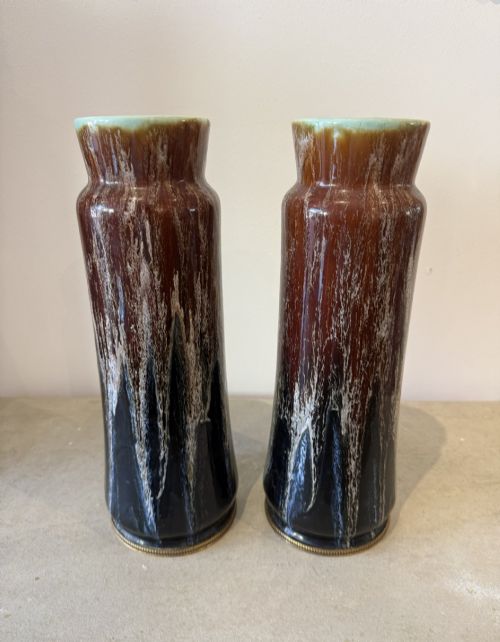
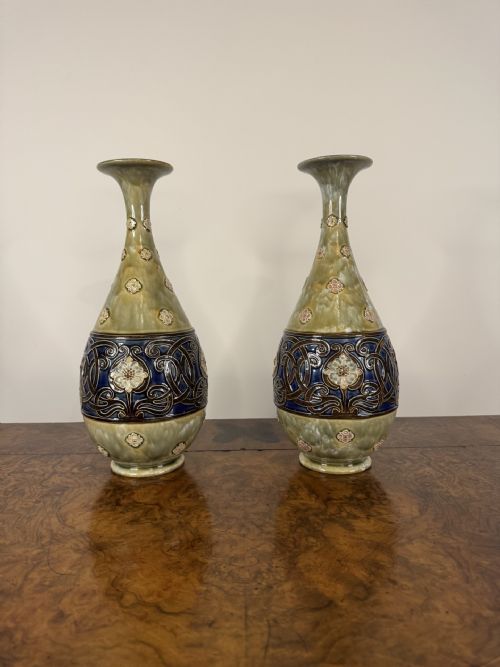
Buyers frequently encounter stoneware baluster shapes from English potteries alongside iridescent art glass from continental makers. Whether formed from earthenware, bronze, or glazed ceramic, each piece demonstrates the characteristic floral and whiplash decorative vocabulary of the era.
Materials and production methods
Pottery production relied on earthenware, stoneware, and ceramic bodies shaped by hand or thrown on a wheel, then finished with lustrous glazes, enamel, or hand-painted botanical patterns. Workshops applied gold leaf and metallic oxides to accentuate low-relief plant forms and geometric borders.
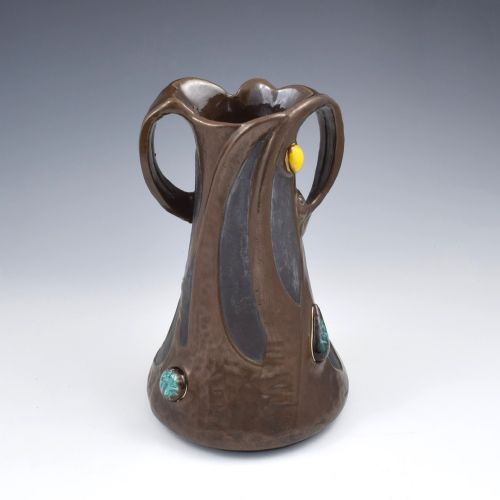
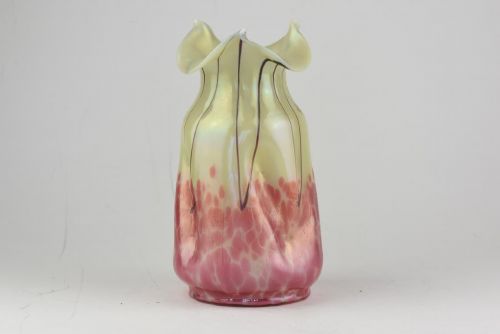
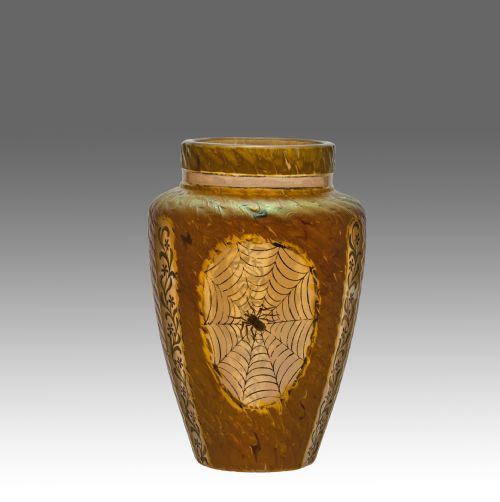
Glassmakers utilised heat manipulation techniques to achieve iridescent surfaces, silvered armorial finishes, and organic spider web patterns within the hot metal. Metalworkers cast bronze, copper, and chrome into figural mounts and vessel bodies, often incorporating applied cabochons or repoussé botanical details.
Object forms recorded in the evidence include baluster vases, jardiniere stands, mantel clocks, stick stands, and three-handled bowls.
Distinctions in craftsmanship and design
Quality rests upon the precision of the modelling and the depth of the glaze or metal patination. Superior examples display crisp definition in hand-chased bronze mounts and complex chemical reactions in iridescent glass rather than flat, uniform surfaces.
Pieces bearing the signature or specific pattern attribution of noted designers and major ceramic factories demonstrate superior artistic execution. The complexity of the firing process in lustre wares and multi-glazed stonewares separates standard production items from exceptional studio achievements.
Royal Doulton·Wedgwood·Boch Freres·Bretby Pottery·Pallme Konig·Loetz·Kralik Glass·TG Green·Loetz Witwe·Minton·Wileman Intarsio·Shelley·Clement Massier·Ernst Wahliss·Thomas Gurney
The Art Nouveau Urn Glossary
- Baluster
- A tall vessel form characterised by a rounded body that tapers toward the base and neck, frequently seen in stoneware and ceramic vases.
- Iridescent glass
- Glass treated with metallic salts while hot to produce a rainbow sheen that mimics natural oil films, heavily utilised by Bohemian glass houses.
- Jardiniere
- A large decorative ceramic or metal pot designed to hold growing plants or cut floral arrangements within a domestic interior.
- Stoneware
- A robust, vitrified ceramic fired at high temperatures, capable of holding water without porosity and favoured by late Victorian and Edwardian art potteries.
- Lustre glaze
- A type of ceramic finish containing metallic elements that create a reflective, multicoloured surface effect during reduction firing.
Art Nouveau Urn: Frequently Asked Questions
What defines an art nouveau urn?
These vessels are defined by asymmetrical flowing lines, whiplash curves, and stylised motifs derived from plant stems, flowers, and insect wings. They emerged during the late nineteenth century as a deliberate departure from historic revival styles.
Craftsmen translated these organic themes into ceramics, glass, and cast metals, creating functional containers that doubled as decorative sculpture for the home.
How were these vessels used?
Original owners utilised these pieces primarily for holding cut flowers, potted plants, or dried botanical displays within the parlour or drawing room. Larger examples stood on the floor or upon dedicated jardiniere stands.
Many metal and ceramic pieces functioned entirely as decorative ornaments, placed on mantelpieces or cabinets to showcase the artistic taste of the household.
How do I care for antique art glass and ceramics?
These delicate pieces require gentle cleaning with a soft, dry cloth to remove dust without disturbing fragile iridescent surfaces or gilding. Water should be used cautiously inside antique ceramics to prevent moisture absorption through unglazed areas.
Placement away from direct sunlight preserves the fugitive colours of enamel decoration and prevents thermal shock to fragile historical glass.
How can I distinguish periods within this style?
Early pieces from the 1880s and 1890s often retain lingering Victorian symmetry while introducing transitional floral motifs. Items produced around nineteen hundred fully embrace the radical asymmetry and whip-like curves characteristic of the height of the movement.
Pieces from the 1910s and 1920s frequently show the gradual simplification of forms that bridged the gap toward Art Deco geometric patterns.