

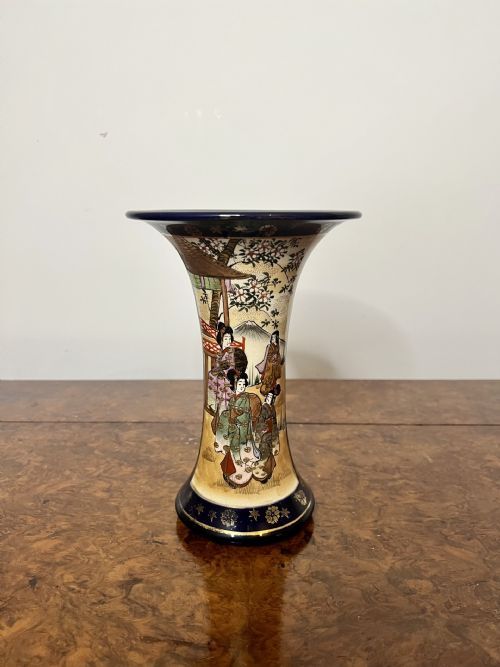


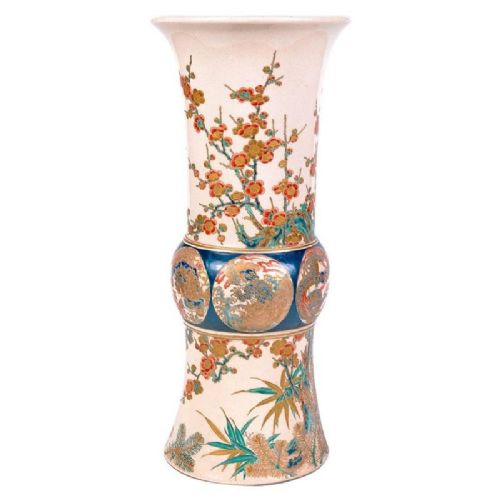


Flared Porcelain Vase
These flared porcelain vase examples span the nineteenth century and Regency periods, offering distinct forms shaped by hand and fired in kilns.
Flared Porcelain Vase
A flared porcelain vase presents an outward-curving neck designed to support arrangement of stems or to stand alone as a decorative vessel. These pieces appear across nineteenth century and Regency periods, reflecting both European manufactories and East Asian export traditions.
The most common form met on this page is the Japanese export vessel, particularly in Imari, Kutani, and Satsuma styles alongside nineteenth century Chinese blue and white porcelain. European examples from English country houses and continental workshops also occur.
Vessels range from large floor-standing decorative vases to smaller spill vases and bottle vases. Their profiles utilise flared necks to balance robust bodies decorated with enamel, paint, and gold leaf.
Materials and construction methods
Makers shaped porcelain clay on the wheel or in moulds before firing the body at high temperatures to achieve vitrification. Cobalt glaze was often applied beneath the clear glaze for blue and white designs, while enamel and gold leaf were added over the glaze in subsequent firings.
Alternative finishes include lacquer applied over black paint on Japanese porcelain bodies. Hand painting provides the primary decorative detail across floral medallions, birds, and narrative scenes.
Flared Porcelain Vase Retail Price Guide 2026
Typical asking prices for flared porcelain vase among the pieces listed under this phrase on Sellingantiques today, from the lower quarter to the upper quarter. They describe what is for sale here now, not the wider market.
Listings feature nineteenth century porcelain alongside Regency and Meiji period examples utilising enamel, gold leaf, and cobalt glaze.
Quality factors in porcelain vases
The precision of the throwing and the refinement of the porcelain body dictate the structural integrity of the vessel. Thinner walls and symmetrical flare indicate greater skill in the kiln.
The execution of hand painting separates standard production from finer work. Careful brushwork in cobalt glaze, enamel, and gold leaf retains crisp detail and harmonious balance across the surface.
The Flared Porcelain Vase Glossary
- Porcelain
- A hard, fine-grained ceramic fired at high temperatures until semi-vitreous and translucent. It forms the impermeable white body of these vessels.
- Imari
- A style of Japanese export porcelain characterised by a palette of underglaze blue, iron red, and gold. It originates from the town of Arita.
- Kutani
- Japanese ceramic ware known for bold coloured enamels and intricate pictorial designs. Pieces often feature iron-based red and gold pigments.
- Spill vase
- A small vertical vessel designed to hold taper candles or spills for lighting fires. These examples date primarily to the early nineteenth century.
- Regency
- An English design period spanning the early nineteenth century. Pieces from this era often display classical restraint and country house provenance.
Flared Porcelain Vase: Frequently Asked Questions
How are flared porcelain vases cleaned?
Dust the surface gently with a soft, dry brush to prevent accumulation in recessed painted areas.
Avoid immersing antique painted or gilded porcelain in water, as moisture can damage overglaze enamels and gold leaf.
Where were Japanese export vases displayed?
These vessels were typically placed on mantelpieces, side tables, or cabinets in nineteenth-century drawing rooms. Their large scale suited prominent display in country houses.
Pairs were often arranged symmetrically to balance interior decorative schemes.
How do I date a porcelain vase?
Examine the base for unglazed clay footrims, kiln marks, and the quality of the glaze pooling. Pigments and painting styles also indicate the period of manufacture.
Comparison with documented pieces from makers like Jacob Petit or Derby provides additional chronological context.
What is a spill vase used for?
A spill vase held slender rolled paper spills used to transfer fire from a hearth to candles or pipes. They sat near fireplaces for daily household utility.
Over time, these functional vessels transitioned into decorative mantel ornaments.