






Art Deco Nest of Tables
An art deco nest of tables offers clever space-saving design paired with striking geometric wood veneers for any interior.
Art Deco Nest of Tables
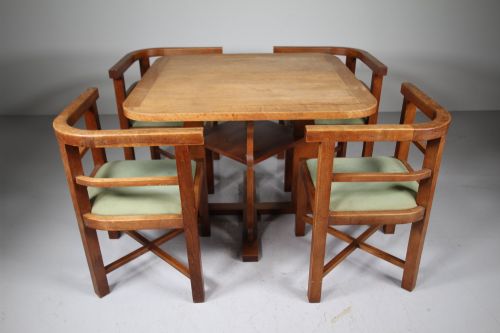
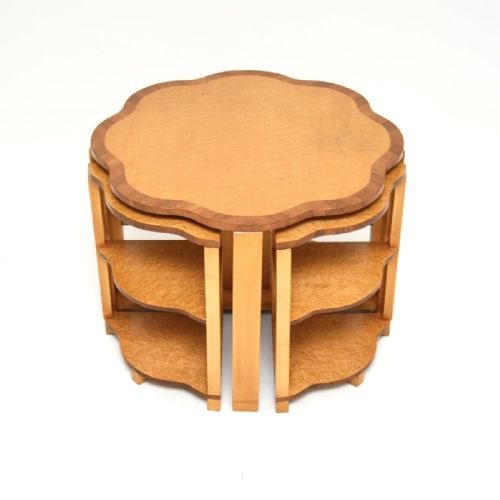
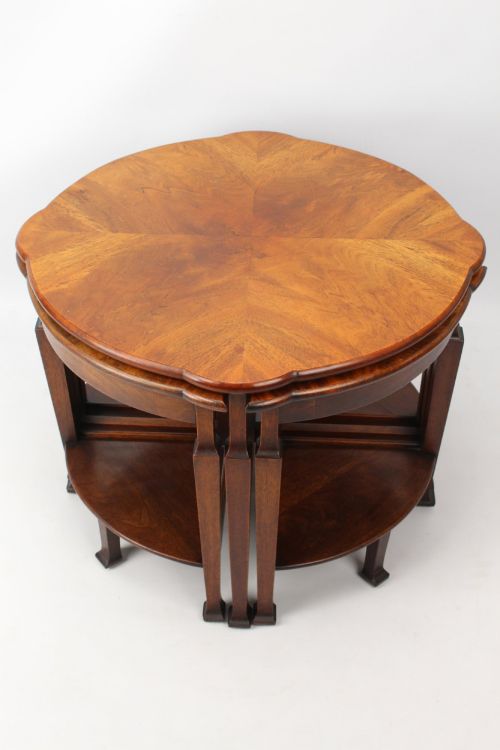
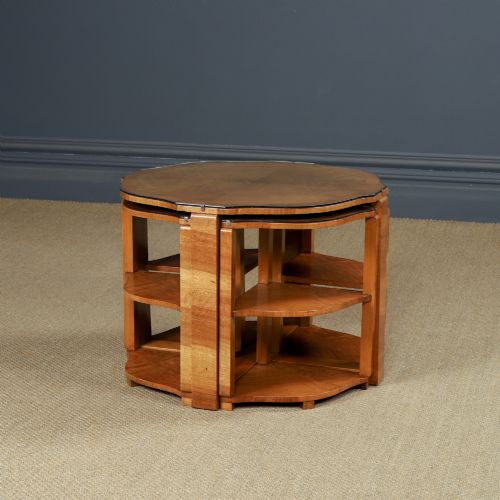
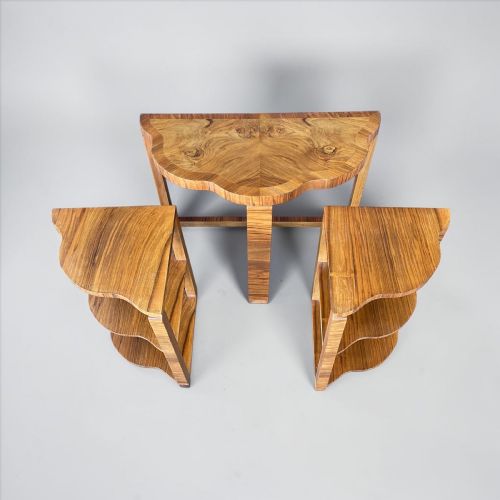
An art deco nest of tables groups multiple small occasional surfaces that slide neatly beneath one another when floor space is required. These pieces emerge primarily from the nineteen-twenties, nineteen-thirties, and nineteen-forties, constructed in English, French, and international workshops.
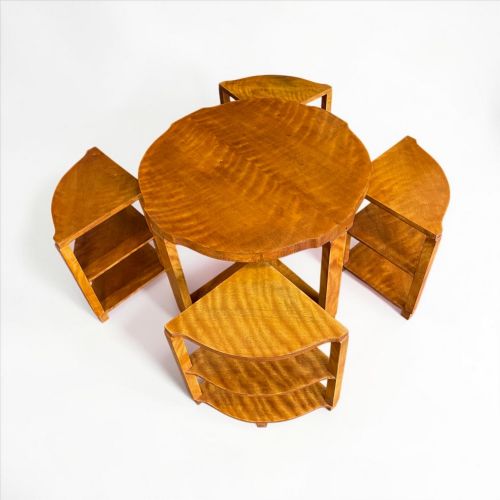
Sets commonly comprise three, four, or five graduating tables designed to function as coffee tables, side tables, or lamp tables. The single round nest of five tables is a frequent discovery on this page alongside standard rectangular tiers.
The aesthetic relies on clean lines, symmetrical arrangements, and tiered skyscraper silhouettes that reflect the modernist movements of the period.
Materials and Construction
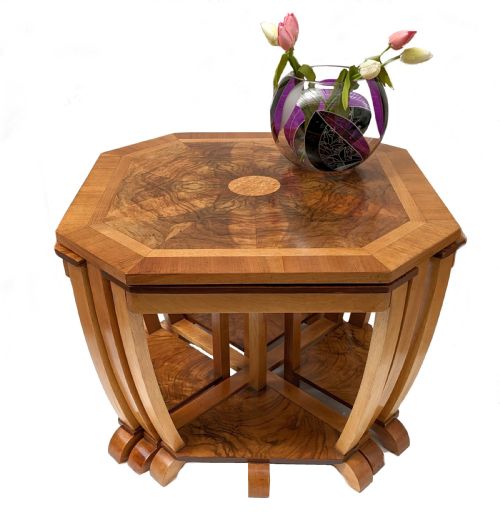
Cabinet makers utilised dense native and exotic timbers, applying figured walnut, burr walnut, birds eye maple, oak, teak, mahogany, and Indian rosewood across the tops. Veneers were selected for their dramatic natural grain patterns and laid symmetrically to create striking visual movement.
Many examples incorporate glass inserts or carved wooden details such as elephants to accent the frames. Construction methods prioritised sturdy joints that allowed smaller tables to glide smoothly into the main framework.
Art Deco Nest of Tables Retail Price Guide 2026
Typical asking prices for art deco nest of tables among the pieces listed under this phrase on Sellingantiques today, from the lower quarter to the upper quarter. They describe what is for sale here now, not the wider market.
Listings feature woods spanning walnut, burr walnut, oak, teak, mahogany, birds eye maple, satinwood veneer, and Indian rosewood.
Assessing Quality and Craftsmanship
Quality rests in the choice of timber veneer and the precision of the nesting mechanism. Sets featuring high-figured burr walnut or blonde birds eye maple indicate superior workshop selection.
Maker attribution separates standard production from exceptional examples, with works originating from renowned firms commanding greater attention. The structural integrity of the graduating slides determines how well the tables endure daily use.
Harry and Lou Epstein·The Hille Furniture Company·Heal's
The Art Deco Nest of Tables Glossary
- Burr walnut
- A highly figured timber harvested from walnut tree growths, producing swirling grain patterns prized by period cabinet makers.
- Quartetto
- A matched set of four tables designed to nest together. This traditional term appears frequently in descriptions of modular multi-tier furniture.
- Quintetto
- A matched set of five tables designed to nest together. These larger groupings often require circular or rotating configurations.
- Veneer
- A thin slice of decorative wood applied over a stable secondary timber base. This technique allowed makers to display dramatic natural grain across flat surfaces without warping.
- J Nest
- A specific interlocking table design where smaller pieces slide into a main frame from the side. This configuration forms a distinct shape reminiscent of the letter J.
Art Deco Nest of Tables: Frequently Asked Questions
How do I use an art deco nest of tables?
These tables stack together compactly to function as a single central coffee table when floor space is at a premium. Individual tiers pull out easily to serve drinks or hold lamps beside seating.
Separating the tables provides multiple small surfaces across a room during gatherings. Once entertaining concludes, the smaller tiers slide back into the main frame to restore the room layout.
What woods were used for art deco nesting tables?
Makers constructed these tables using walnut, burr walnut, oak, teak, mahogany, and birds eye maple. Exotic selections like Indian rosewood also appear across period workshops.
High-grade pieces frequently showcase figured veneers that highlight natural wood grain. Lighter blonde maples and darker figured walnuts define the palette of the era.
How do I identify an Epstein nest of tables?
Epstein pieces often feature substantial construction in burr walnut or birds eye maple, frequently configured as larger sets of four or five tables. The craftsmanship reflects high-end London cabinet making from the nineteen-thirties.
Proportions remain robust, and the timber selection utilises strongly figured veneers. Many examples are documented through maker attributions in the design records.
What is a J nest table?
A J nest is a specialised configuration where the smaller tables slide sideways into a primary vertical frame. This layout creates an asymmetric silhouette when viewed from the front.
This form was popularised by prominent London furniture firms during the nineteen-thirties. The design maximises utility while presenting a distinct architectural profile.