


Art Deco Fruit Bowl
An art deco fruit bowl brings geometric symmetry and striking materials to a table, combining utility with distinct period design.

What an art deco fruit bowl is
When you search for an art deco fruit bowl, you are looking at functional tablewares and centrepieces that span the early decades of the twentieth century. These vessels served practical dining functions while displaying the signature lines and motifs of the movement.
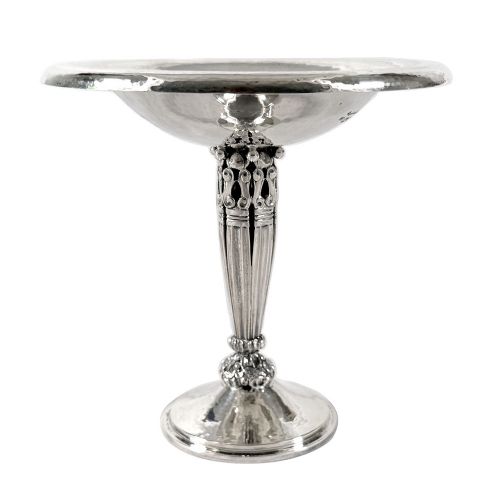
On this page, you are most likely to meet pieces originating from the nineteen-tens through to nineteen-thirty. The selection encompasses diverse forms including pedestal bowls, tazze, comport dishes, and handled baskets.
Origins represented across these examples stretch from English potteries and silversmiths to continental glassmakers and metalworkers. Each piece reflects how different European workshops interpreted the modernist aesthetic for the domestic interior.
How they were made
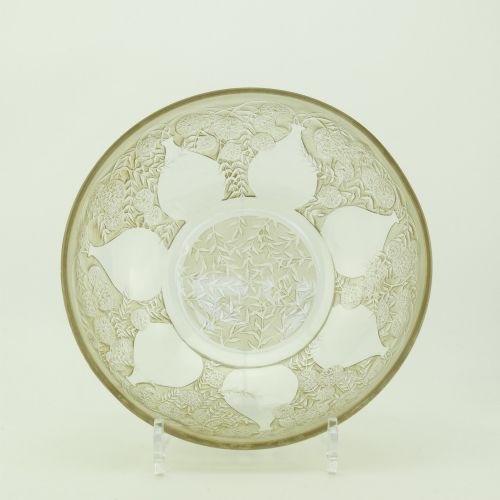
The materials recorded in these items range from pressed, cut, and opalescent glass to earthenware, silver plate, chrome, pewter, and wood. Makers shaped these substances using industrial techniques adapted for decorative domestic arts.
Glass vessels often utilised mould-pressing and staining to achieve deep colour saturation and tactile relief patterns. Metal items combined hammered surfaces, pedestal mounting, and chrome plating to create contrasting textures and clean metallic profiles.
Retail Price Guide 2026
Typical UK retail prices for art deco fruit bowl, calculated from the Sellingantiques database of over a million retail prices indexed since 2003. This retail price guide relies exclusively on Sellingantiques data; no external sources or auction records are used, so the figures do not describe the wider market.
Some handled metal baskets were designed to hold bread yet double perfectly for autumn apples.
What varies in quality
Simpler production pieces rely on standard moulded forms and basic plated finishes. The distinction lies in the crispness of the detailing and the harmony between material selection and the underlying geometric form.
René Lalique·W M F·Walker & Hall·Mazoyer·Maling
The Art Deco Fruit Bowl Glossary
- Comport
- A large bowl raised on a stem or foot, traditionally used for serving fruit or sweets at the table. These vessels elevate the display above the surface of the dining table.
- Tazza
- A shallow bowl or saucer mounted on a foot and stem, originating from Renaissance forms and revived during the twentieth century. It functions similarly to a comport for presentation.
- Opalescent glass
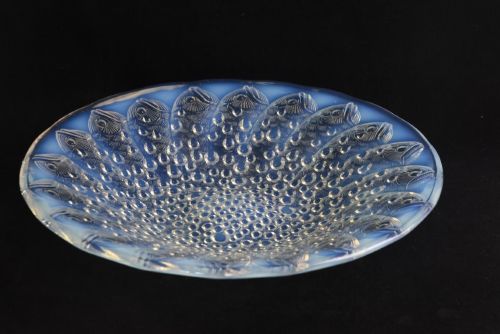
- Glass containing ingredients that cause it to milky-blue or fire-like appearance when illuminated from different angles. This technique was favoured by major French makers of the era.
- Silver plate
- A base metal coated with a thin layer of silver through electroplating or other chemical processes. It provided the luxurious appearance of solid silver at a more accessible production cost.
Frequently Asked Questions
How were these metal baskets used originally?
Silver plated and chrome metal baskets with swing handles or pierced rims served multiple functions on the dining table or sideboard. They held fresh fruit, bread rolls, or pastries for communal dining.
Their openwork metal construction allowed air circulation around fruit while presenting an ornamental metallic sheen that reflected dining room lighting.
How can I tell glass types apart?
Pressed glass shows uniform machine-moulded patterns often with sharp mould seams, whereas cut glass exhibits hand-polished facets and linear incisions. Opalescent glass displays a characteristic milky luminescence that shifts colour when viewed against light.
Examining the weight, surface texture, and clarity under bright light helps distinguish between simple pressed wares and higher grade studio pieces.
How do I style an art deco bowl today?
These bowls work well as standalone sculptural objects on sideboards or coffee tables, where their geometric lines and coloured glass or metal finishes can be appreciated without clutter. They also function practically to hold fruit or decorative spheres.
Pairing a pedestal comport or coloured glass vessel near a light source enhances the opacity and tone of the material within a modern interior.