









Art Deco Bronze Birds
Art deco bronze birds capture streamlined speed and avian elegance, bringing sleek modernist movement to any mantel or desk.
Art Deco Bronze Birds
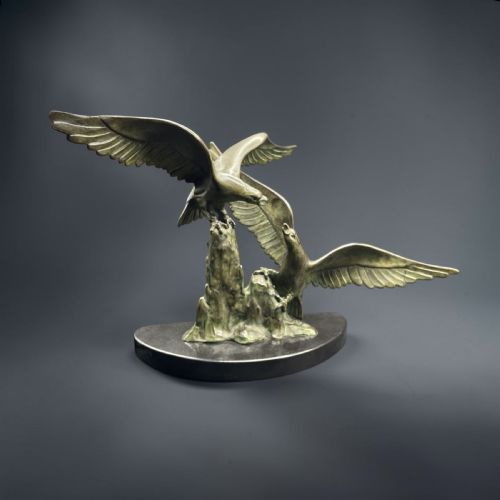
Art deco bronze birds encompass sculptures, bookends, clocks, lamps, and desk accessories created across the early decades of the twentieth century. These pieces record natural forms transformed by modernist design, depicting budgerigars, pheasants, pigeons, seagulls, albatrosses, pelicans, songbirds, and lovebirds.
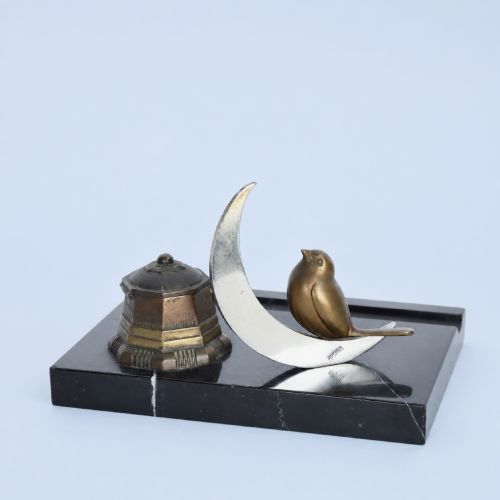
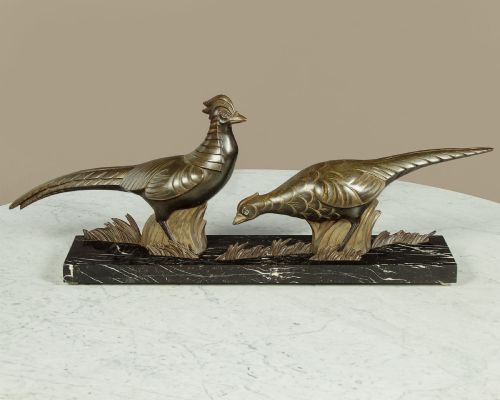
The version you are most likely to meet on this page is a French or Austrian casting from the nineteen-twenties or nineteen-thirties, frequently mounted upon a contrasting plinth of black or variegated marble. Figures appear either as standalone sculptural studies or integrated into functional objects such as inkwells, night lights, and mantel garnitures.
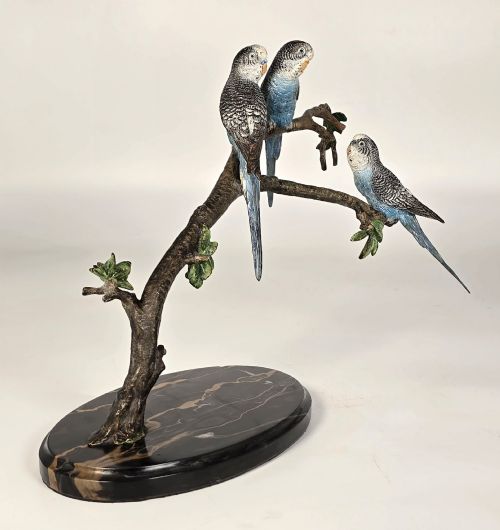
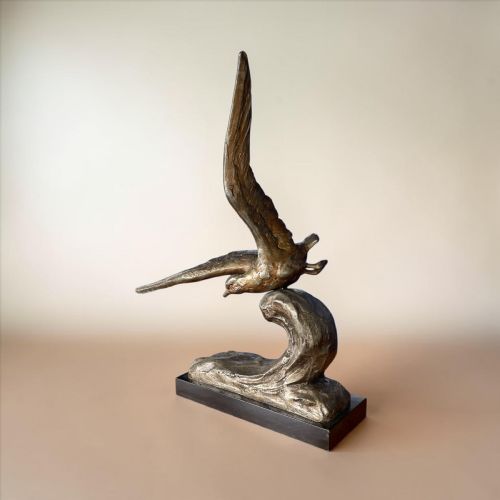
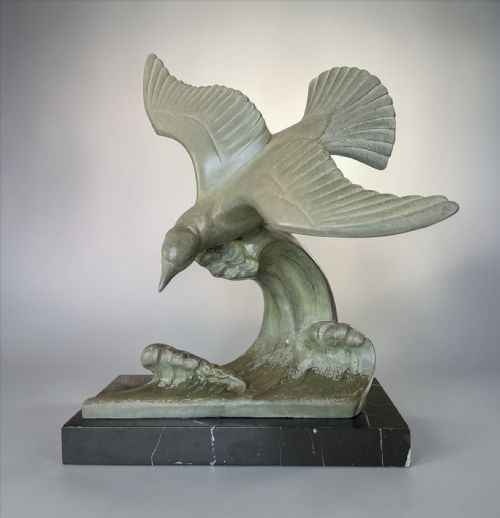
Makers and sculptors of the period rendered these avian subjects with varying degrees of realism, ranging from cold painted budgerigars perched on branches to stylised seabirds caught mid-flight above crested waves. French pieces dominate the selection, often combining metalwork with glass, onyx, or marble bases.
Materials and construction
Foundries utilised bronze and spelter as the primary metals for casting these avian figures, frequently applying cold painting, gilding, or nickel plating to achieve surface colour and sheen. Spelter provided a workable alternative to bronze, allowing intricate casting for mood lamps and decorative items.
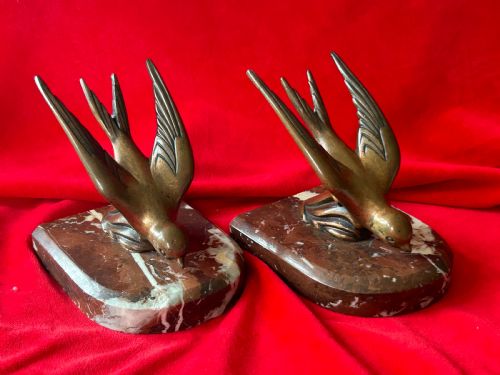
Heavy bases of black marble, onyx, and occasionally cut crystal or glass grounded the dynamic metal figures. Artisans mounted the birds onto these stone plinths using threaded bolts or pins, combining organic mineral patterns with metallic contours.
Art Deco Bronze Birds Retail Price Guide 2026
Typical asking prices for art deco bronze birds among the pieces listed under this phrase on Sellingantiques today, from the lower quarter to the upper quarter. They describe what is for sale here now, not the wider market.
Materials paired with the metal birds include marble, onyx, glass, and crystal across various functional object types.
Separating the ordinary from the exceptional
Quality rests upon the crispness of the casting and the sensitivity of the chisel work applied to the metal after it left the mould. Superior examples retain fine feather detailing, balanced proportions, and secure, well-fitted mounting to their stone or marble bases.
The richness and preservation of surface finishes, whether cold painted polychrome colours, gilded highlights, or patinated bronze, dictate the desirability of a piece. Finer works also demonstrate a confident capture of avian movement, distinguishing mass-produced items from artistic sculpture.
Frederique Cederlund-Ozanne·Zoldan Kovats·Paul Joris·P.MAREC·Herzig·BECQUEREL
The Art Deco Bronze Birds Glossary
- Cold painted
- A technique where non-fired paint is applied to bronze or metal sculptures after casting. This method allowed makers to render vibrant plumage on birds like budgerigars and pheasants.
- Spelter
- A zinc alloy commonly utilised as a cost-effective substitute for bronze during the period. It accepts patination and plating well, often appearing in lamps and decorative figures.
- Garniture clock
- A clock accompanied by matching side ornaments, such as vases or sculptural figures. These sets formed symmetrical centrepieces for mantelpieces.
- Desk tidy
- A desktop container or tray designed for office supplies, frequently mounted with decorative bronze figures. They combine utility with the sculptural styling of the era.
- Patination
- The natural or artificial ageing and coloration of a metal surface over time. It gives depth and character to the bronze skin of the birds.
Art Deco Bronze Birds: Frequently Asked Questions
How do I clean and care for them?
Dust the metal and marble surfaces gently with a soft, dry cloth to prevent the accumulation of dirt. Avoid chemical polishes, particularly on cold painted or patinated areas, as abrasive cleaners will strip the original surface finish.
Keep pieces away from direct sunlight and damp environments to protect the marble bases and fragile painted details. Handle the sculptures by their solid sections rather than delicate wings or tails.
How can I tell the period?
Pieces typically date from the nineteen-tens through the nineteen-thirties, aligning with the rise and peak of the art deco movement. Stylistic cues such as streamlined aerodynamic lines, geometric marble plinths, and typical foundry signatures point directly to this era.
Construction methods, including older screw fittings and the specific type of marble used in the base, also help confirm the age of the casting. Archive records show consistent production styles across these specific decades.
Where were these pieces used originally?
They served as decorative ornaments in homes and offices, placed upon mantelpieces, desks, and side tables. Functional items like lamps, clocks, and inkwells brought avian sculpture into daily domestic routines.
Larger sculptures stood alone on furniture surfaces or pedestals, while bookends anchored rows of volumes on library shelves. Their design was meant to catch the eye in well-appointed interior spaces.