
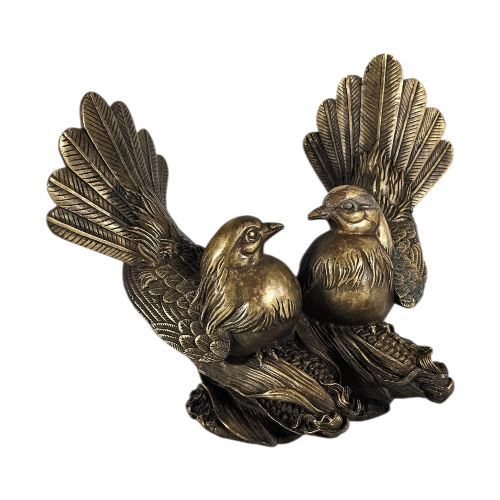
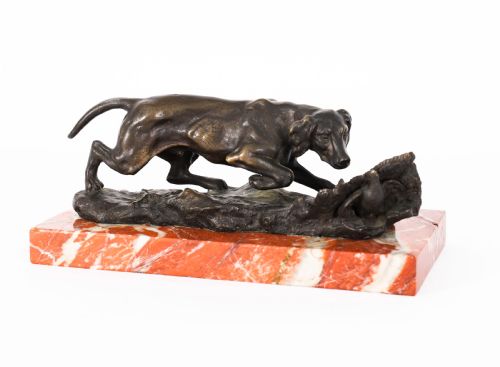
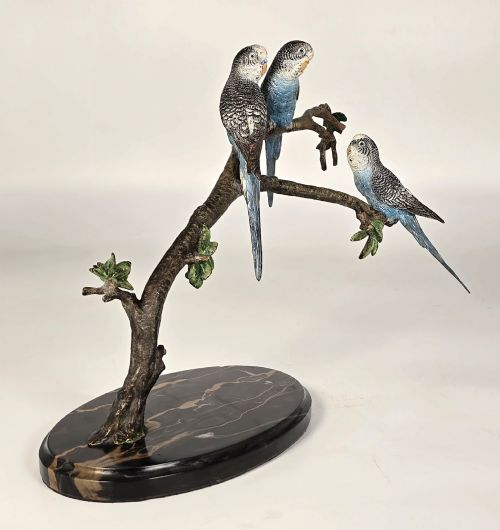
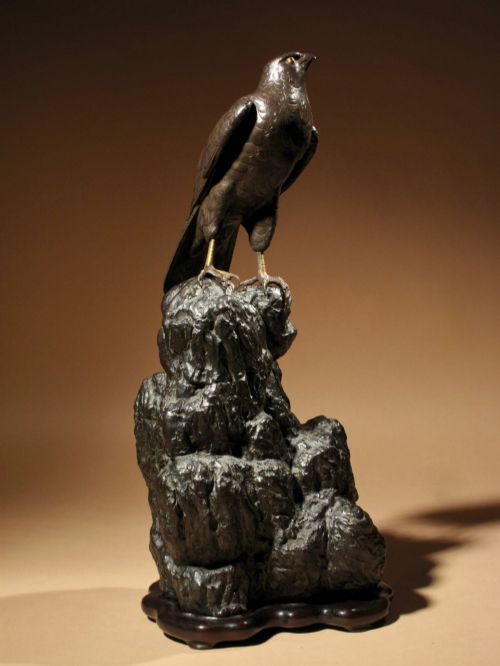
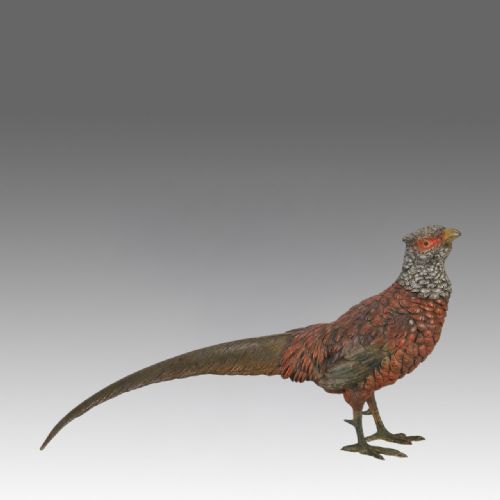


Vintage Bronze Bird Figurine
A vintage bronze bird figurine brings avian form into domestic spaces through enduring metalwork.
Vintage Bronze Bird Figurine
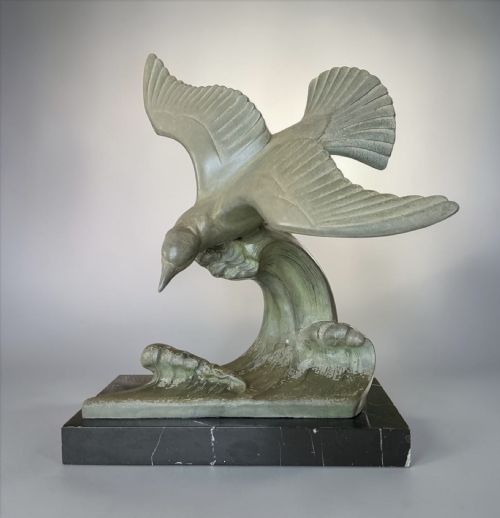
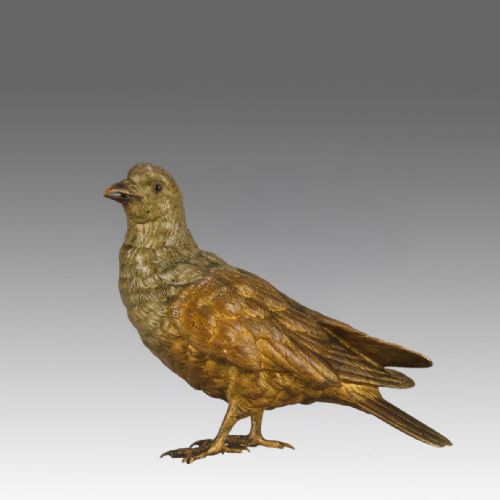
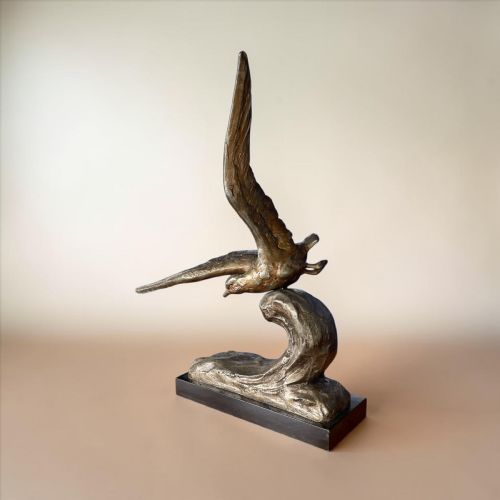
When a collector searches for a vintage bronze bird figurine, they encounter sculptural works ranging from small desk accessories to substantial animalier studies. The selection spans periods from the nineteenth century through the Art Deco era, capturing species from domestic pigeons to exotic parrots.
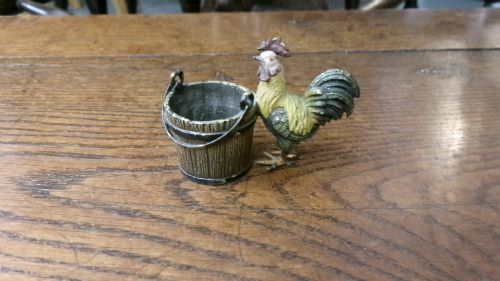
Many examples originate from Austrian foundries specialising in cold-painted techniques, while others reflect French Art Deco aesthetics or nineteenth-century animalier traditions. These pieces frequently incorporate natural stone bases such as marble or onyx to support the metal sculpture.
Materials and Techniques
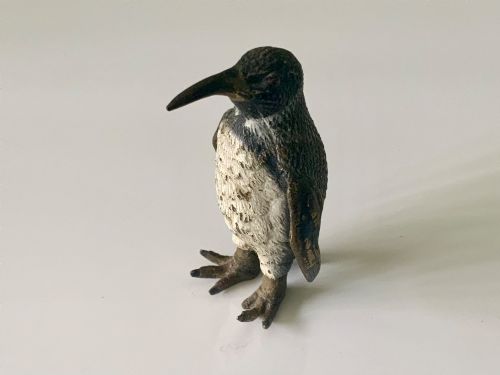
The primary material is cast bronze, sometimes complemented by brass or nickel bronze, shaped through traditional foundry methods. Many pieces receive polychrome or enamel paint applied in cold-painting techniques directly onto the metal surface.
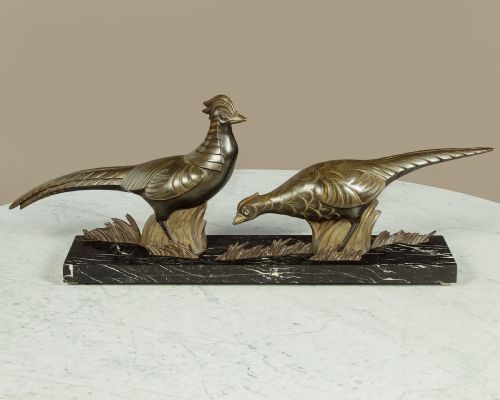
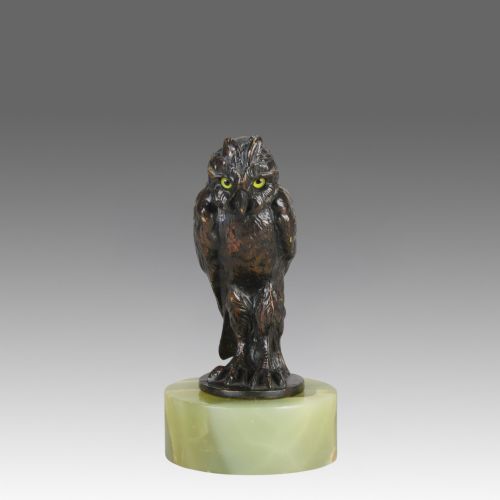
Foundations often utilise contrasting natural materials, mounting heavy bronze subjects upon bases carved from marble, onyx or wood. Gilt finishes and surface patination further define the visual character of these sculptures.
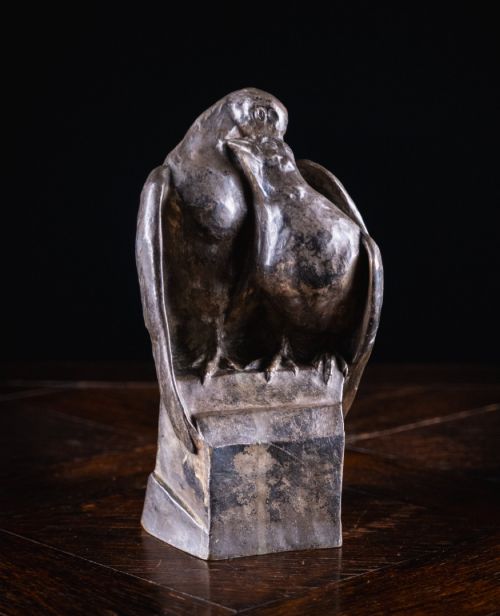
Listings feature bronze bird figures mounted on marble, onyx and wooden plinths.
Distinctions in Execution
The standard of a vintage bronze bird figurine depends largely on the fidelity of the casting and the sensitivity of the surface finishing. Master foundries achieve anatomical precision in feathers and posture that lesser workshops miss.
The preservation of original cold-painted surfaces heavily influences the integrity of the piece. Finer works display nuanced polychrome details that remain intact across intricate forms like budgerigars and pheasants.
Carl Kauba·Franz Bergman·Frederique Cederlund-Ozanne·Zoldan Kovats·P J Mêne·Barye·P.MAREC·Baetens London
The Vintage Bronze Bird Figurine Glossary
- Cold-painted
- A method where paint is applied to cured bronze without subsequent firing at high temperatures. This technique creates vibrant surface decoration found on Vienna bronzes.
- Animalier
- A nineteenth-century artistic movement dedicated to the realistic portrayal of animals. Sculptors in this style focused on anatomical accuracy and natural movement.
- Vienna Bronze
- Small cast metal sculptures produced in Austrian workshops during the late nineteenth and early twentieth centuries. These items frequently depict birds and animals with detailed cold-painted finishes.
- Patina
- The surface coloration and sheen developed naturally through age or applied artificially by the maker. It highlights the texture of the bronze casting.
- Plinth
- A heavy base of marble, onyx or wood supporting a sculpture. It provides stability and visual elevation for the metal figure.
Vintage Bronze Bird Figurine: Frequently Asked Questions
How do I clean a painted bronze bird?
Dust the surface gently with a soft, dry brush to remove accumulated particles without disturbing the underlying finish. Avoid liquid cleaners and chemical solvents entirely, as these substances can strip fragile cold-painted decoration.
Store the sculpture away from direct sunlight and high humidity to protect enamel and polychrome pigments from fading or flaking over time.
What distinguishes Vienna bronze from other figures?
Vienna bronze figures are characterised by meticulous detailing and distinctive cold-painted colour schemes applied by specialist Austrian artisans. These pieces often capture whimsical or naturalistic bird subjects in compact forms.
Foundry marks and characteristic casting weights help identify authentic Austrian production periods from later reproductions.
Are these bird figures mounted on stone?
Many sculptures incorporate heavy bases of marble, onyx or wood to anchor the metal work securely. These plinths provide structural balance for dynamic compositions such as birds perched on branches.
The integration of stone varies by period, with Art Deco examples frequently utilising geometric marble plinths.
How can I tell nineteenth century pieces apart?
Nineteenth-century animalier sculptures focus heavily on anatomical realism and natural poses derived from direct observation of wildlife. The patination on these older bronzes tends to show deep, natural wear developed over generations.
Signatures or foundry stamps embedded in the metal base often provide definitive clues to the nineteenth-century origin.