


Cold Painted Bird Ornament
A cold painted bird ornament brings vivid avian realism to a desk or cabinet, captured in miniature metal through meticulous hand application.
Cold Painted Bird Ornament
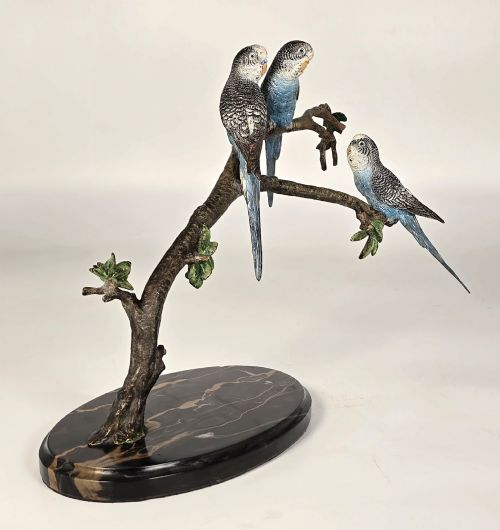
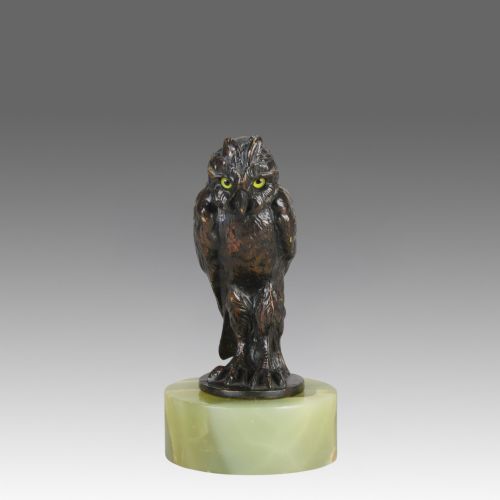
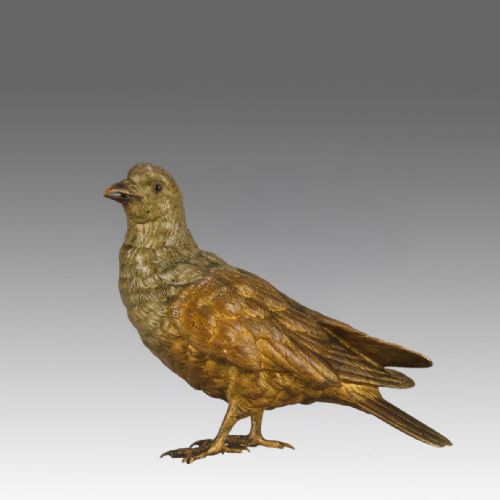
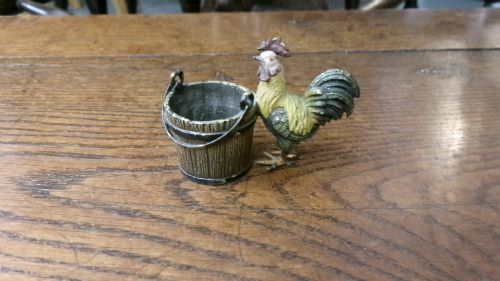
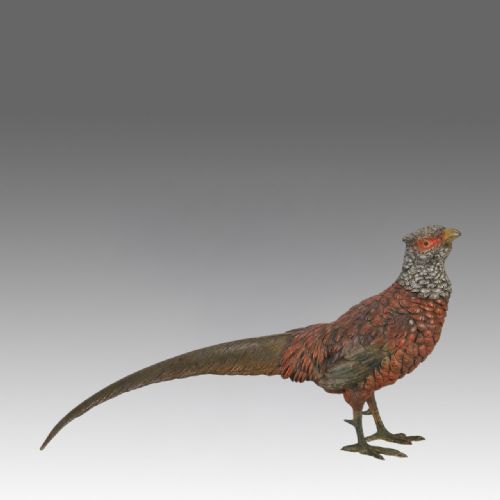
A cold painted bird ornament is a small sculptural piece depicting avian subjects, ranging from budgerigars and owls to penguins and golden pheasants. These figures frequently double as functional items such as pin trays or desk accessories, or stand purely as sculptural studies.
The version most commonly met on this page originates from Austrian foundries, particularly Vienna bronze workshops dating from the nineteenth and early twentieth centuries. These pieces span historical periods from eighteen-fifty through to nineteen-thirty, encompassing Art Nouveau and Art Deco sensibilities.
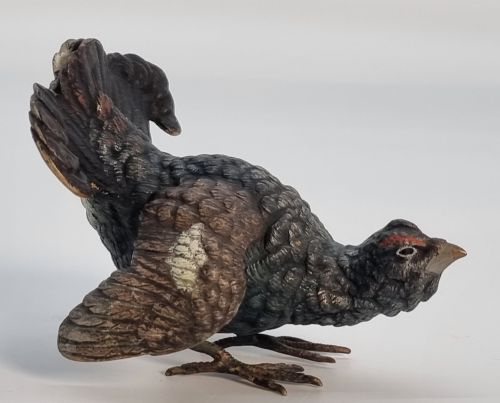
Makers recorded in the evidence include Franz Bergman alongside Nuremberg makers, applying detailed naturalism to species like the capercaillie, kingfisher, and magpie. Collectors encounter both solitary birds perched on branches and mounted figures set upon onyx or marble plinths.
What varies in quality
Quality rests upon the fidelity of the bronze casting and the precision of the hand-applied cold paint. Finer examples display crisp feather texturing and subtle colour blending that mimics living plumage without obscuring the underlying metalwork.
The presence of maker signatures, foundry marks, or original bases such as onyx and marble alters the character of a piece. Superior works maintain their pigment layer intact across intricate anatomical forms like wings and crests.
The listings feature periods spanning the nineteenth century, nineteen-hundred, nineteen-ten, and nineteen-thirty.
Franz Bergman
The Cold Painted Bird Ornament Glossary
- Cold-painted bronze
- A bronze sculpture decorated with unfired paint applied directly to the cold metal surface. This technique allows for vivid polychrome details that kiln-fired enamels cannot achieve.
- Vienna bronze
- Small, naturalistic metal sculptures produced in Austrian workshops, especially during the nineteenth and early twentieth centuries. They are celebrated for their humorous or observant animal subjects.
- Animalier
- A nineteenth-century artistic style focusing on the realistic portrayal of animals. Sculptors working in this manner studied anatomy closely to capture birds and beasts in lifelike poses.
- Pin tray
- A small shallow dish designed to hold common pins, often adorned with figural sculptures. In these listings, birds are frequently mounted upon or beside the tray.
- Plomb de Nuremberg
- A type of metal alloy used for small German figures and ornaments. It provides a distinct substrate for cold painted finishes.
Cold Painted Bird Ornament: Frequently Asked Questions
What is a cold painted bird ornament?
A cold painted bird ornament is a small bronze or metal figure decorated with hand-applied paint that has not been kiln-fired. These pieces capture various avian species in realistic or stylised poses.
Originating largely from Austrian foundries, they served as decorative desk accessories, pin trays, or cabinet sculptures during the nineteenth and early twentieth centuries.
How do I care for a cold painted bronze?
These pieces require gentle handling to protect the delicate pigment layer applied to the metal surface. Keep them away from direct sunlight and moisture to prevent the paint from flaking or fading.
Dust them very carefully with a dry, soft brush rather than using any cleaning liquids or polishes that might strip the original finish.
Are these birds mounted on stone?
Some of the pieces feature integrated stone bases such as onyx or marble, often taking the form of plinths or trays. This adds weight and stability to the metal sculpture.
Others are cast as standalone figures depicting birds perched upon natural elements like leafy branches.
How are different periods identified?
Dating relies on stylistic markers such as the transition from nineteenth-century naturalism into Art Nouveau curves and later Art Deco geometries. Foundry marks and signatures from makers like Franz Bergman also help establish a production era.
The specific choice of bird species and the complexity of the casting provide further clues to the manufacturing decade.