


Art Deco Bronze Animal
These art deco bronze animal sculptures capture the dynamic energy of the interwar period, offering collectors bold feline figures and sleek domestic pets.
Art Deco Bronze Animal
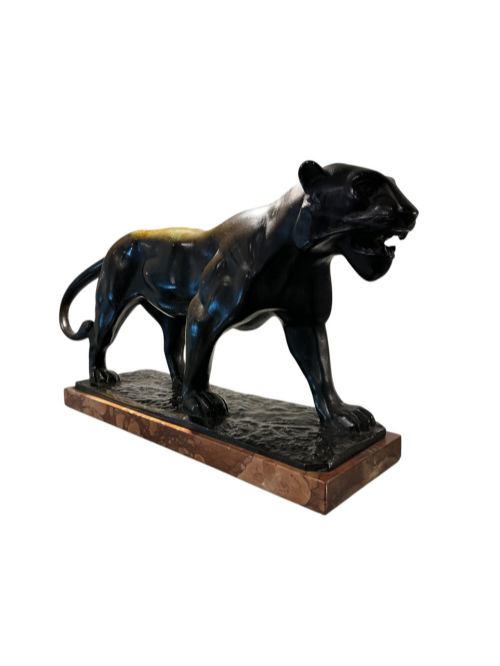
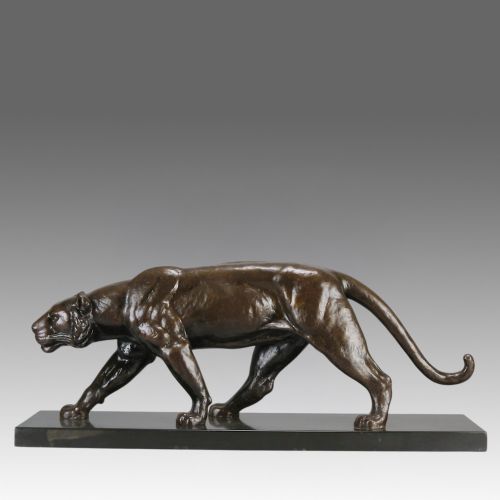
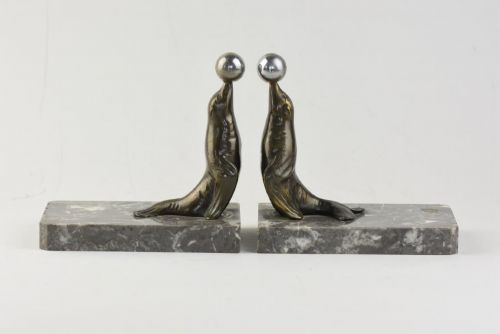
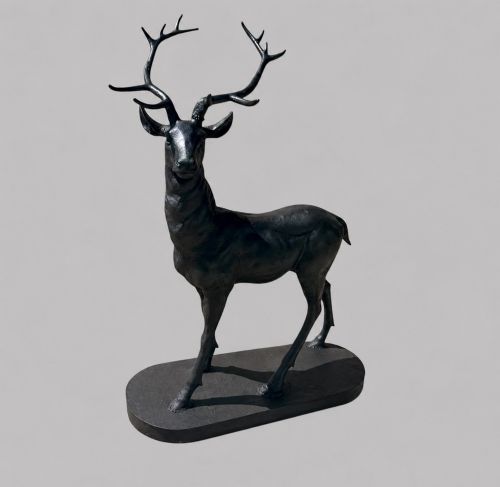
When you search for art deco bronze animal, you encounter sculptures, bookends, table lamps, and desk accessories created during the 1920s, 1930s, and 1940s. The most frequent forms on this page include prowling panthers, hunting dogs, and stags cast in bronze or spelter. These figures usually rest on heavy marble or onyx bases that anchor the composition.
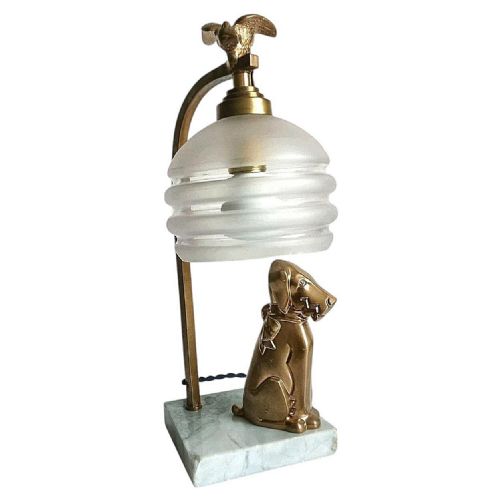
Makers across France, Austria, and Britain produced these works in the animalier tradition, adapting naturalistic forms to geometric modernist aesthetics. While many pieces depict wild cats and racing greyhounds, domestic and farm animals also appear in utilitarian objects such as inkwells and night lights.
How they were made
Foundries utilised hot casting techniques for bronze works, capturing fine details in the musculature of animals like panthers and stags through patination. Spelter served as a more economical alternative to bronze, often receiving painted or metallic finishes to mimic true metal patinas.
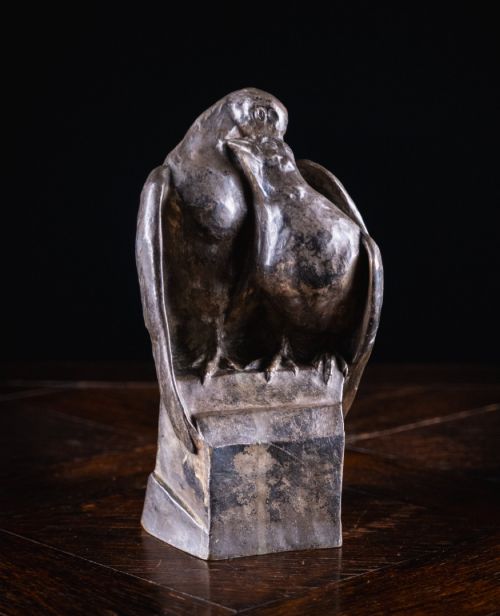
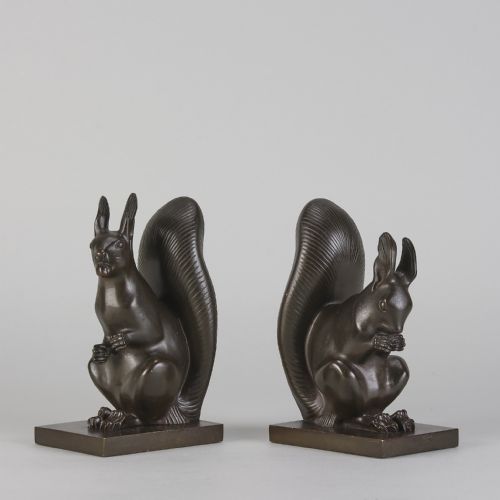
Cats dominate the menagerie, but enthusiastic dogs, pelicans, squirrels, and a solitary bull also hold their ground.
What varies in quality
The selection and mounting of the stone base also influence the overall standard, as well-balanced marble and onyx slabs enhance the sculptural silhouette. The depth and durability of the original patination remain crucial indicators of how carefully the metal was finished.
Frederique Cederlund-Ozanne·Alexandre Ouline·Franz Gruber·C Omin·Bugatti·Karl Hagenaur·Asprey Of London·Albert Hussmann·Michel Decoux·I. Rochard
The Art Deco Bronze Animal Glossary
- Animalier
- A nineteenth and twentieth century sculptural style dedicated to the realistic portrayal of animals. This tradition informed the athletic poses of the hounds and felines produced during the interwar years.
- Spelter
- A zinc alloy commonly utilised as a cheaper substitute for bronze in decorative figures. It takes patination well but proves softer and more brittle than true bronze.
- Patina
- The surface coloration and chemical finish applied to metal sculptures. Artists used patination to accentuate shadows and give depth to the animal's coat.
- Base
- The heavy slab of marble, onyx, or wood supporting the metal figure. These foundations provide necessary weight and architectural context for bookends and desk items.
- Hot cast
- A traditional foundry method where molten metal is poured into a mould. This process preserves the intricate textures modelled by the sculptor.
Art Deco Bronze Animal: Frequently Asked Questions
Are these animal sculptures made of solid bronze?
Many listings feature hot cast bronze, while others employ spelter as a contemporary alloy alternative. Both materials were widely used for decorative figures during the period.
Examine the weight, surface finish, and mounting to distinguish between the heavier bronze castings and the softer spelter alternatives.
How do I use bookends safely on shelves?
These heavy marble-based bookends provide substantial weight to support rows of books securely. Ensure the stone bases sit flush against the shelf surface to prevent tipping.
Place them away from shelf edges where the protruding metal animal sculptures might catch on passing objects.
What rooms suit these desk accessories?
Desk tidies, inkwells, and small animal figures fit well on writing desks, sideboards, or mantelpieces. Their compact forms integrate easily into study rooms and living spaces.
Keep them away from direct sunlight and damp environments to protect the marble bases and metal patinas.
How can I tell the 1920s pieces apart from later ones?
Pieces from the 1920s and 1930s typically exhibit distinct art deco geometric lines and characteristic marble mounting styles. Later reproductions or modern items lack the specific foundry marks and material patination of the interwar period.
Look for signs of age in the stone bases and the wear patterns on the metal surfaces to confirm the manufacturing era.