


Armorial Porcelain Dish
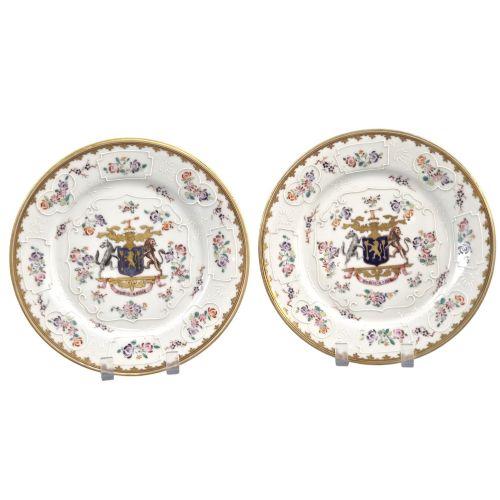
An armorial porcelain dish carries the painted crest or coat of arms of a notable family, making it both a table service piece and a record of heritage.
Armorial Porcelain Dish
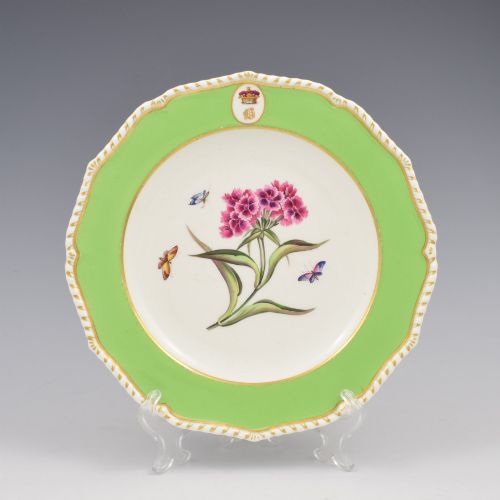
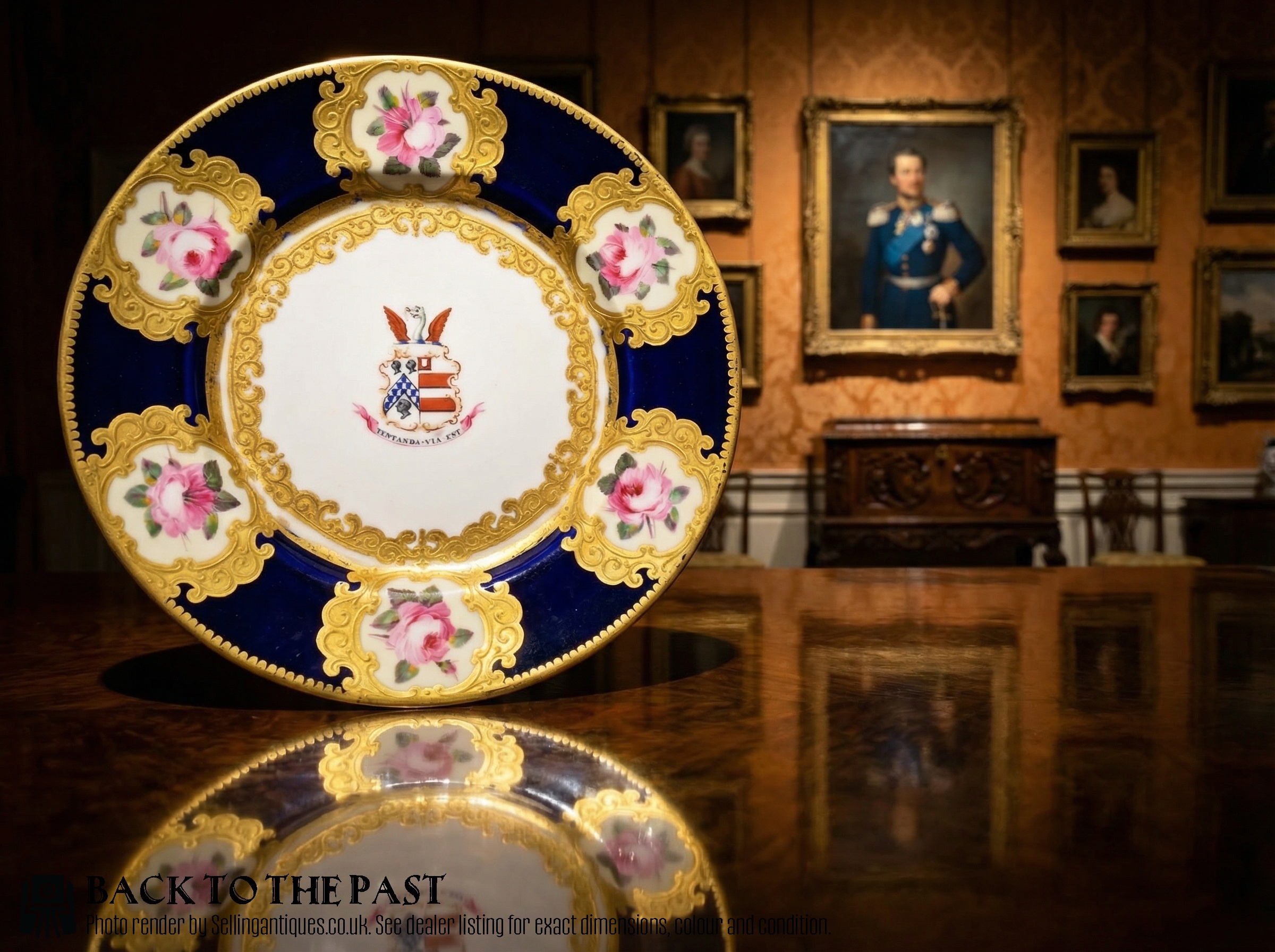
An armorial porcelain dish is a serving or dining vessel painted with a specific family heraldry, crest, or coat of arms. When you search for this phrase, you find plates, dessert plates, soup plates, and tureens dating from the eighteenth and nineteenth centuries.
The versions most likely to appear on this page include Chinese export porcelain made for the European market alongside English factories such as Chamberlain Worcester, Bloor Derby, and Coalport. These pieces range from simple round plates to rectangular serving dishes and pierced baskets.
Originating as bespoke commissions for the aristocracy and gentry, these wares combined utility with family identity. The decoration often pairs the heraldic achievement with botanical painting or floral borders.
How they were made
Hard-paste and soft-paste porcelain formed the foundation of these vessels, shaped on a potter's wheel or pressed in moulds to create plates, soup dishes, and tureens. Factories applied ceramic colours by hand, using overglaze enamels to render the complex heraldic tinctures of coats of arms.
Gold leaf and gilding were applied to rims and borders to highlight the status of the commissioning family, then fixed in a muffle kiln. Chinese export pieces arrived from distant kilns painted to order from European drawings, while English potteries painted their own blanks in domestic workshops.
Listings feature hard-paste porcelain, enamel, and gold leaf applied across Georgian, Regency, and Victorian periods.
What varies in quality
The standard of an armorial porcelain dish rests upon the crispness of the porcelain body and the precision of the heraldic painting. Fine examples display sharply detailed coats of arms with accurate tinctures, whereas lesser pieces show hurried brushwork in the crest or simple enamel wear.
Provenance and the distinction of the commissioning family also lift a piece above the ordinary. Plates belonging to named historical services or identified noble houses carry greater artistic and historical weight than standard crested stock.
Edmé Samson And Cie·Bloor Derby·Coalport·Chamberlain Worcester·Copeland·Flight Barr And Barr·Barr Flight And Barr
The Armorial Porcelain Dish Glossary
- Armorial
- Bearing a coat of arms or heraldic crest. This term denotes porcelain commissioned specifically for a titled family.
- Hard-Paste Porcelain
- A dense, vitrified ceramic material fired at high temperatures. It resists scratching and forms the durable body of many export and European dishes.
- Overglaze Enamel
- Ceramic pigment applied on top of the fired glaze. It allows for vibrant multi-coloured decoration including heraldic shields.
- Gilding
- The application of gold leaf or gold paint to ceramics. It typically frames the rim and accents the borders of dining plates.
- Chinese Export
- Porcelain manufactured in China specifically for the Western market. These objects often copied European armorial designs sent out on trading ships.
Armorial Porcelain Dish: Frequently Asked Questions
How do I identify the family crest?
Identifying the family crest requires consulting heraldic rolls and reference books that match coats of arms to historical surnames. The design typically includes a shield, helmet, and motto.
Factories often recorded the names of the original commissioners in pattern books, which helps link specific services to landed families.
Were these dishes used for everyday dining?
These dishes formed part of large, expensive dinner and dessert services reserved for formal banquets and entertaining guests. They were handled with care due to the high cost of porcelain and bespoke painting.
Plates, soup plates, and tureens were brought out for special occasions to impress visitors with the host's social standing.
How do I date an armorial dish?
Dating relies on the style of the porcelain body, the shape of the dish, and the characteristics of the enamel palette. Chinese export pieces often date to the eighteenth century, while English factory marks narrow down nineteenth-century pieces.
Botanical borders and gilt styles also shift across decades, from Georgian restraint to Victorian exuberance.