


Antique Heraldic Porcelain
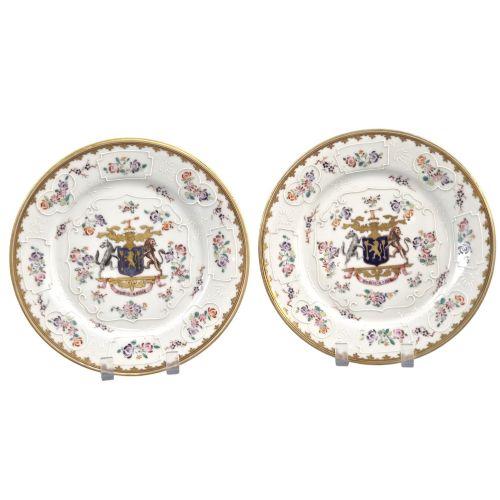
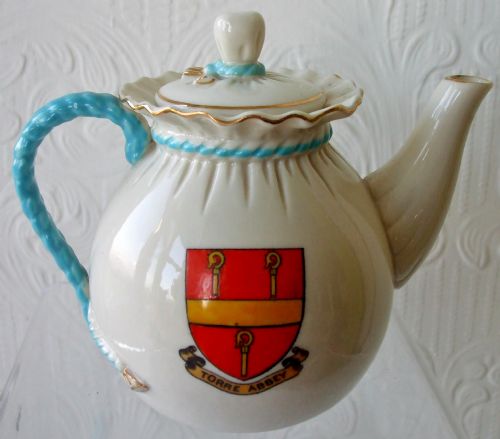
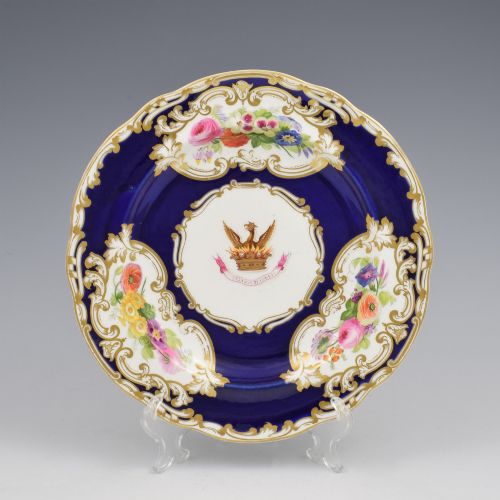
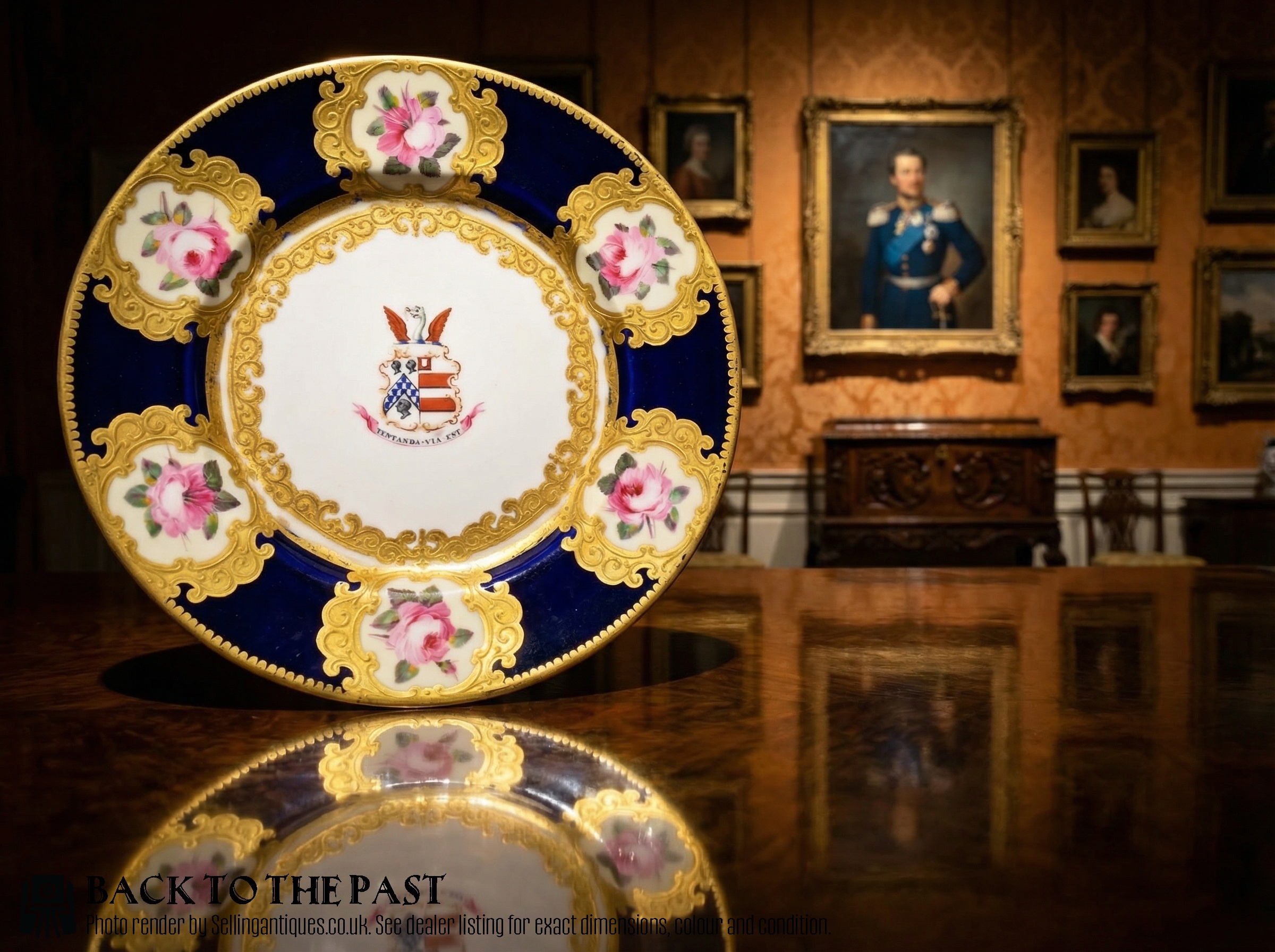
Antique heraldic porcelain displays the crests and coats of arms of landed families, hand-painted on durable ceramic bodies.
Antique Heraldic Porcelain
These pieces are plates, dishes, teapots, and vases painted with specific family crests, coats of arms, and mottoes. When collectors search for antique heraldic porcelain, they look for ceramic items commissioned by aristocratic families or institutions.
The selections span the eighteenth and nineteenth centuries, featuring works from English factories like Chamberlain Worcester and Coalport, continental makers such as Edmé Samson & Cie, and Chinese export porcelain made for Western markets.
Plates and soup plates dominate the selection, alongside occasional teacups, jugs, and campana vases. These wares record the lineages of specific historical figures, bishops, and earls.
Materials and construction
Potters shaped these objects using porcelain, bone china, soft-paste porcelain, and glazed pottery. Artisans then applied enamel paints by hand to render intricate heraldic coats of arms with precise tinctures.
Gold leaf and gilding were frequently added to highlight borders, rims, and crest details. Many pieces were fired multiple times in kilns to set the polychrome enamels and metallic accents firmly onto the ceramic body.
The inventory records pieces from the Georgian, Victorian, and Regency periods, spanning porcelain, bone china, and glazed pottery.
What separates the finest examples
Quality rests upon the precision of the hand-painted heraldry and the crispness of the porcelain body. Expert brushwork in the rendering of crests, mantling, and mottoes distinguishes superior items from simpler decorative wares.
The distinction also lies in the provenance and documentation of the service. Pieces created for named nobility, such as marquesses or bishops, by celebrated manufactories command greater attention than unassigned factory stock.
Edmé Samson & Cie·W.H. Goss·Copeland·Derby·Chamberlain Worcester·Coalport·Minton·Barr Flight And Barr
The Antique Heraldic Porcelain Glossary
- Armorial
- Bearing a coat of arms or heraldic device. This term describes porcelain decorated specifically with a family's registered heraldic insignia.
- Crest
- The component of a coat of arms placed above the shield on a helmet or coronet. On these ceramics, the crest often appears alone at the centre or rim.
- Soft-Paste Porcelain
- An early artificial ceramic composition made from white-firing clay mixed with ground glass and frit. It predates true hard-paste porcelain in many European factories.
- Famille Rose
- A palette of Chinese porcelain enamels dominated by opaque pink or rose colours introduced during the Qing dynasty. Much export armorial porcelain utilises this specific colour scheme.
- Campana Vases
- Urn-shaped vessels resembling inverted bells, popular during the Regency and Victorian periods. They provide a broad surface suited for prominent crest painting.
Antique Heraldic Porcelain: Frequently Asked Questions
How were family crests painted on porcelain?
Artists painted crests by hand using enamel colours mixed to match the official heraldic tinctures of the commissioning family. Gold leaf and gilding were applied to highlight the mottoes, helms, and decorative mantling surrounding the shield.
Export pieces were often painted in Chinese workshops from European sketches sent out by sea. Domestic factories employed specialist ceramic painters to ensure the heraldry met strict rules.
How do I identify the family on a piece?
Identification relies on researching the specific coat of arms, motto, or crest painted on the ceramic surface. Heraldic dictionaries and records help match the charges, chevrons, and supporters to historical families.
Many listings name the original owner, such as a specific marquess, earl, or bishop, alongside factory marks. Cross-referencing these details with genealogical archives reveals the history behind the commission.
Where were these armorial services made?
Services were produced by prominent European porcelain manufactories such as Chamberlain Worcester, Coalport, Minton, and Derby. Additionally, significant quantities were ordered from Chinese export kilns during the eighteenth century.
French workshops, including Samson of Paris, also produced armorial pieces, sometimes continuing or replicating earlier historical styles. Each origin region utilised distinct paste compositions and glazing techniques.
How should I display antique armorial plates?
Armorial plates are commonly displayed using stable wall mounts or dedicated plate stands that support the base safely. Placing them away from direct sunlight preserves the vibrant enamel colours and delicate gilding.
Cabinet plates and soup plates look best in well-lit display furniture where the detailed crests remain easily visible. Hand washing with mild soap is recommended if cleaning is ever required.