


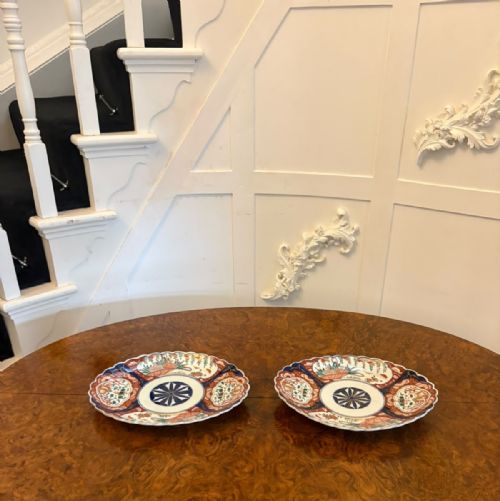

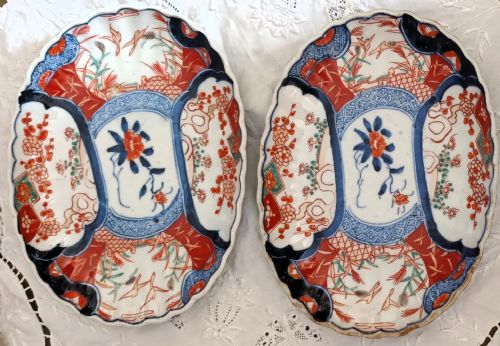


Arita Ware Porcelain Charger
An arita ware porcelain charger brings centuries of Japanese ceramic skill into a room, offering rich colours and intricate patterns that anchor a collection.
Arita Ware Porcelain Charger
An arita ware porcelain charger forms part of a tradition originating in Japan, spanning periods from the seventeenth century through to the twentieth century. These substantial display pieces and serving vessels appear alongside related forms such as dishes, bowls, and plates.
The pieces on this page heavily feature Japanese Imari styles, alongside Edo period and Meiji period works. Buyers encounter large chargers, scallop-edged bowls, and oval dishes decorated with floral and bird motifs.
The selection ranges from early blue and white Arita designs dating to the late seventeenth century up to later nineteenth and early twentieth century interpretations. Each object demonstrates the enduring output of the Hizen kilns.
Materials and construction
Potters built these items using porcelain clay, finished with glazes and cobalt underglaze for the foundational blue and white patterns. Artisans then applied enamel, enamel glaze, and occasional gold leaf or gilding to create the characteristic multi-coloured Imari palette.
Decoration relied on hand painting, rendering detailed floral, bird, and scrolling foliate borders across the surface of the chargers and plates. Kiln firing fixed these minerals into the ceramic body, producing durable decorative objects.
Materials recorded across the inventory include porcelain, ceramic, cobalt underglaze, enamel, gold leaf, and gilding.
Distinctions in quality
The refinement of the hand-painted brushwork separates standard production from superior examples, particularly in the precision of floral and bird motifs. Crispness in the cobalt underglaze and the careful application of enamel and gold leaf indicate higher workshop standards.
Form also dictates standing, with unusual shapes such as fan-shaped plates, square plates, and scalloped edges demanding greater skill from the potter than simple circular vessels.
The Arita Ware Porcelain Charger Glossary
- Arita
- A town in Hizen province, Japan, known as the birthplace of Japanese porcelain production. Kilns here supplied domestic and export markets for centuries.
- Imari
- A style of Japanese porcelain exported from European ports, typically featuring a palette of cobalt blue, iron red, and gold. It encompasses both blue and white and polychrome designs.
- Meiji Period
- The era in Japanese history spanning from 1868 to 1912, characterised by opening trade and significant production of decorative arts for export.
- Edo Period
- The period of Japanese history from 1603 to 1867, during which Arita porcelain production and the Imari style were first established.
- Cobalt Underglaze
- A blue pigment applied to ceramic pieces before glazing and firing, capable of withstanding high kiln temperatures without fading.
Arita Ware Porcelain Charger: Frequently Asked Questions
How were arita ware porcelain chargers used?
These large plates served primarily for display on walls, tables, or cabinets rather than dining use. Their substantial size allowed households to showcase intricate painted designs.
Export pieces often travelled to European homes where owners prized them as ornamental items in reception rooms and galleries.
How do I identify Edo period pieces?
Edo period items generally date between 1603 and 1867, often showing early Arita blue and white designs or traditional Imari palettes. Examination of the foot ring and body helps distinguish these earlier wares from Meiji period productions.
Earlier examples tend to exhibit heavier potting and softer blue tones beneath the glaze compared to later output.
What is the difference between Arita and Imari?
Arita refers to the geographical production centre in Japan where the porcelain clay was mined and fired. Imari describes the decorative style and the port from which these ceramics were shipped.
All Imari porcelain from this region is Arita ware, but not all Arita ware uses the Imari decorative scheme.
How should I display a charger?
Chargers require sturdy wall hangers or secure plate stands designed to support heavier ceramic items. Placement away from direct sunlight preserves the enamel colours and gilding.
Allowing adequate space around the piece lets the detailed scrolling foliate borders and central motifs remain visible.