



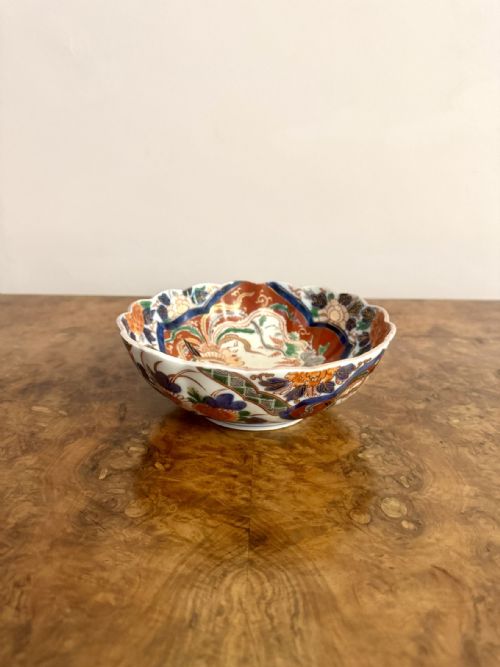
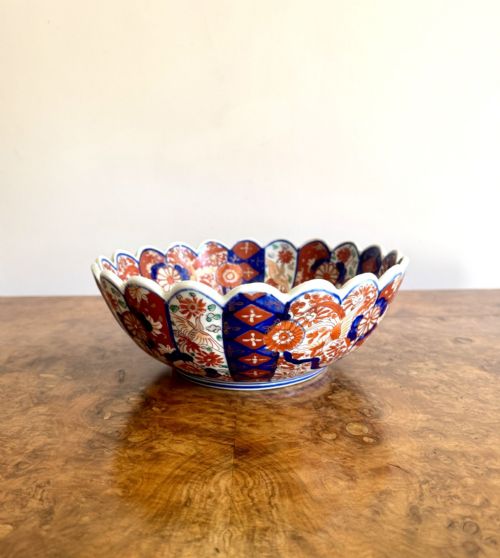
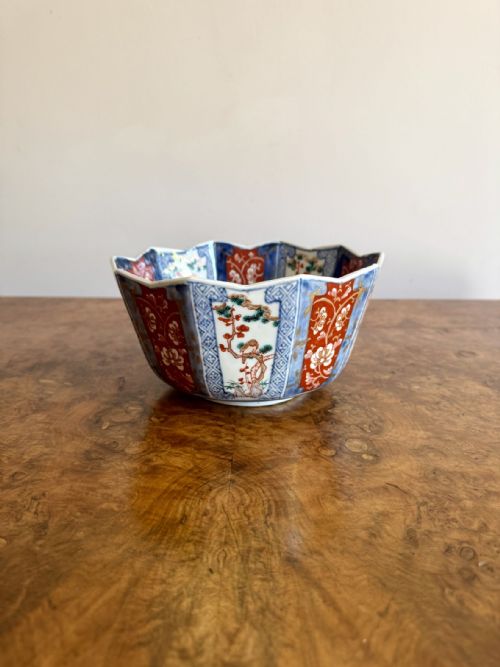


Arita Ceramic Bowl
An arita ceramic bowl brings centuries of Japanese kiln tradition to a room, valued for its striking cobalt blue and enamel palette.
Arita Ceramic Bowl
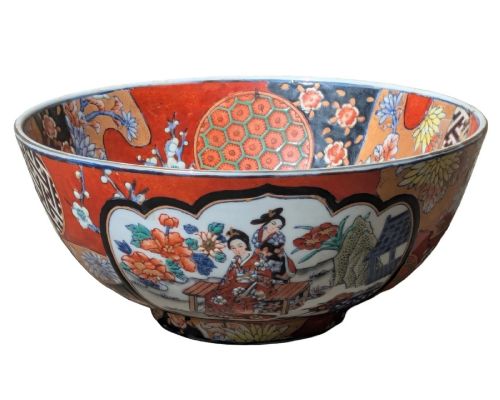
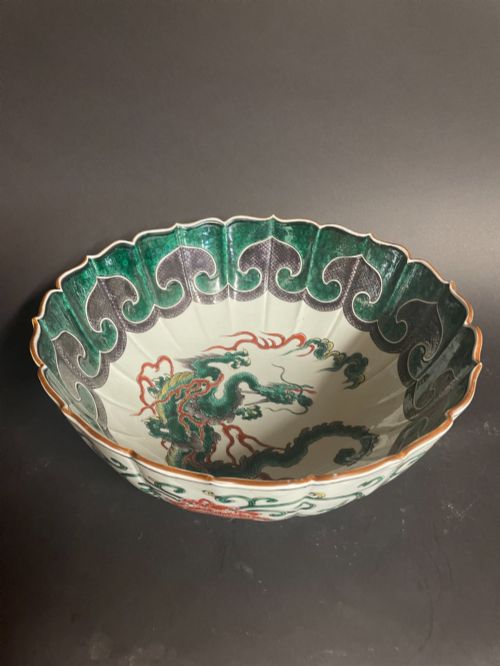
An arita ceramic bowl spans several distinct eras of production, originating from the Hizen province in Japan and encompassing forms from deep jardiniere vessels to shallow decorative dishes. The pieces encountered most frequently on this page date from the 17th century through the Meiji and Showa periods, reflecting both early Edo traditions and later export wares.
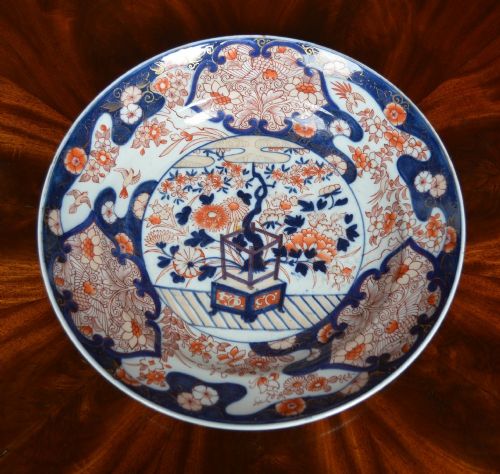
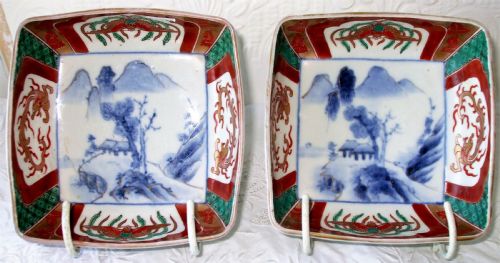
The objects take various functional and decorative shapes, including scallop edge bowls, hexagonal vessels, clam shell dishes, and tripod bowls. Chargers and plates also appear alongside traditional bowls, often displaying the characteristic Japanese Imari style associated with the kiln origins.
Makers and artisans created these items for both domestic use and international trade, resulting in a wide survival of pieces ranging from everyday tableware to grand centrepieces. The chronological spread reaches from the late 1600s up to 1930, capturing significant shifts in decorative painting over three hundred years.
How they were made
Craftsmen utilised high-firing ceramic and porcelain bodies, applying cobalt underglaze pigments before the initial kiln burn to establish the primary blue decoration. Enamel colours and gold leaf were frequently added in subsequent stages to create the rich polychrome patterns seen on Imari and Aka-e examples.
Potters shaped the clay by hand or on the wheel before executing detailed hand painted motifs such as cranes and floral arrangements. Transparent glaze layers sealed the surface, providing a smooth finish that protected the intricate gilt and enamel work beneath.
Listings feature porcelain spanning from the late 17th century to the 1930s, incorporating cobalt blue, enamel, and gold leaf.
What varies in quality
The refinement of the painted brushwork distinguishes ordinary production from finer examples, particularly in the precision of floral and animal motifs like cranes. Control over the cobalt underglaze and the crisp application of enamel and gold leaf determine the visual depth of the surface.
The complexity of the vessel form also separates pieces, with scalloped edges, hexagonal cuts, and tripod structures demanding greater skill from the potter. Consistency in the glaze application and the preservation of original gilding indicate the level of care taken during both manufacture and subsequent centuries.
The Arita Ceramic Bowl Glossary
- Imari
- A style of Japanese porcelain decorated in underglaze cobalt blue, iron red, and gold, originating in the Hizen province and shipped through the port of Imari. This aesthetic dominated many export wares destined for European markets during the Edo period.
- Edo Period
- The period in Japanese history spanning from 1603 to 1868, characterised by economic growth and strict social order under the Tokugawa shogunate. Ceramics from this era often display refined regional kiln techniques.
- Meiji Period
- The era lasting from 1868 to 1912, marked by the modernisation of Japan and a significant increase in decorative arts exported abroad. Pieces from this time frequently combine traditional motifs with ambitious scale and detailed painting.
- Jardiniere
- A large decorative ceramic pot or bowl intended to hold plants or flowers. These substantial vessels often feature prominent Imari decoration.
- Cobalt Underglaze
- A blue pigment applied to raw ceramic bodies before glazing and firing, capable of withstanding extreme kiln temperatures. It yields a durable, deep blue colour beneath a clear protective surface.
Arita Ceramic Bowl: Frequently Asked Questions
How do I date an arita bowl?
Dating relies on stylistic markers, such as the distinct palette of early Edo pieces compared to later Meiji export wares. Examining the base, potting technique, and glaze characteristics helps place a vessel within its specific century.
Changes in trade patterns and kiln output across the 17th, 18th, and 19th centuries provide further chronological context for individual items.
What is Japanese Imari?
Japanese Imari refers to porcelain decorated in a distinctive combination of cobalt blue, iron red, and gold leaf. The style developed in the Hizen region around the town of Arita.
These wares gained immense popularity in Europe during the late 17th and 18th centuries, prized for their vibrant colours and intricate patterns.
How were these bowls used historically?
Many arita bowls served as functional tableware, while larger examples functioned as centrepieces for dining tables or decorative vessels in grand rooms. Jardiniere forms held plants, and specialised dishes presented food or served as display pieces.
The durability of the porcelain body allowed these objects to withstand daily use over generations before becoming collectible antiques.
Can I use these bowls daily?
While these ceramics are robust porcelain, antique pieces from the 17th to 19th centuries warrant careful handling to preserve fragile enamel and gold leaf details. Hand washing is essential to protect the historic glaze surfaces.
Many collectors prefer to display them as decorative centrepieces rather than subjecting them to regular utility.