



Hand Painted Asian Bowl
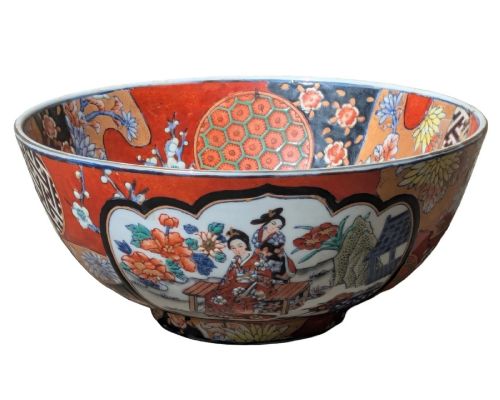
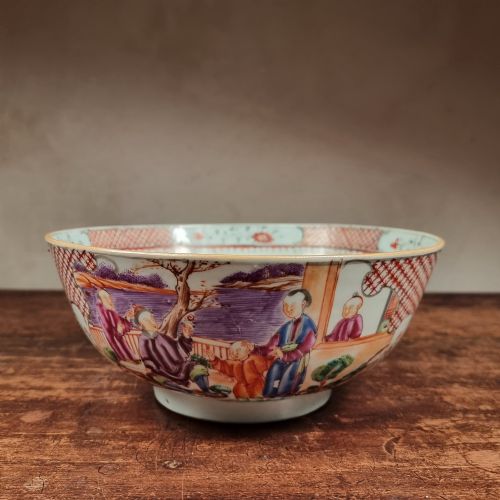
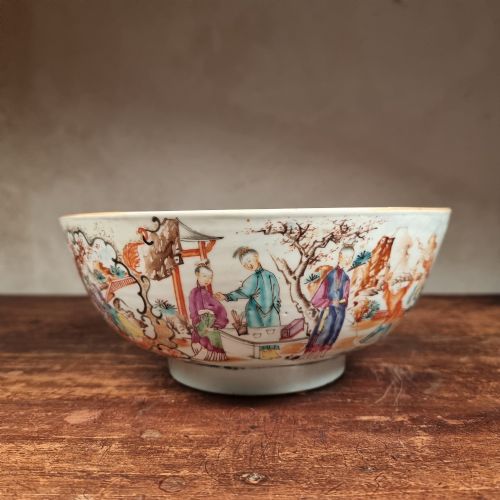
These hand painted asian bowl examples bring vibrant enamel, glaze and cobalt underglaze into a room through centuries of porcelain and earthenware traditions.
Hand Painted Asian Bowl
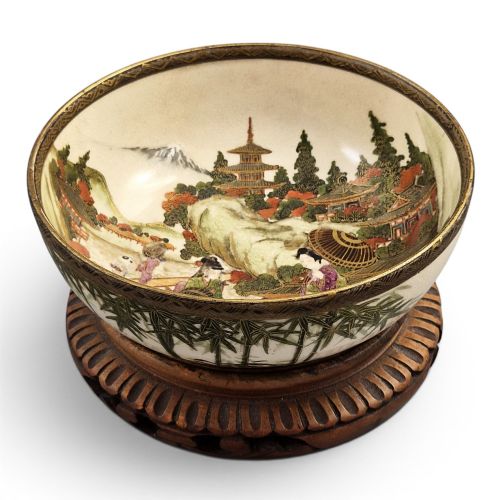
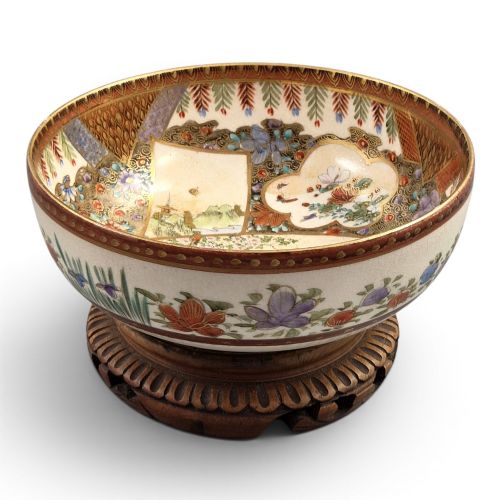
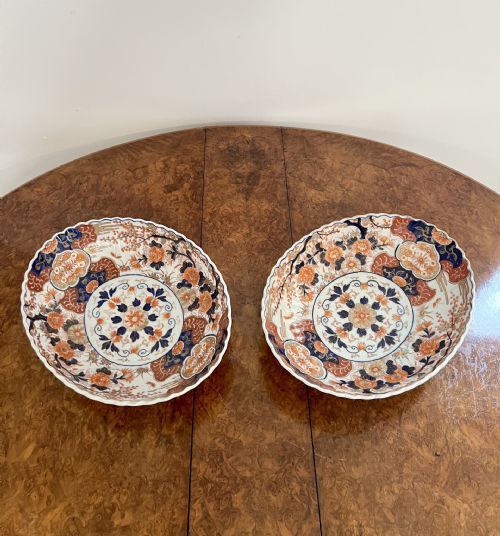
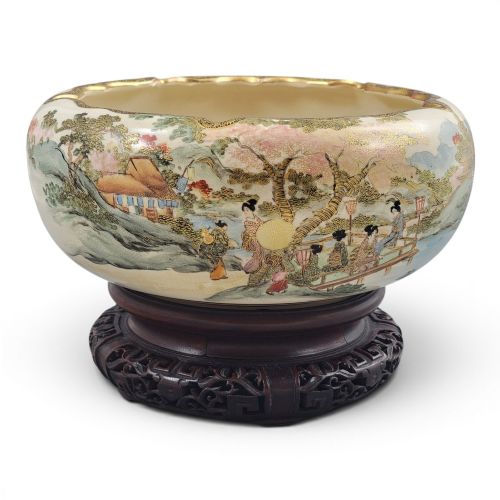
A hand painted asian bowl encompasses decorative bowls, dishes, plates, teacups and jardiniere vessels originating from Japan and China across multiple centuries. Buyers encounter forms ranging from miniature Kutani ware to large Imari scalloped vessels and blue and white fish bowls.
The material record spans the 17th century through the 1930s, capturing the Genroku period, Edo period, Meiji period, and Qing dynasty. Japanese Imari and Satsuma wares appear frequently alongside Chinese export porcelain and Famille Rose pieces.
Vessels take circular, hexagonal, and scalloped profiles intended for display or domestic service. Stand-mounted pieces and matched pairs demonstrate the variety of decorative objects found within this category.
How they were made
Potters shaped porcelain and earthenware bodies before applying cobalt underglaze, enamel, and gold leaf accents. Kiln firing fixed the mineral pigments and glazes to the clay base.
Hand painting techniques incorporated detailed floral, bird, and figural motifs executed by skilled artisans. Master workshops utilised specialised pigments to achieve the characteristic palette of Satsuma and Imari ceramics.
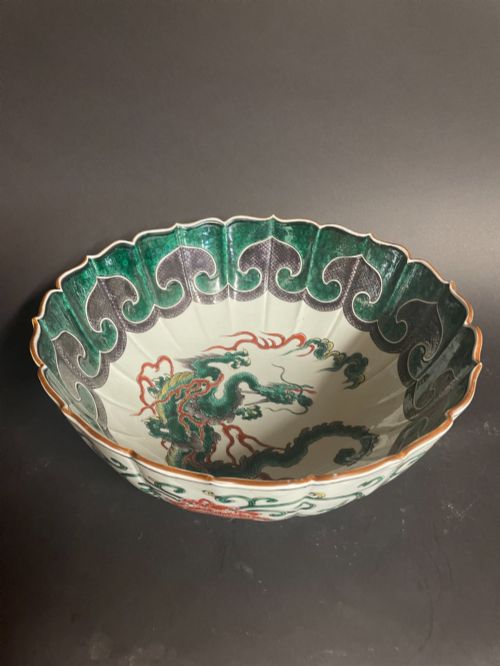
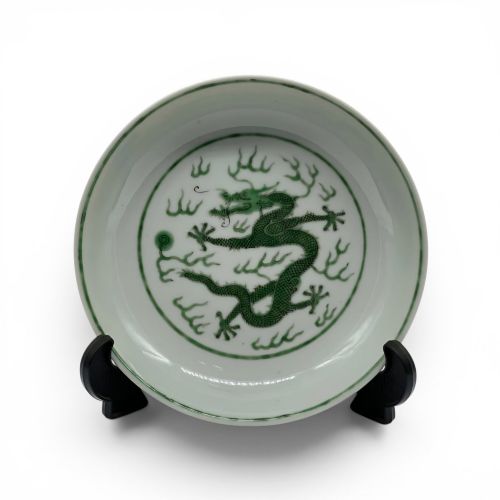
Green dragons coil fiercely across imperial-style porcelain dishes, keeping permanent watch over your floating fruit.
What varies in quality
Precision of brushwork and depth of enamel application distinguish masterwork pieces from standard domestic output. Finer examples display controlled gilding and complex multi-layered patterns across the interior and exterior surfaces.
Signatures by recognised makers or kilns indicate a higher tier of production within Meiji period Satsuma and Imari traditions. The crispness of porcelain potting and the stability of the glaze further separate exceptional bowls from ordinary items.
Kozan·Shizan·Kinkozan·Ryuzan
The Hand Painted Asian Bowl Glossary
- Imari
- A style of Japanese porcelain featuring a distinct palette of cobalt blue, iron red, and gilt highlights. These wares were exported extensively to Europe from the Edo period onward.
- Satsuma
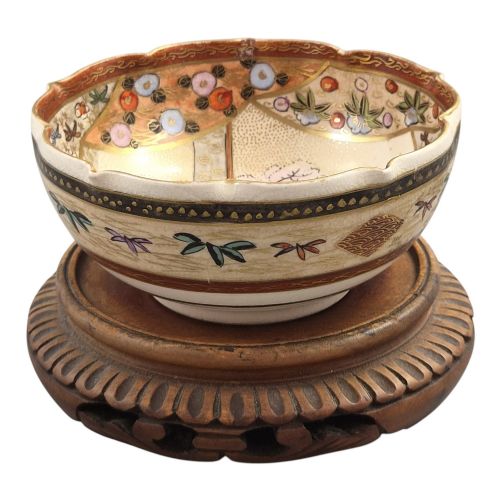
- Earthenware pottery originating from Satsuma province, characterised by a finely crackled ivory glaze decorated with polychrome enamels and gold. Kyoto workshops became major production centres for this style.
- Cobalt Underglaze
- A blue pigment applied to the raw clay body before glazing and firing, capable of withstanding high kiln temperatures. This technique creates durable designs beneath a clear protective surface.
- Famille Rose
- A palette of opaque enamels dominated by pink or rose colours, introduced to Chinese porcelain during the Qing dynasty. The style allowed for subtle tonal gradations in floral and figural painting.
- Jardiniere
- A large ornamental pot or bowl designed to hold live plants or flowers. Ceramic examples often feature robust proportions and heavy cobalt underglaze decoration.
Hand Painted Asian Bowl: Frequently Asked Questions
How do I identify Imari porcelain?
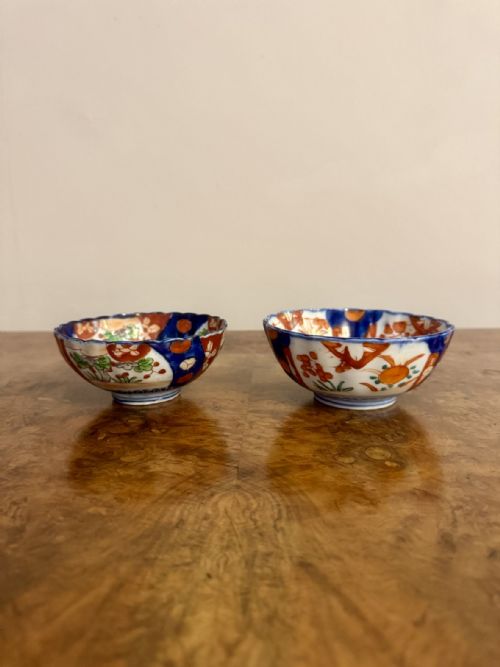
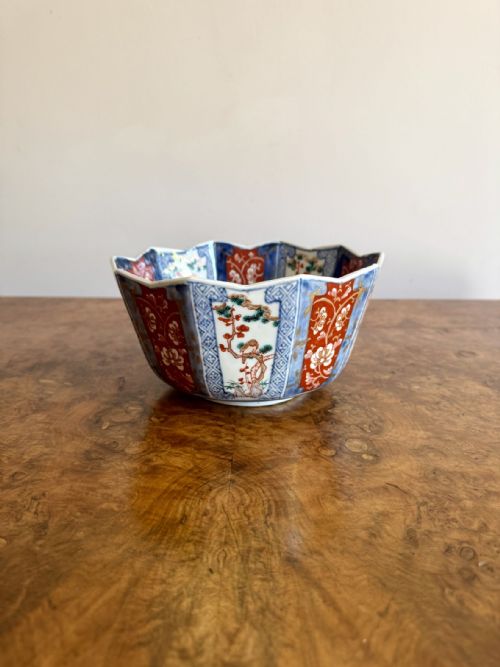
Imari porcelain is recognised by its signature combination of underglaze cobalt blue, iron red, and added gold leaf. The designs often feature dense floral and brocade patterns across the surface.
These pieces were produced primarily in Japan for both domestic use and export. The robust body and vibrant palette make them visually distinct from other Asian ceramics.
What is Satsuma ware?
Satsuma ware consists of earthenware pottery with a characteristic cream-coloured, finely crackled glaze. Artisans painted these surfaces with elaborate polychrome enamel scenes and gilt details.
Originally produced in southern Japan, production later expanded to Kyoto workshops like Kinkozan. The fine crackle in the glaze serves as a hallmark of the style.
How were large bowls used historically?
Large bowls and jardiniere vessels served as decorative centrepieces or functional containers for plants and water. Their substantial size allowed artisans to execute expansive narrative or botanical scenes.
In domestic settings, these pieces anchored tables or alcoves, displaying the skill of the potter and painter. Their sturdy construction supported practical daily use alongside ornamental display.
What is the difference between Chinese export and Qing dynasty pieces?
Chinese export porcelain was specifically manufactured to suit Western aesthetic preferences and shipping demands. Qing dynasty pieces encompass both export wares and items made for the domestic imperial market.
Specific reign marks, such as Qianlong, help date imperial and high-grade Qing ceramics. Export pieces often blend traditional Chinese motifs with shapes requested by foreign buyers.