
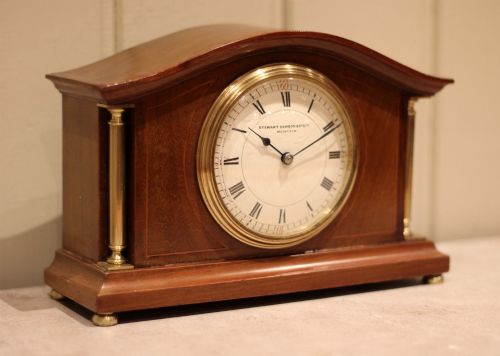
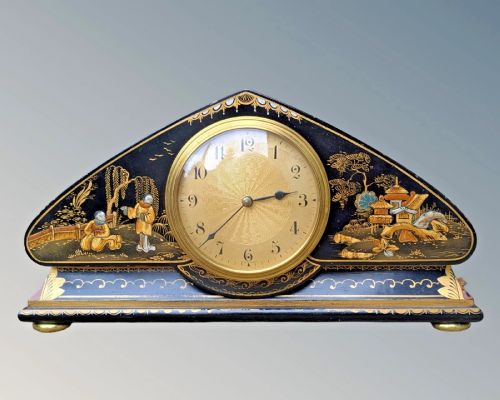
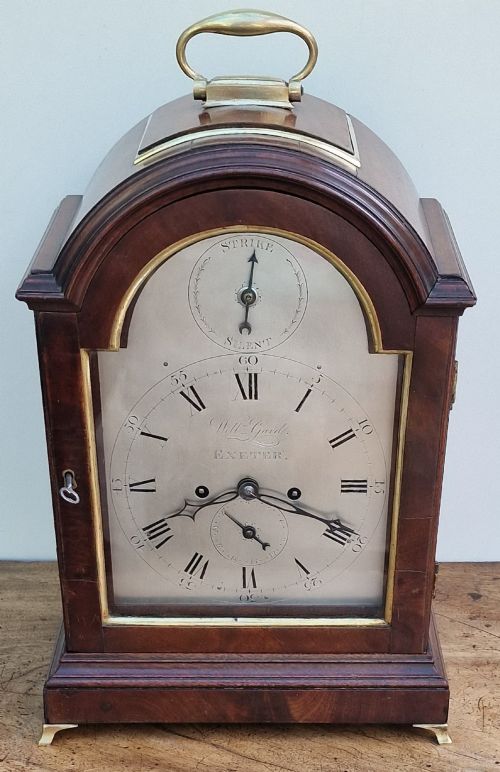
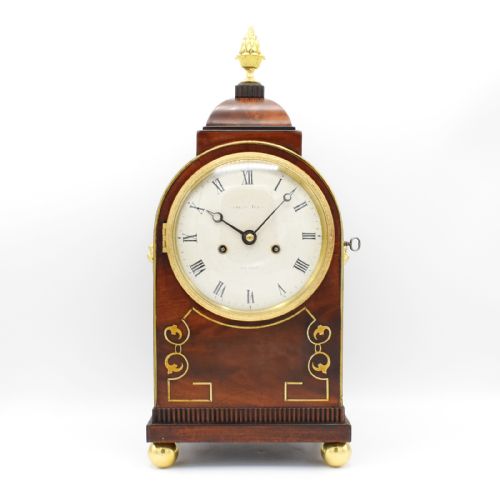

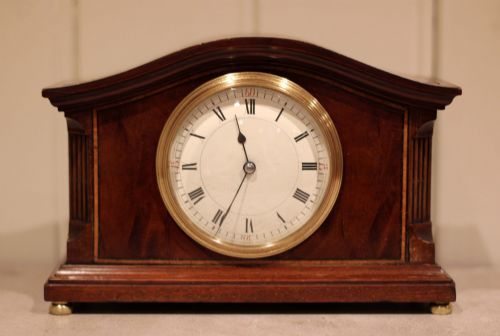
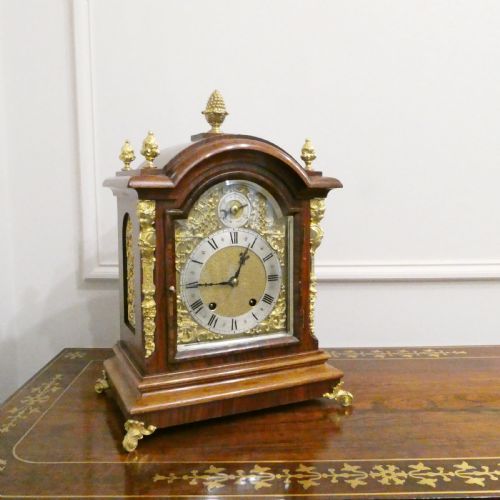
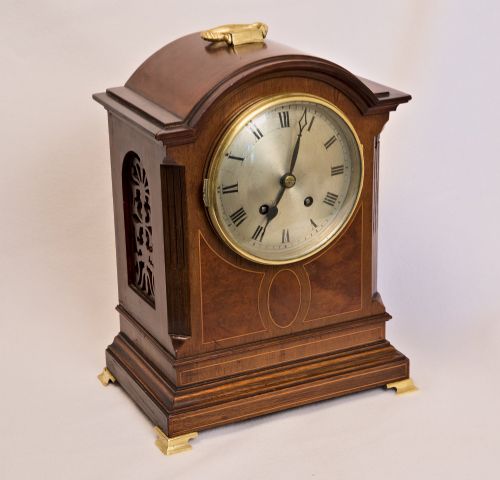


Arched Top Table Clock
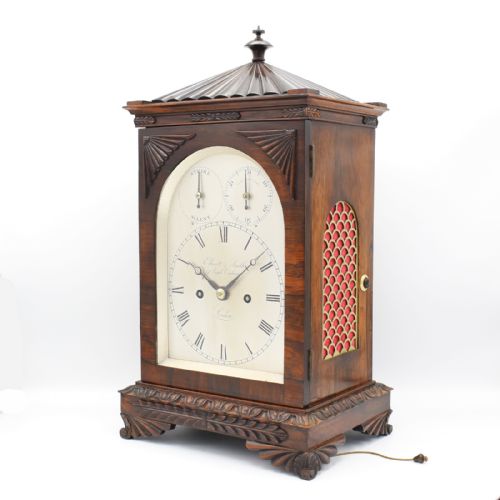
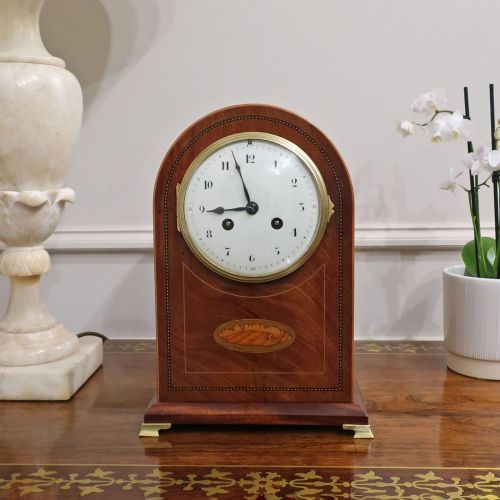
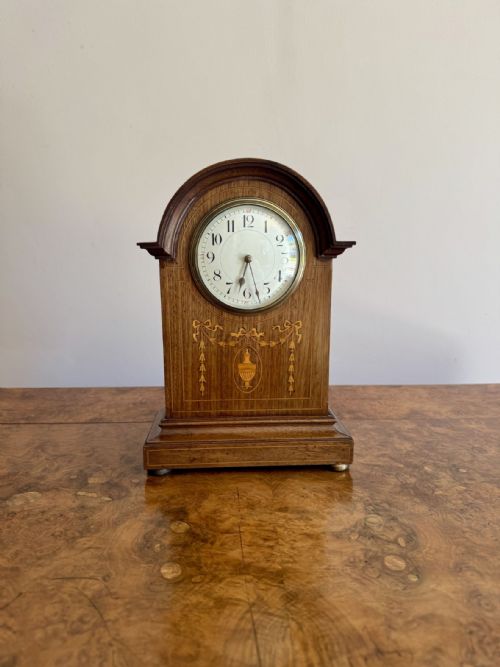
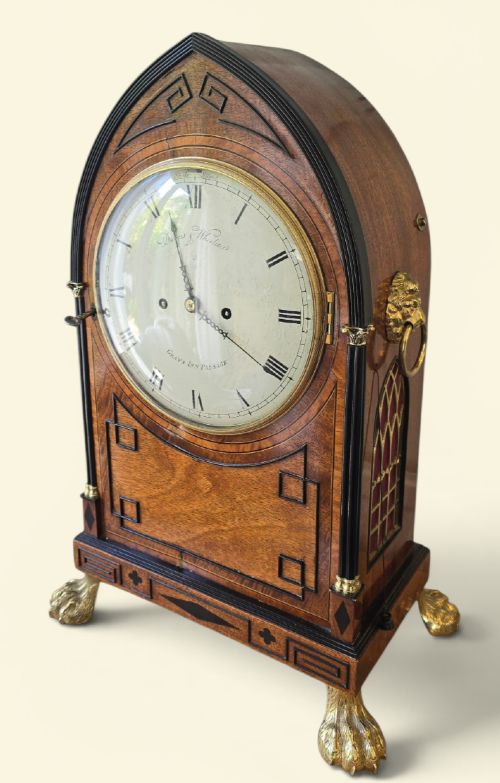
These arched top table clock pieces span the Georgian, Regency, Victorian, and Edwardian periods, offering mechanical horology housed in timber cases.

Arched Top Table Clock
An arched top table clock takes the form of a mantel, bracket, or carriage clock designed to sit on a surface or shelf. When searching for an arched top table clock, buyers frequently encounter mahogany cases produced during the Georgian, Regency, and Edwardian eras.
The selection includes provincial examples alongside pieces by notable London makers, housed in timber or brass-mounted bodies. Forms range from simple timepieces to striking clocks with fusee movements.
Variations span the 18th, 19th, and early 20th centuries, taking influence from styles such as Chinoiserie, Belle Epoque, and Ottoman Revival. Mahogany remains the dominant wood, accompanied by satinwood, rosewood, ebony, oak, and walnut.
Materials and Construction
Cases are constructed primarily from solid timber and veneers, utilising mahogany, walnut, oak, satinwood, ebony, and rosewood. Brass mounts, glass panels, and enamel or silvered dials complete the exterior structure of the clock.
Internal mechanisms rely on traditional methods such as fusee-driven movements, verge escapements, and striking trains including ting-tang configurations. Cabinetmakers applied decorative elements through brass inlay, marquetry, and delicate stringing.
Makers from London, provincial towns, and continental workshops appear, utilising brass mounts, enamel, and silvered dials.
Evaluating Quality
Quality rests in the crispness of the cabinetwork, the choice of timber figurations, and the reputation of the horologist named on the dial. Provincial pieces differ from the output of established London workshops through simpler case execution and regional movement variations.
The sophistication of the internal movement dictates the tier of the piece, distinguishing standard timepieces from twin fusee striking clocks with intricate escapements. Retained original components and crisp brass mounts separate high-tier examples from heavily restored or altered counterparts.
William Gard Exeter·Barwise London·Charles Pratt London·Ellicott Smith·Desbois Wheeler·Schneckenburger·Cording of London·Phillips Brothers·Wilkinson Leicester·Hyde of Salisbury·Louis Recordon·Perigal of London·Lenzkirch·Winterhalder Hofmeier·John McGregor Wick·Perigal Duterrau
The Arched Top Table Clock Glossary
- Fusee
- A conical pulley used in clock movements to maintain an even pull on the gear train as the mainspring unwinds. This mechanism ensures more accurate timekeeping throughout the power reserve.
- Verge escapement
- An early type of clock escapement that controls the release of power from the gear train. It works with a balance wheel or pendulum to regulate the speed.
- Bracket clock
- A portable domestic clock originally designed to sit upon a wall bracket or table. Many feature arched top cases with carrying handles.
- Silvered dial
- A metal clock face treated with a silver compound to produce a matte finish, often featuring engraved numerals and maker details. These dials reflect light softly behind the glass door.
- Ting-tang
- A striking mechanism that sounds two different notes on bells or gongs to indicate the quarters. It provides an audible chime without a full hour count on the smaller intervals.
Arched Top Table Clock: Frequently Asked Questions
What is a fusee movement?
A fusee movement uses a conical pulley connected to the mainspring by a cord or chain. This device equalises the diminishing torque of the spring as it unwinds.
Clocks with fusee movements often indicate higher precision and better workshop origin during the Georgian and Regency periods.
Where were these clocks placed?
These clocks were designed for placement on tables, mantelpieces, or dedicated wall brackets within formal rooms. Their portable nature allowed owners to move them between rooms as needed.
Smaller library timepieces and larger bracket clocks served both decorative and practical timekeeping functions in domestic interiors.
How do I identify the period?
Dating relies on case timber, dial design, and mechanical style alongside maker signatures. Georgian and Regency pieces favour mahogany and brass inlay, while Edwardian examples often introduce lighter marquetry.
Maker records and specific movement types such as verge escapements further narrow the decade of manufacture.
What maintenance do they need?
Mechanical clocks require professional cleaning and oiling every few years to prevent wear on the brass wheels and pivots. Setting them up on a level surface ensures the pendulum or balance wheel beats evenly.
Regular winding following the maker instructions keeps the mainspring functioning correctly without over-tensioning.