


Antique Yellow Pottery Urn
An antique yellow pottery urn brings rich colour and striking form to a room, offering both decorative presence and historical depth.
Antique Yellow Pottery Urn
When you search for an antique yellow pottery urn, you encounter a diverse range of vessels spanning earthenware, ceramic, and porcelain bodies, often rendered in vibrant yellow glazes or painted grounds. These pieces emerge from periods such as the nineteenth century, nineteen hundred, and earlier revivals, taking forms like vases, planters, and storage jars.
You are most likely to meet examples influenced by styles such as Renaissance Revival, Arts and Crafts, and Art Nouveau, alongside regional European ceramics from Italy, France, and England. Such vessels function traditionally as decorative centrepieces, urns with covers, or amphorae.
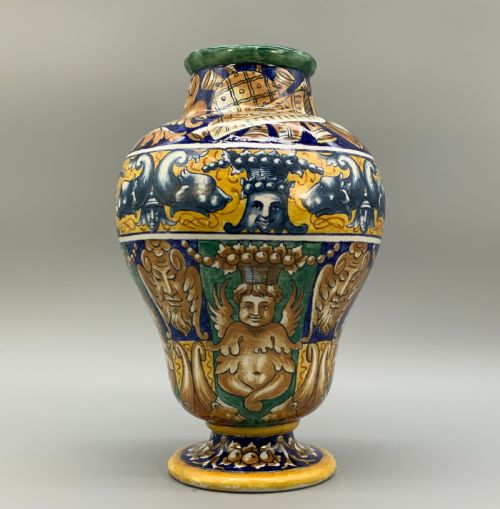
The assortment reflects varied origins, from British potteries like Burmantofts and Doulton Lambeth to continental majolica and faience works. Each piece demonstrates how makers utilised distinct glazes to achieve the characteristic yellow tones that define this category.
How they were made
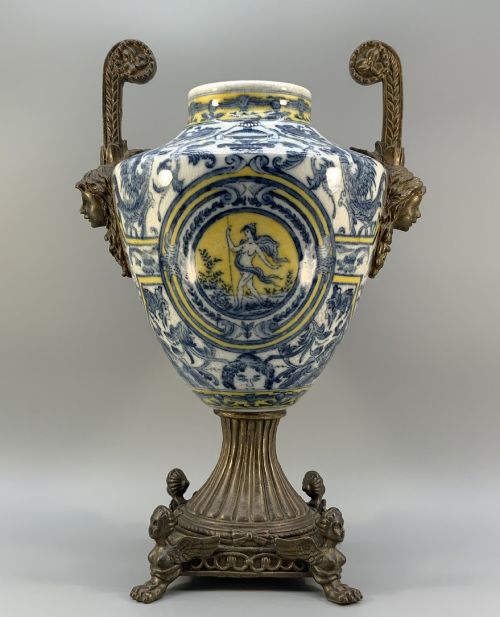
Potters shaped these vessels using earthenware, terracotta, ceramic, or porcelain, frequently applying tin glaze, enamel, or coloured glazes over the clay body. Some pieces incorporate bronze mounts or gold leaf detailing to accent the ceramic form.
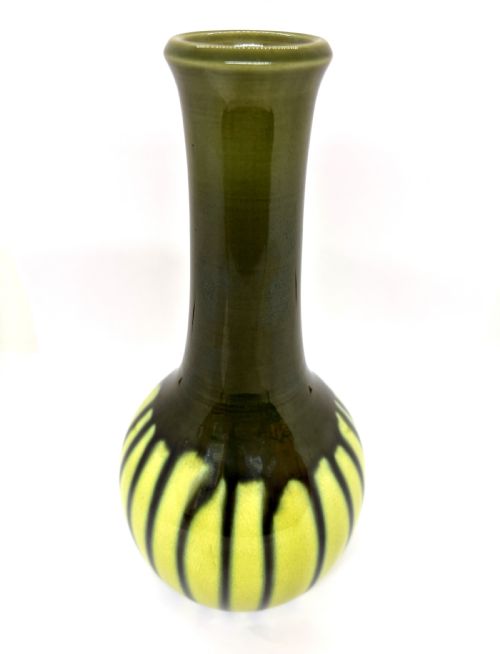
Techniques range from hand-painted decoration depicting birds and polychrome motifs to specialised treatments like drip glazing and Slaters Patent texturing. Firing methods dictated the depth of the yellow ground and the permanence of the surface pigments.
Styles recorded across the pieces range from Renaissance Revival and Regency Chinoiserie to Art Nouveau and Arts and Crafts.
What varies in quality
The distinction between ordinary and exceptional pieces lies in the precision of the hand-painted artistry and the richness of the glaze application. Finer examples display deliberate brushwork, complex polychrome detailing, and well-executed surface textures rather than flat, uniform colour.
Execution of secondary elements, such as bronze mounts, handles, and covers, influences the overall standing of an urn. Pieces bearing signatures from recognised potteries or named artists command attention through superior control of the ceramic medium during firing.
Burmantoft's Pottery·Doulton Lambeth·Cantagalli Faience·Rozenburg·Royal Doulton·Royal Bonn·Royal Worcester·Minton
The Antique Yellow Pottery Urn Glossary
- Faience
- Tin-glazed earthenware produced in Europe, noted for its opaque coloured background and painted surface decoration. It often mimics the appearance of higher-fired porcelain.
- Majolica
- Opaque tin-glazed pottery, particularly associated with Italian and Victorian wares featuring vibrant polychrome glazes. This technique allows for rich colour saturation across sculptural forms.
- Amphora
- A two-handled jar with a narrow neck used in antiquity for storage or decoration, later revived in nineteenth-century pottery. Its classical silhouette remains popular in decorative ceramics.
- Confit pot
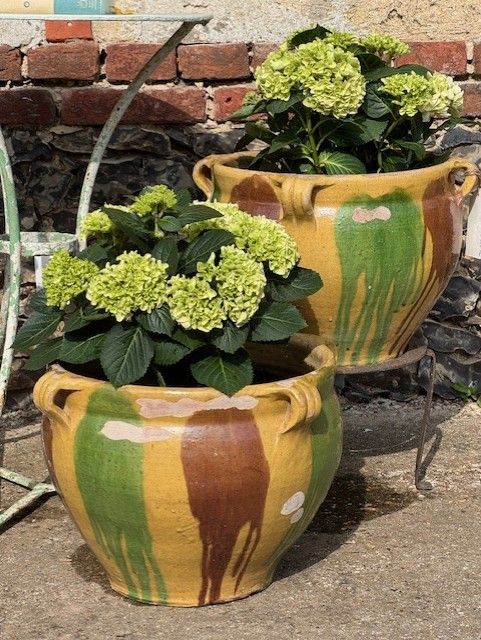
- A traditional French earthenware vessel, often glazed, originally designed for preserving food. These utilitarian pots frequently feature characteristic dipped or dribble glazes.
- Ironstone
- A type of heavy, durable ceramic patented in the nineteenth century that bridges the gap between earthenware and porcelain. It provides a sturdy body for decorative patterns.
Antique Yellow Pottery Urn: Frequently Asked Questions
What is an antique yellow pottery urn?
An antique yellow pottery urn is a ceramic or earthenware vessel finished with a yellow glaze or painted ground, produced across various nineteenth and twentieth-century European traditions.
These objects range from majolica and faience vases to French confit pots and planters, serving primarily as decorative interior elements.
How were these urns used historically?
Historically, these vessels served both functional and decorative purposes, from storing provisions in French farmhouses to displaying floral arrangements in formal European parlours.
Larger urns and amphorae were designed as statement pieces for gardens, entryways, or pedestals within substantial homes.
How do I live with an antique yellow pottery urn?
Living with these pieces involves placing them where their yellow glazes can catch natural light, whether on a mantelpiece, table, or dedicated pedestal.
Because many are earthenware or majolica, they require careful placement away from heavy foot traffic to prevent accidental impact.
How do I tell different periods apart?
Distinguishing periods relies on observing stylistic markers, such as the exuberant flora of Art Nouveau, the historical motifs of Renaissance Revival, or the cleaner lines of later decades.
Clay bodies, glaze types, and maker's marks or registration numbers stamped underneath also provide chronological anchors.