
Antique Wool Trapping
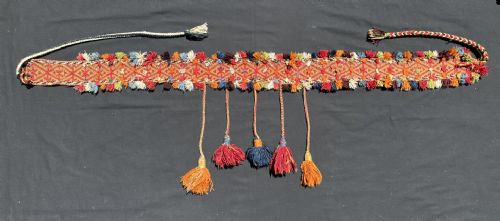
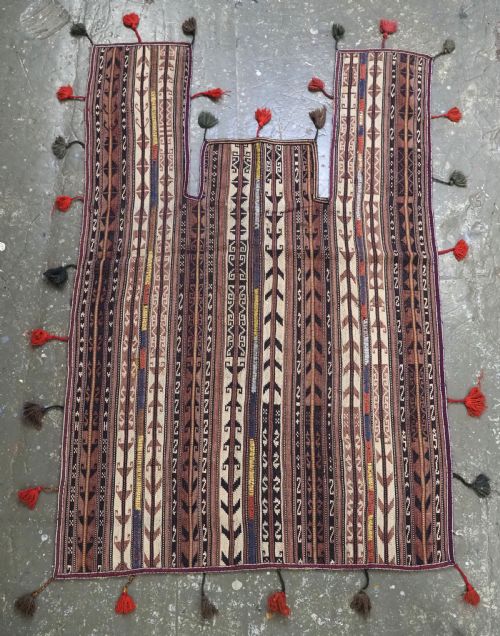
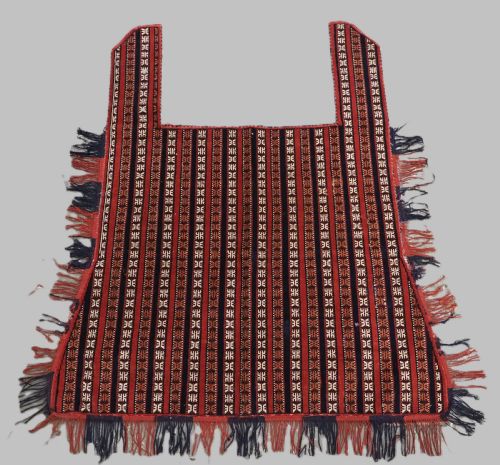
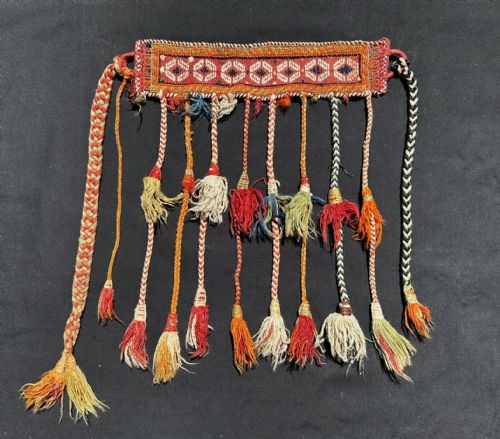
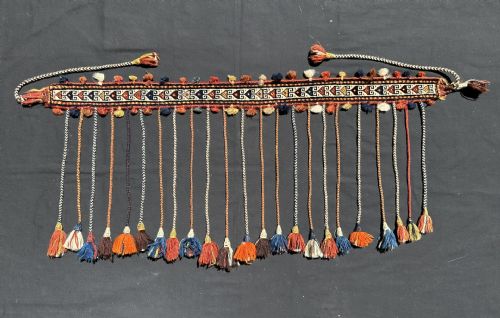
Antique wool trapping items comprise tribal weavings and ceremonial horse covers created by nomadic groups across Central Asia and Persia.
Antique Wool Trapping
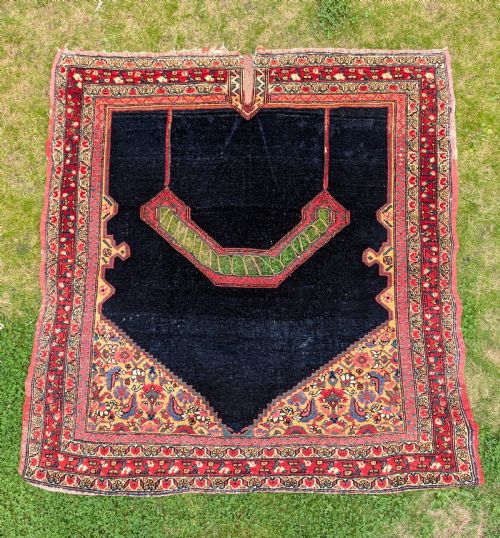
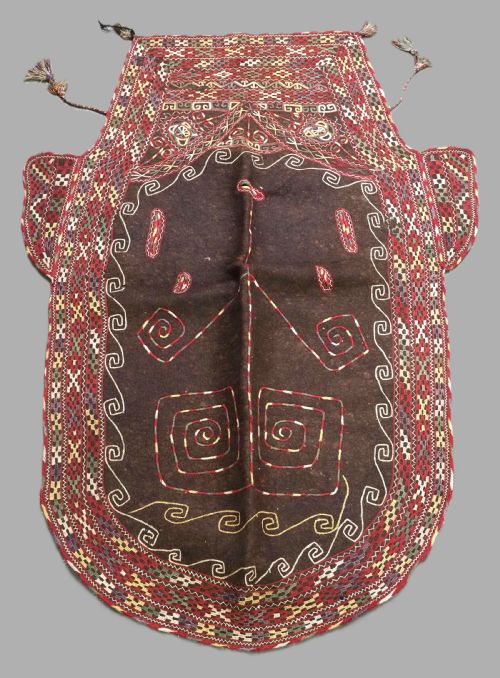
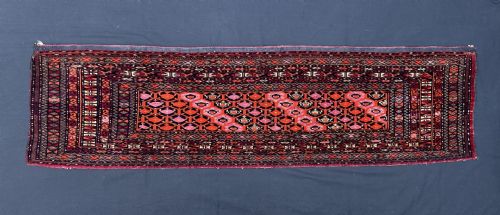
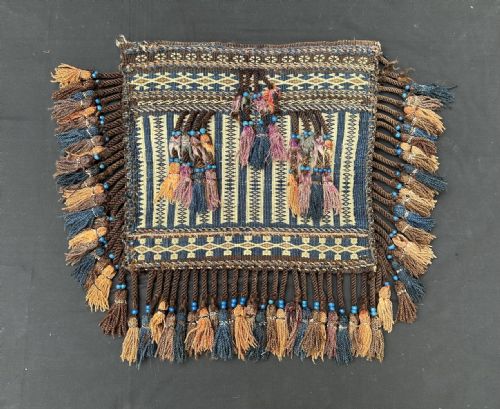
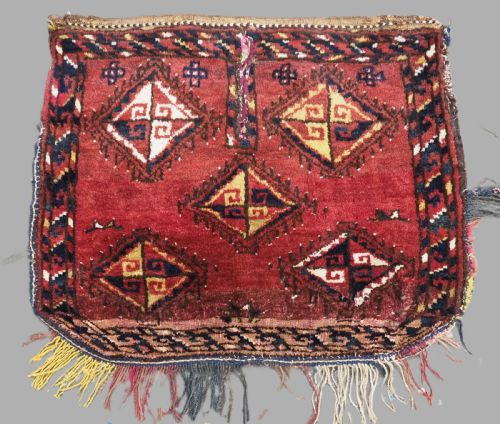
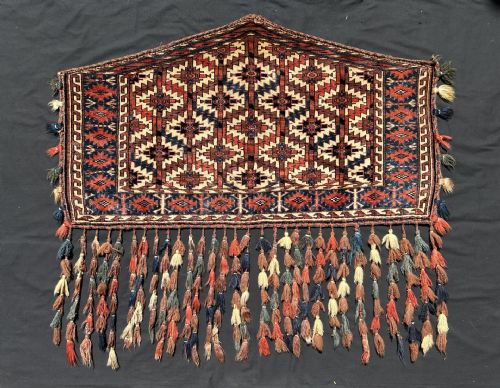
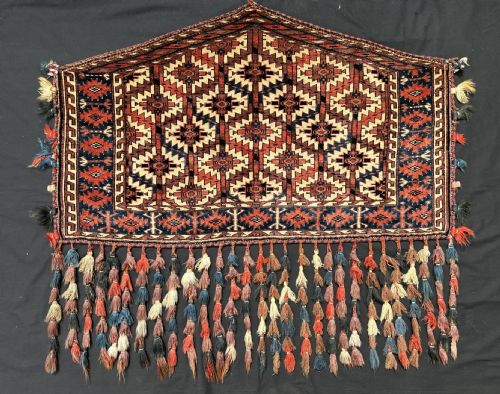
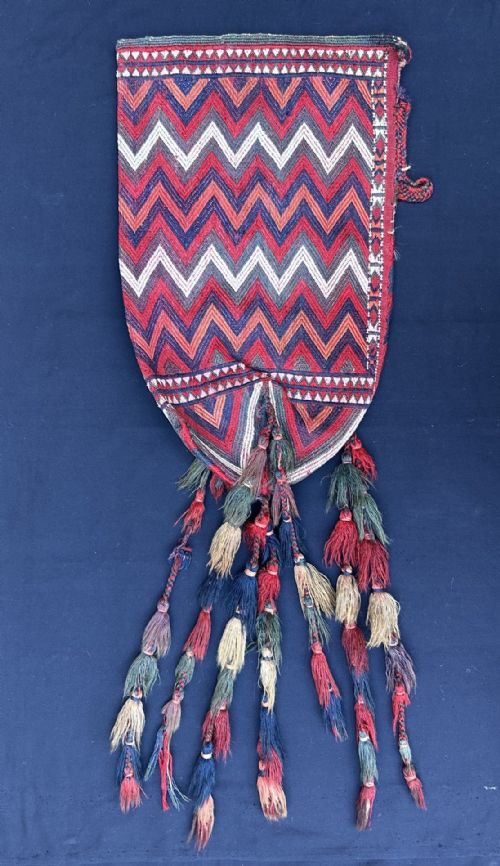
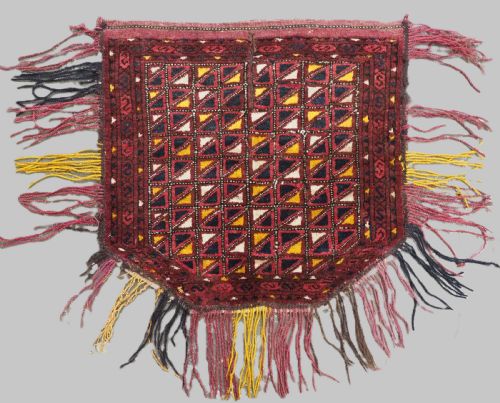
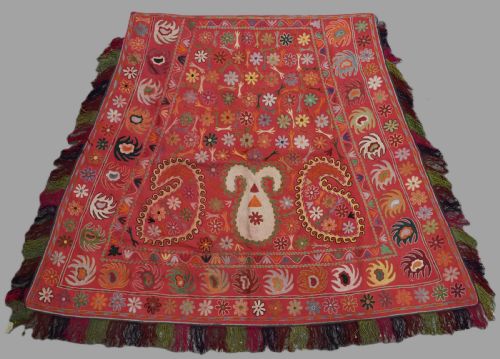
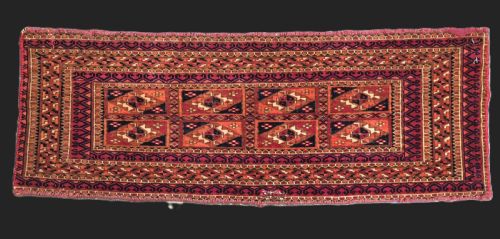
An antique wool trapping encompasses utilitarian and ceremonial objects produced by tribal makers, predominantly originating from Turkmen, Qashqai, Uzbek, and Baluch groups. These pieces include saddle covers, horse blankets, asmalyks, torbas, and storage bags designed for animal adornment and nomadic domestic use.
The buyer meets various forms on this page spanning the nineteenth and early twentieth centuries, with torbas and ceremonial horse blankets appearing frequently alongside saddle rugs. Pieces originate from regions such as Turkmenistan, the Fars province of Persia, and Afghanistan.
Tribal weaving traditions dictate the specific iconography and structural format of each trapping, reflecting regional identity and functional purpose within nomadic societies.
Materials and construction methods
Makers utilised wool as the primary foundation and pile material, frequently combining it with cotton and felted wool structures. Natural dyes provided the colour palette across tribal and nomadic workshops.
Embellishment involved cotton thread, silk thread, and glass beads applied to wool foundations. Certain ceremonial items incorporate felted wool bases with detailed embroidery techniques.
Camels wore elaborate pentagonal asmalyks during wedding processions to look exceptionally smart for the guests.
Variations in quality and execution
Quality separates through the fineness of the weave and the complexity of the tribal design work, such as distinct gul patterns or embroidered highlights. The survival of original elements like tassels and backs alters the integrity of an antique wool trapping.
The depth and variation of natural dyes influence the visual success of the piece, alongside the precision executed in tribal motifs by weavers across Central Asian and Persian regions.
The Antique Wool Trapping Glossary
- Asmalyk
- A large pentagonal trapping produced by Turkmen tribes, traditionally hung on the flanks of a camel during wedding processions.
- Torba
- A small storage bag woven by nomadic groups, utilised inside tents for possessions and household items.
- Gul
- A medallion motif repeated across Turkmen carpet and trapping designs, often identifying specific tribal groups.
- Jollar
- A long, horizontal bag face or trapping used for transport and storage within nomadic dwellings.
- Mafrash
- A rectangular storage bag or hamper piece, often woven in face panels to hold bedding and clothing.
Antique Wool Trapping: Frequently Asked Questions
What were antique wool trappings used for?
Nomadic communities utilised these textiles primarily for practical transport and animal adornment during daily life and migration. Many examples served specific ceremonial functions, such as horse blankets and camel trappings for weddings.
Other formats functioned as storage bags inside tents, holding household goods, bedding, and clothing. Each piece reflected the specific cultural requirements of tribes across Persia and Central Asia.
How do you display a wool trapping at home?
Collectors frequently mount smaller torbas and asmalyks on walls as textile art to protect the wool structure from floor wear. Larger saddle covers and blankets can rest flat on appropriate surfaces or hang securely from custom display rods.
Proper placement avoids direct, harsh sunlight to preserve natural dye colours over time. Maintaining stable indoor humidity prevents degradation of the historical wool fibres.
How are different tribal trappings told apart?
Tribal attribution relies on specific structural formats, colour palettes, and characteristic medallion motifs such as distinct gul designs. Yomut, Tekke, Ersari, and Qashqai weavers each employed unique layouts and border configurations.
Geographic origins and specific weaving techniques further clarify whether an example emerged from the Trans-Caspian steppes or the Fars province.
What age are these textile pieces?
The available selection dates primarily from the nineteenth century through to the early decades of the twentieth century. Specific production dates span from the mid-nineteenth century up to approximately 1920.
Stylistic conventions and structural materials help establish these approximate periods of origin for each tribal artefact.