



Burgundy Woven Bag
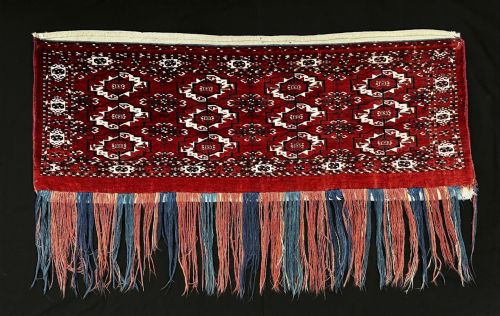
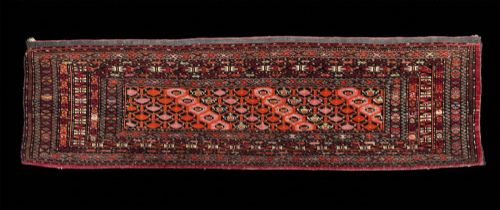
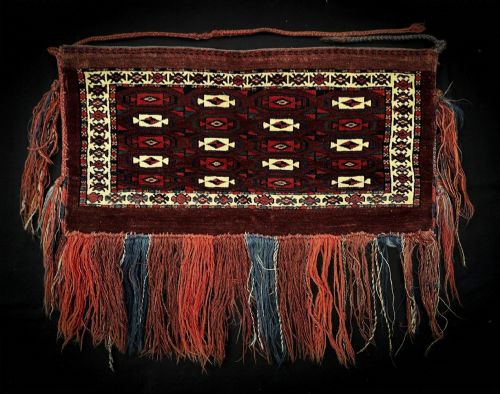
These burgundy woven bag examples are Central Asian tribal weavings created by nomadic makers to hold household possessions.
Burgundy Woven Bag
When you search for a burgundy woven bag, you are looking at antique Turkmen torbas, jollars, and chuval faces originating from nineteenth-century Central Asia. These items served practical nomadic functions as storage sacks and tent bags before entering the collector market.
The pieces appearing on this page span several decades from the mid to late nineteenth century, specifically between eighteen fifty and eighteen ninety. They represent tribal weaving traditions including Tekke, Sariq, Yomut, and Ersari groups from regions such as the Merv and Yolatan oases.
Forms vary from complete torbas with plain weave backs to individual chuval faces and wall hanging textiles. Each object displays the distinctive geometric guls and deep red colour palettes characteristic of these nomadic workshops.
What varies in quality
Quality rests upon the fineness of the weave and the clarity of the tribal design elements. Pieces featuring complex gul arrangements and tight knotting demonstrate superior craftsmanship.
Condition and completeness also distinguish examples, such as whether a torba retains its plain weave back or survives as a fragment face. The brilliance and saturation of the natural dyes further elevate specific pieces above standard examples.
Burgundy Woven Bag Retail Price Guide 2026
Typical asking prices for burgundy woven bag among the pieces listed under this phrase on Sellingantiques today, from the lower quarter to the upper quarter. They describe what is for sale here now, not the wider market.
Nomadic weavers packed their entire worldly belongings into these bags, making them the original luggage with built-in interior design.
The Burgundy Woven Bag Glossary
- Torba
- A small storage bag produced by Turkmen tribes used for domestic possessions inside the tent. These pieces often feature prominent guls on the face.
- Chuval
- A large tent bag used by nomadic groups for storing bedding and household goods. Surviving examples frequently circulate as decorative faces.
- Gul
- A medallion pattern repeated across Turkmen carpets and tribal bags. Each design identifies the specific tribe or clan that made the textile.
- Jollar
- A bag used for camel transport or tent storage within Turkmen culture. They share construction methods with torbas but often feature elongated proportions.
- Plain weave
- A simple unpatterned weave structure utilised for the backs of storage bags. This technique reduced weight and material expense for nomadic makers.
Burgundy Woven Bag: Frequently Asked Questions
What is a torba?
A torba is a small storage bag made by Turkmen nomadic tribes during the nineteenth century. These items were hung inside tents to hold personal belongings.
They are distinguished by intricate geometric guls and deep red wool construction. Collectors value them as portable examples of tribal textile art.
How were these bags used?
Nomadic families utilised these woven pieces as practical containers for storage during travel and settlement. They held household goods, bedding, and personal items.
Over time, many bags have lost their plain weave backs and now survive as decorative textile faces suitable for display.
How do I date these textiles?
Dating relies on stylistic analysis, material examination, and historical context within nineteenth-century Central Asian production. Pieces on this page originate between eighteen fifty and eighteen ninety.
Natural dyes, hand-spun wool, and specific tribal patterns help experts place items within this forty-year window.
How do I display a bag face?
These textile faces function effectively as wall hangings due to their flat format and striking geometric patterns. Mounting them requires careful support to distribute weight evenly across the wool fabric.
Keep them away from direct sunlight to protect the natural dyes from fading over time.