







Antique Tribal Torba
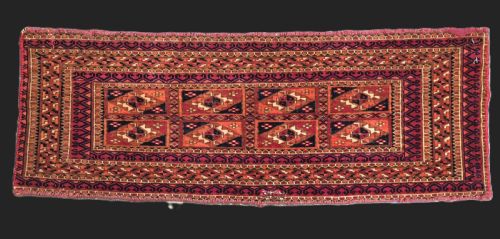
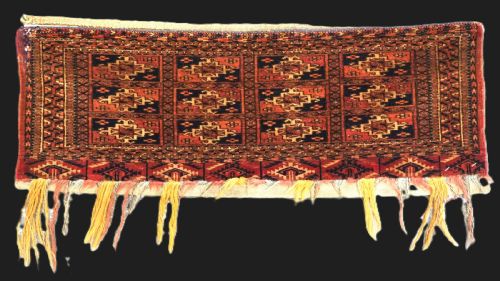
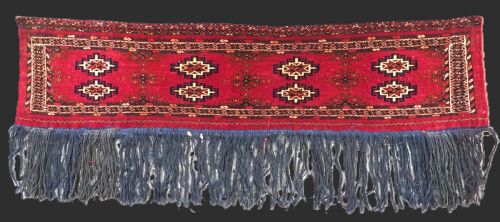
An antique tribal torba is a nomadic Central Asian storage bag woven with distinct tribal motifs for domestic and dowry use.
Antique Tribal Torba
When searching for an antique tribal torba, collectors encounter small Central Asian storage sacks created by nomadic and tribal groups such as the Tekke, Yomut, Saryk, and Ersari Turkmen, alongside Lakai Uzbek and Shahsevan groups. These pieces date predominantly from the nineteenth and early twentieth centuries, spanning periods from eighteen fifty to nineteen twenty.
The objects typically appear either as individual bag faces or complete with their original plain weave backs, mafrash components, and hanging flaps. Formats range from standard storage bags to specialised horse gear bags known as at torba ilgich.
Tribal weavers utilised structured wool foundations decorated with tribal guls, including the kepse, schemle, and salor designs. Examples frequently showcase ivory grounds, banded flatweaves, and specific regional motifs characteristic of the Trans-Caspian steppes and surrounding oases.
Materials and Construction
Weavers constructed these pieces using hand-spun wool for the primary pile and foundation, often supplemented by cotton and structural elements. Natural dyes provide the underlying palette, while certain pieces incorporate silk highlights or embroidery to accentuate specific design elements.
The production involves dense knotting techniques resulting in fine weaves, paired with flatweave constructions for the backs and utility areas. Artisans executed complex tribal patterns through precise colour placement and structural weaving traditions passed down through generations.
Antique Tribal Torba Retail Price Guide 2026
Typical asking prices for tribal torba among the pieces listed under this phrase on Sellingantiques today, from the lower quarter to the upper quarter. They describe what is for sale here now, not the wider market.
Listings feature pieces spanning the nineteenth century up to nineteen twenty, utilising hand-spun wool, cotton, silk, and natural dyes.
Evaluating Quality
Quality rests upon the density of the weave and the precision with which the tribal guls and geometric motifs are rendered. Examples featuring exceptionally fine knotting, balanced proportions, and scarce design variations represent the upper tier of the range.
The vibrancy and depth of the natural dyes, combined with the presence of complete original backs and contrasting silk highlights, distinguish standard utility items from masterworks of nomadic weaving.
The Antique Tribal Torba Glossary
- Torba
- A small Turkmen storage bag traditionally used inside a yurt for holding personal items or as part of a dowry. These pieces were woven by nomadic women using distinctive tribal patterns.
- Gul
- A repeating medallion or floral motif associated with specific Turkmen tribes and clans. Each tribe utilised characteristic guls to signify identity and heritage.
- Mafrash
- A larger rectangular storage container or compartment bag used for bedding and household possessions during nomadic migrations. They often share similar flatweave and pile techniques with torbas.
- Flatweave
- A textile technique produced without pile by interweaving warp and weft threads together. This method creates durable, flat surfaces often utilised for the backs of bags.
- At Torba Ilgich
- A specialised horse gear bag or hanging trapping produced by Lakai Uzbek weavers. These items feature distinctive embroidered surfaces and silk highlights.
Antique Tribal Torba: Frequently Asked Questions
What was a torba used for?
Nomadic families utilised these bags for storing household goods, clothing, and personal valuables inside the tent or yurt. They also formed an essential component of a bride's dowry.
Smaller versions functioned as vanity bags or specialised containers for riding equipment and horse trappings.
How do you identify tribal groups?
Identification relies primarily on the specific repeating guls, border arrangements, and structural colour choices unique to each region. Weavers from different tribes incorporated distinct geometric vocabularies.
Examining the weave structure and secondary materials further clarifies whether a piece originates from Tekke, Yomut, Saryk, or Ersari traditions.
Are original backs common?
Many surviving examples exist simply as bag faces because the plain weave backs sustained heavy wear during active nomadic use. Pieces that retain their original backs or hanging flaps are distinctly valued by collectors.
These surviving backs often display utilitarian flatweave bands that provide insight into the complete construction of the original object.
How should I display a torba?
These textiles adapt well to wall hanging using conservation-grade mounting methods that distribute the weight evenly across the upper edge. Proper mounting protects the structural integrity of the wool foundation.
Placement should avoid direct sunlight to preserve the natural dye colours over time.