
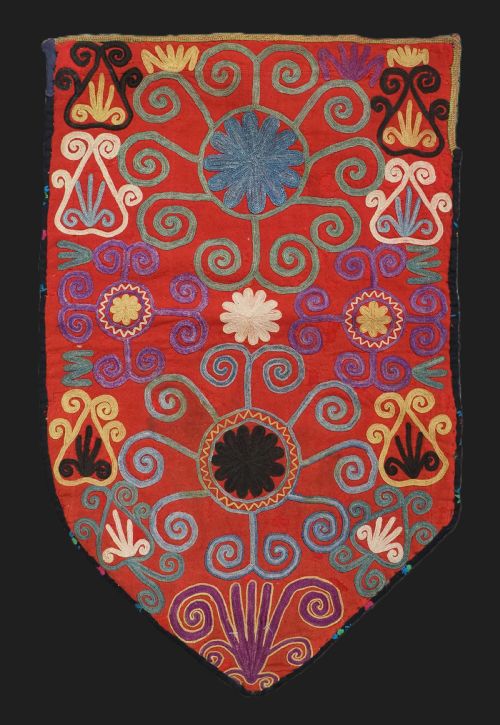
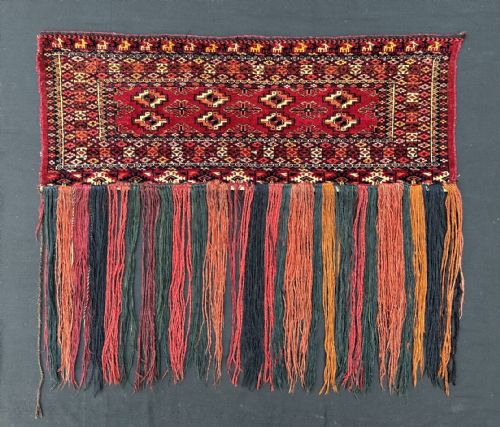
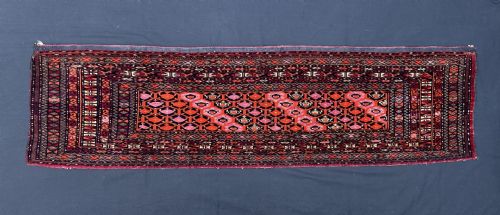
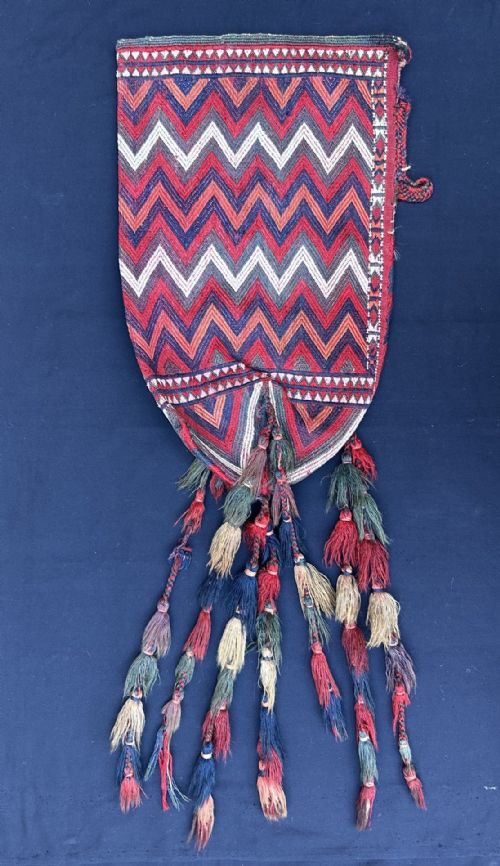


Antique Nomadic Tent Bag
An antique nomadic tent bag brings the rich tribal textile heritage of Central Asia into a modern interior through geometric patterns and deep wool pile.
Antique Nomadic Tent Bag
When searching for an antique nomadic tent bag, collectors encounter utilitarian storage vessels woven by tribal groups across Central Asia. These items served practical functions within portable dwellings, holding household goods, bedding, or tent poles.
Pieces appear either as complete bags retaining their original plain weave backs or as individual decorative faces intended for display. Formats range from large storage chuvals down to smaller tent-pole bags and hanging elements.
Materials and Construction
Weavers utilised hand-spun wool as the primary structural and decorative material, often combined with cotton foundations and occasional silk highlights for contrast. Artisans dyed these fibres using natural dye sources, achieving deep reds, browns, and secondary palette tones that developed characteristic patination over time.
Construction techniques involve dense pile knotting for main bag faces, alongside flat-woven backings, embroidered details, and supplementary weft-wrapping. Selected examples incorporate supplementary silk embroidery or flat-weave structures to enhance specific tribal motifs.
Some tent bags survived simply because they made excellent cushion covers after their nomadic owners settled down.
Evaluating the Weaving
Quality within these tribal textiles rests upon the density of the knotting and the precision of the tribal gul distribution. Finer weaves exhibit intricate geometric clarity and tighter structural integrity across the field.
The presence of complete original backs, tassels, and supplementary silk work elevates specific examples beyond standard fragment survivals. Colour saturation derived from natural dyes and the crisp execution of tribal emblems further separate standard utilitarian pieces from exceptional tribal art.
The Antique Nomadic Tent Bag Glossary
- Torba
- A small rectangular storage bag produced by Turkmen tribes for domestic utility inside the tent. These pieces generally feature horizontal rows of guls and were hung against the lattice walls.
- Chuval
- A large storage bag utilised for bedding and heavy household possessions within the nomadic dwelling. Surviving examples often display multiple major guls across a wide field.
- Okbash
- A specialised tent-pole bag designed to cover the ends of wooden struts when packed or in transit. Their triangular or hood-like shape distinguishes them from rectangular storage bags.
- Gul
- A primary medallion or repeating heraldic motif characteristic of Turkmen and Central Asian tribal weaving. Each distinct tribal group utilised specific gul variants to signify lineage.
- Lakai
- An Uzbek tribal group known for distinctive embroidered tent trappings and hanging elements. Their work often employs bold silk embroidery over a wool or cotton ground.
Antique Nomadic Tent Bag: Frequently Asked Questions
What were antique nomadic tent bags used for?
Nomadic tribes utilised these woven bags to organise and transport household possessions, bedding, and tent components within portable dwellings. Different shapes accommodated specific contents, from bulky bedding down to slender tent poles.
Hung against the interior lattice walls of a yurt or tent, the decorated faces displayed the weaving identity and status of the household. Over time, these utilitarian items transitioned into collectible textile art appreciated for their tribal symbolism.
How do I distinguish between a torba and a chuval?
Torbas are smaller, horizontally oriented storage bags designed to hang along the sides of the tent interior. They typically display a single row of major guls across the face.
Chuvals are significantly larger storage sacks intended for heavy items like wool and bedding. Their wider format generally accommodates multiple rows of guls or a larger grid of primary medallions.
How should I care for an antique wool tent bag?
Keep textile art away from direct, strong sunlight to prevent natural dyes from fading over extended periods. Gentle vacuuming through a mesh screen helps remove dust without disturbing the wool pile.
Avoid hanging heavy items by fragile suspension points, ensuring the weight distributes evenly across the backing or mounting frame. Professional textile conservators should handle any necessary cleaning.
How can I tell different Turkmen tribes apart?
Attribution relies heavily on the specific shape and geometry of the primary guls woven into the field. Tribes such as the Yomut, Tekke, Ersari, Saryk, and Chodor each employed distinct medallion structures and secondary border motifs.
Colour palettes and structural traits like side-cord finishes and knot density also provide key clues for tribal identification. Comparative study of known nineteenth-century tribal weaving groups helps clarify these distinctions.