

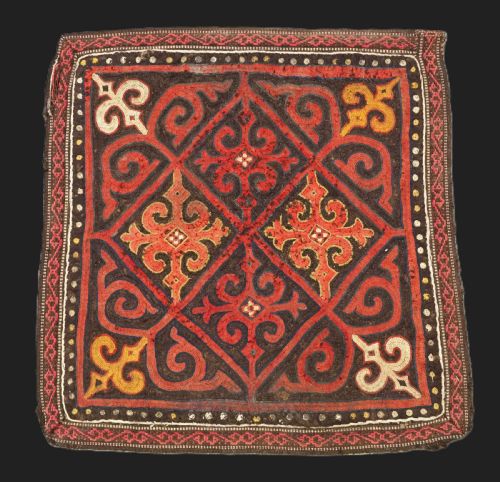


Traditional Nomadic Wool Tapestry
A traditional nomadic wool tapestry brings authentic tribal warmth into a modern room through honest handweaving and rich natural dyes.
Traditional Nomadic Wool Tapestry
When you search for a traditional nomadic wool tapestry, you are looking at flatwoven rugs, embroidered felt panels, saddle bag faces and wall hangings made by tribal makers across Central Asia, Persia, the Caucasus and Anatolia. These textiles represent generations of nomadic craft, created for utility within camps and settled villages alike.
On this page, you are most likely to meet pieces from the late nineteenth and early twentieth centuries, spanning tribal styles such as Persian, Turkmen, Central Asian and Anatolian. They appear as kilims, sumac weaves, cicim embroideries and felt panels.
The forms range from large floor rugs and multi-strip kilims to smaller cushion covers and fragment panels. Each piece reflects the specific material culture of the group that made it, using traditional patterns passed down through families.
How they were made
The foundation of these textiles rests on handspun wool, chosen for its durability and ability to take rich dye colours. Cotton often appears alongside wool for structural warps or supplementary foundations in specific regional formats.
Makers utilised flatweaving techniques like kilim and sumac, alongside needle embroidery on woven grounds and pressed wool felt. These methods allowed weavers to create intricate geometric patterns and textural surface designs without relying on standard loom constraints.
Traditional Nomadic Wool Tapestry Retail Price Guide 2026
Typical asking prices for traditional nomadic wool tapestry among the pieces listed under this phrase on Sellingantiques today, from the lower quarter to the upper quarter. They describe what is for sale here now, not the wider market.
Some saddle bag faces still carry the original side selvedges that rubbed against camels on dusty transit routes.
What varies in quality
The standard of a piece depends on the tightness of the weave and the precision of the geometric layout. Tighter structure and finer spinning denote greater skill in the hands of the weaver.
The depth and preservation of the wool pile or flatweave surface also determine the character of the object. Retained structural integrity across strips, panels or borders marks a higher grade of survival for utilitarian items.
The Traditional Nomadic Wool Tapestry Glossary
- Kilim
- A flatwoven textile produced without a pile, created by tightly interweaving warp and weft strands. This technique forms crisp geometric patterns visible from both sides.
- Sumac
- A supplemental weft-wrapping technique that creates a ribbed texture on the face of the textile. It offers additional structural strength and detailed patterning.
- Cicim
- A brocade-like embroidery technique where coloured threads are sewn onto a finished woven ground. It adds raised surface decoration to panels and rugs.
- Felt
- A non-woven textile made by matting, condensing and pressing wool fibres together. It serves as a base for intricate needlework in nomadic panels.
- Chuval
- A large face used on nomadic storage bags, woven by Turkmen tribes. These pieces often feature traditional gul motifs arranged across the field.
Traditional Nomadic Wool Tapestry: Frequently Asked Questions
How were these traditional textiles used originally?
Nomadic groups used these flatweaves and panels for practical shelter, bedding storage, floor coverings and animal trappings. They formed essential portable furnishings within tents.
Over time, many of these utilitarian objects transitioned into decorative wall hangings and floor rugs as nomadic lifestyles shifted.
How do I care for a wool flatweave?
Regular gentle vacuuming without a rotating brush helps remove dust from the wool fibres. Keeping the textile out of direct sunlight prevents the natural dyes from fading.
Professional cleaning suited for antique carpets ensures the textile remains stable. Avoid excessive moisture on felt or embroidered panels.
How can I tell different tribal styles apart?
Tribal styles are distinguished by their specific geometric vocabulary, border arrangements and colour palettes. Shahsavan and Caucasian pieces often show crisp hooked motifs, while Turkmen weaving relies on repeated guls.
Structure also aids identification, as specific groups favoured distinct flatweaving or embroidery techniques like sumac or cicim.
Are these pieces suitable for walls?
Many of these textiles, including fragment panels and embroidered felts, work well as wall displays. Their lighter weight compared to piled carpets makes them practical for hanging.
Using a proper sleeve or non-damaging mounting method supports the weight of the wool evenly across the textile.