
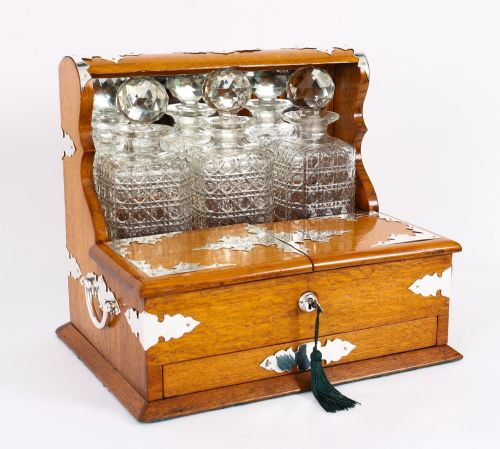
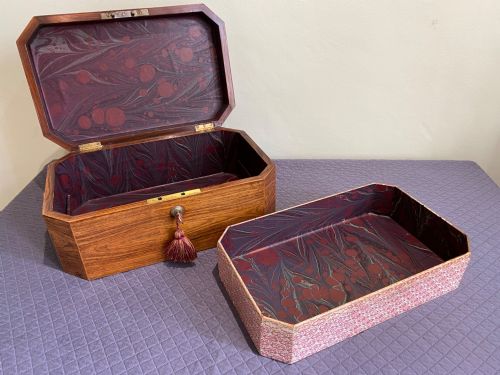

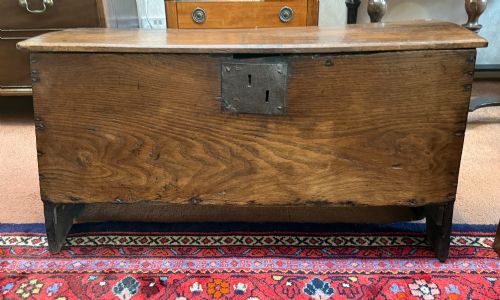
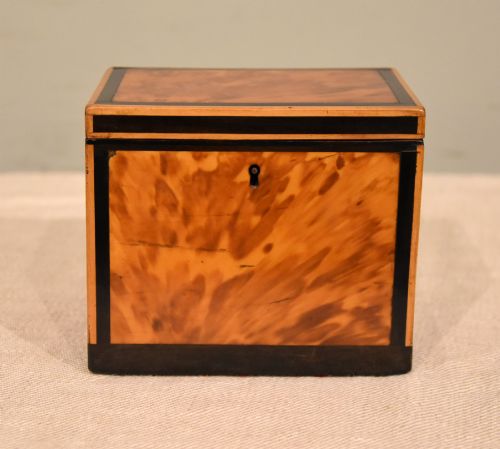
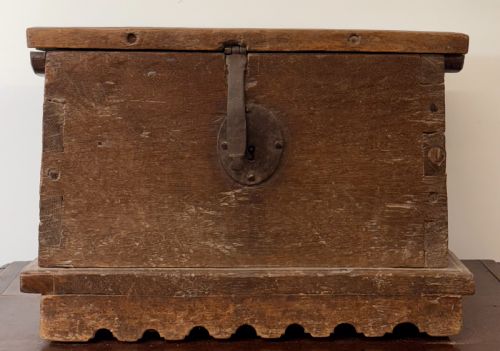
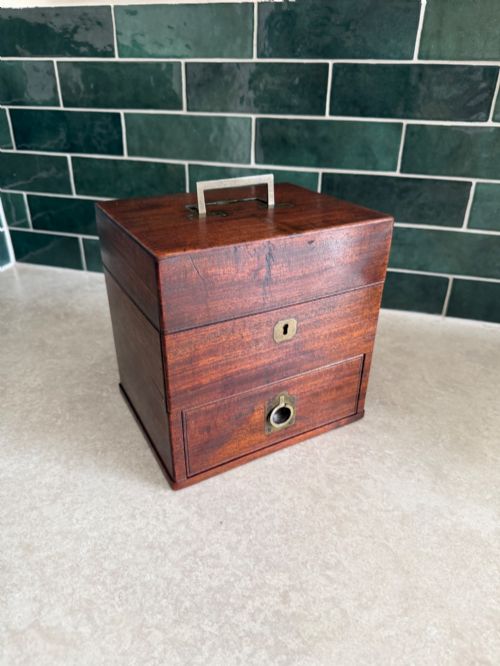
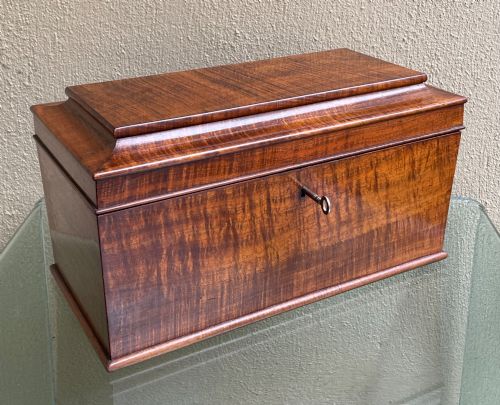
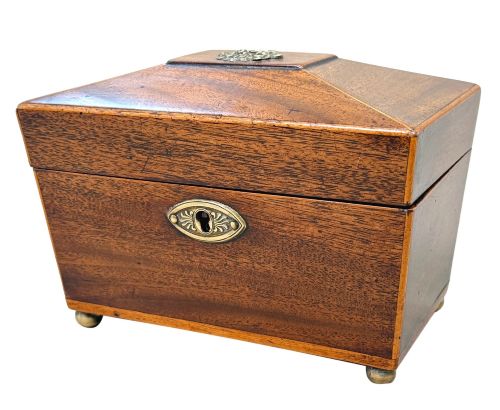
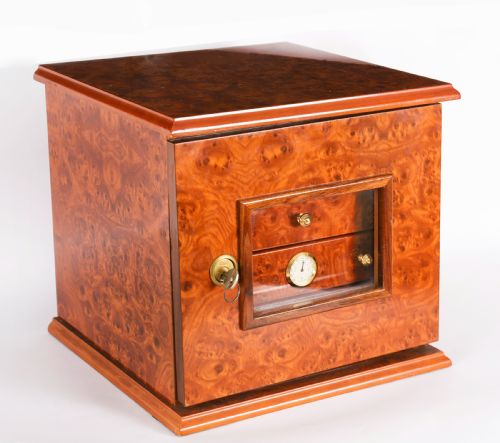
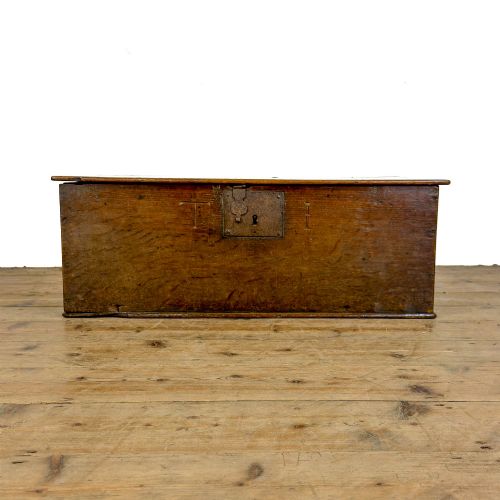
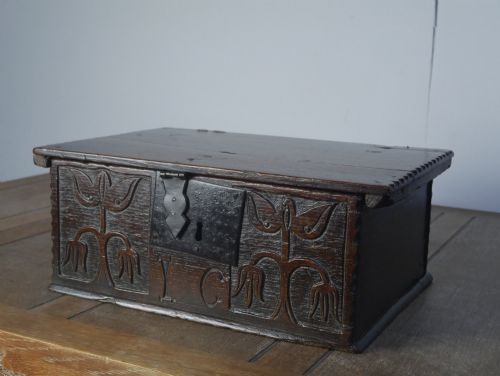
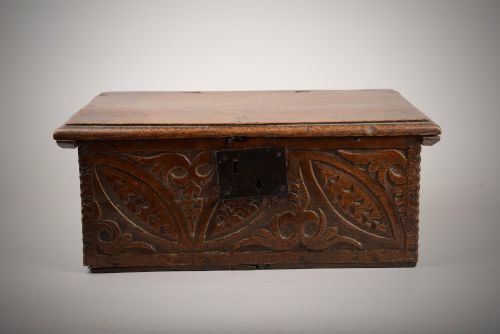

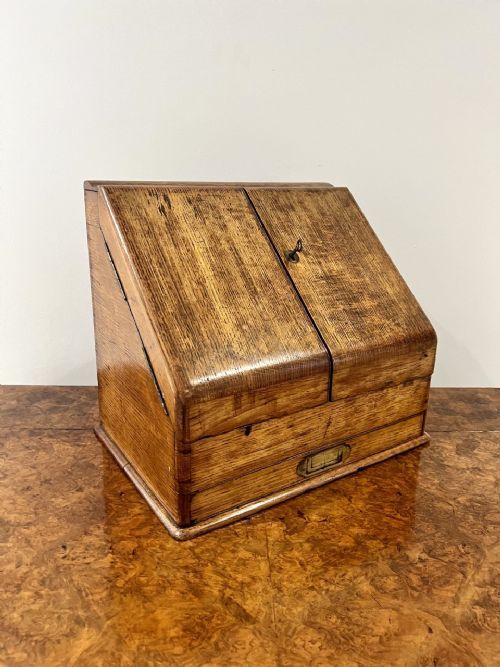
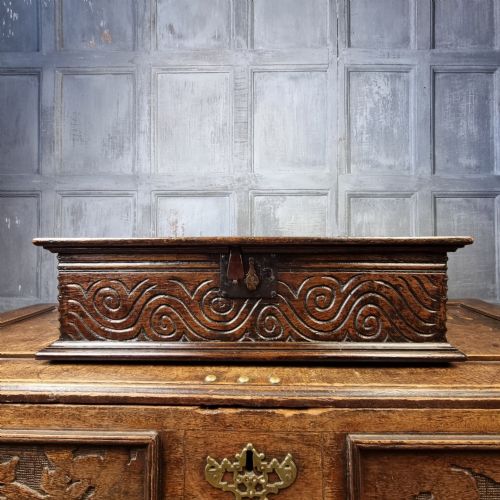
Antique Wooden Lock Box
An antique wooden lock box offers secure storage with period character, prized by collectors for rich timber grains and fine brass hardware.
What an antique wooden lock box is
When searching for an antique wooden lock box, buyers encounter functional containers designed for personal valuables, documents, tea, or medicinal supplies. These pieces survive from the Georgian, Regency, and Victorian periods.
The objects on this page include tea caddies, apothecary boxes, stationery boxes, and table boxes. Mahogany, walnut, burr walnut, rosewood, partridge-wood, and boxwood are the primary timbers used in their construction.
The most likely forms to meet here are rectangular tea caddies and document boxes outfitted with metal or brass components. Makers from the eighteenth and nineteenth centuries shaped these woods into compact, secure vessels.
Materials and construction
Cabinet-makers selected dense hardwoods such as mahogany, walnut, and rosewood for durability and rich figuring. Artisans incorporated boxwood for contrasting stringing and decorative inlay work.
Metal and brass hardware, including key escutcheons and hinges, were fitted by hand to secure the lids and compartments. Tunbridge Ware examples integrated small pieces of coloured wood to create mosaic surface patterns.
Retail Price Guide 2026
Typical UK retail prices for wooden lock box, calculated from the Sellingantiques database of over a million retail prices indexed since 2003. This retail price guide relies exclusively on Sellingantiques data; no external sources or auction records are used, so the figures do not describe the wider market.
Judging quality and merit
Superior examples distinguish themselves through the choice of timber figure, such as burr walnut or figured mahogany. The precision of inlaid boxwood lines and the integration of original brass fittings elevate a piece.
Finer boxes maintain internal divisions and structural integrity within the carcase. The refinement of the locking mechanism and the harmony of the proportions dictate the standing of an individual item.
The Antique Wooden Lock Box Glossary
- Escutcheon
- A protective plate surrounding the keyhole, often cast in brass to prevent wear to the surrounding timber. This hardware frequently aids in dating the piece.
- Caddy
- A small container originally used for storing tea leaves under lock and key when tea was a luxury commodity. These often feature internal lidded compartments.
- Stringing
- A narrow inlay of contrasting wood, such as boxwood, used to outline panels and geometric shapes on the exterior. It defines the decorative style of Georgian and Regency pieces.
- Tunbridge Ware
- Woodware decorated with mosaic patterns formed from tiny wood segments of various natural colours. This technique created pictorial or geometric designs on table boxes.
Frequently Asked Questions
How were these boxes used?
These boxes served to secure valuable commodities, private correspondence, or loose tea leaves from domestic staff and guests. Wealthy households relied on locked containers to protect personal property.
Medicines and important documents also found safe storage inside compartmentalised interiors designed for daily utility.
What woods were commonly utilised?
Cabinet-makers relied on dense tropical and native hardwoods like mahogany, walnut, and rosewood for their durability and attractive grain patterns. Burr walnut and partridge-wood provided decorative visual texture.
Lighter timbers such as boxwood appeared frequently as contrasting inlay or stringing details on the exterior surfaces.
How do I identify a Georgian box?
Georgian pieces typically exhibit restrained classical proportions and rich mahogany or walnut construction without excessive ornamentation. Subtle boxwood stringing and brass escutcheons mark the period style.
Construction methods from the eighteenth century involve hand-cut dovetails and solid timber carcases rather than modern manufactured boards.
Where should I place a box?
These pieces function well on side tables, desks, or chests of drawers where their polished timber grains add texture to a room. Placing them away from direct heat sources protects the antique wood.
They also provide practical storage for modern trinkets, keys, or jewellery while retaining their historical presence.