

Antique Wooden Lighting Pair
These antique wooden lighting pair selections bring matched symmetry and warm illumination to a room, spanning centuries of carved and turned craftsmanship.
Antique Wooden Lighting Pair
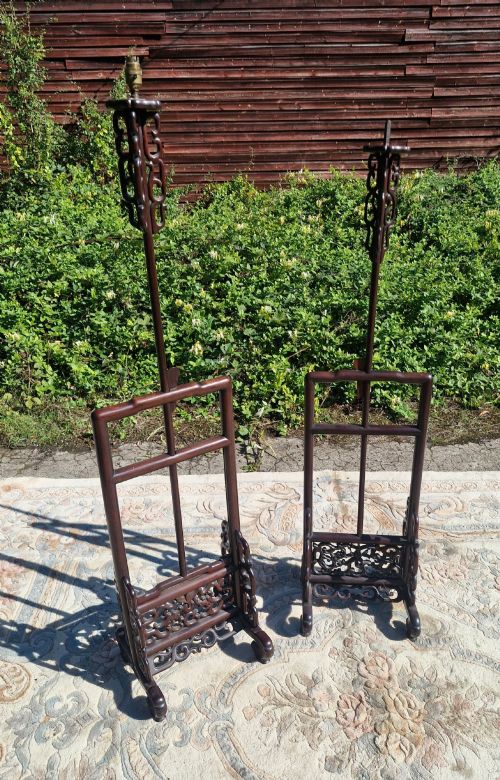
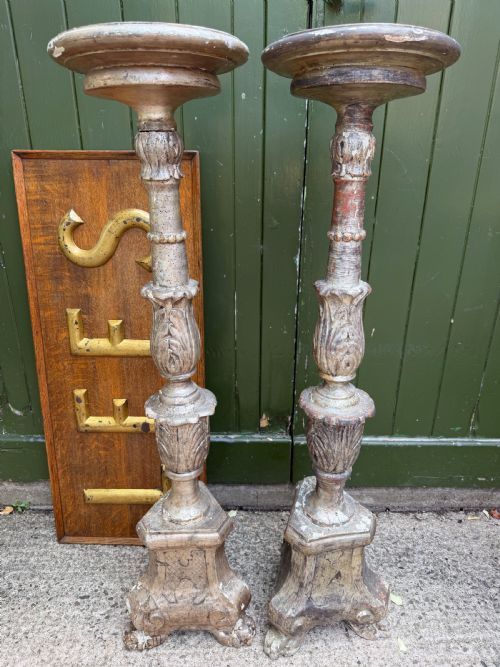
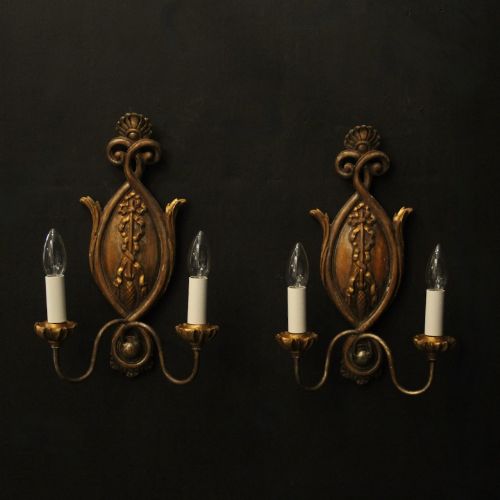
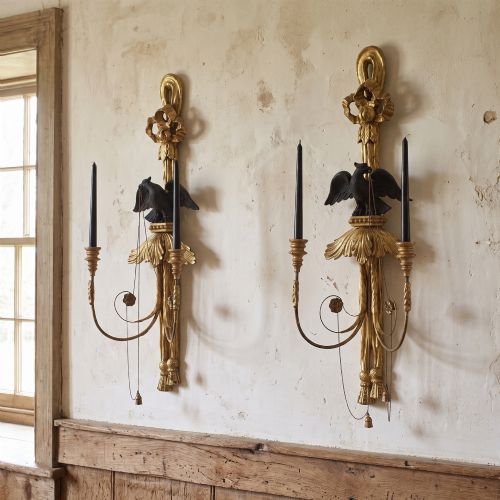
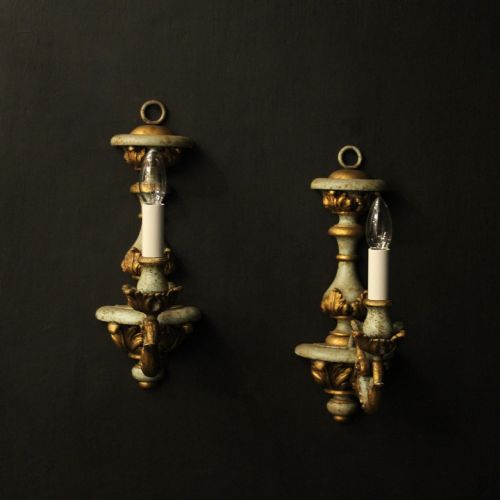
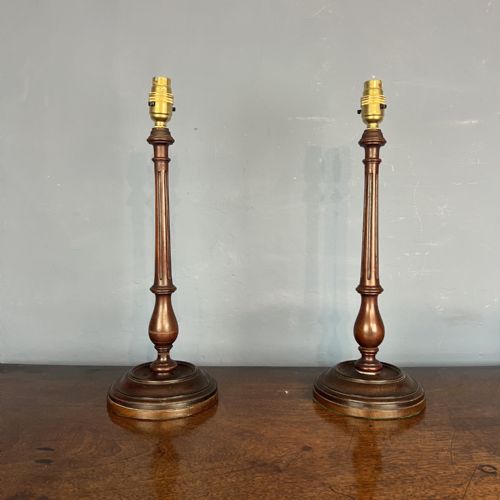
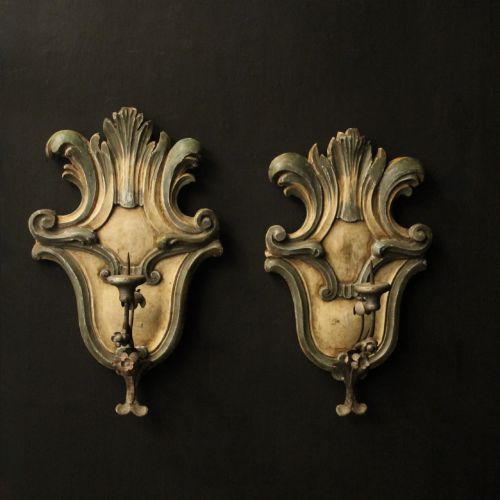
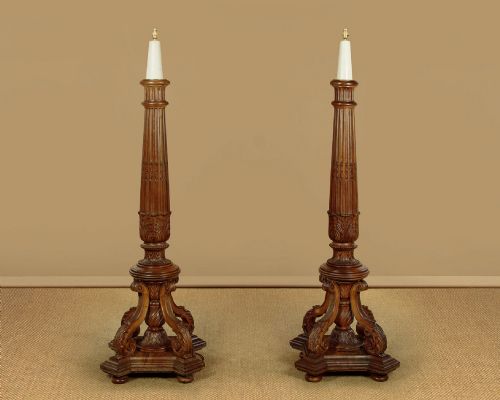
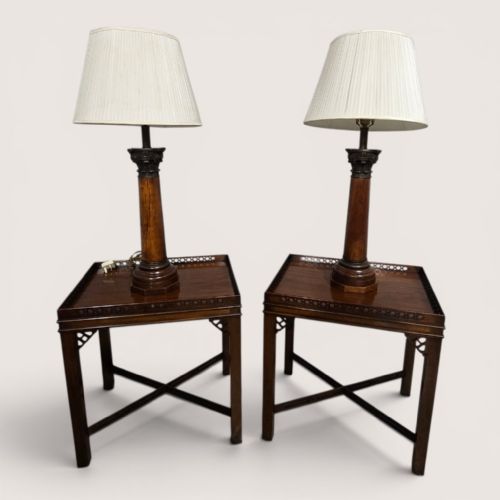
The selection frequently includes table lamps, wall sconces, and tall torcheres shaped from oak, walnut, mahogany, and ash. Many examples show adaptations where older candle holders or altar sticks are converted for electrical use.
Origins stretch across English, Italian, and Kashmiri workshops, displaying regional influences from Georgian restraint to ornate Florentine carving. Buyers encounter diverse forms created for domestic illumination and decorative display over the last few centuries.
Materials and construction methods
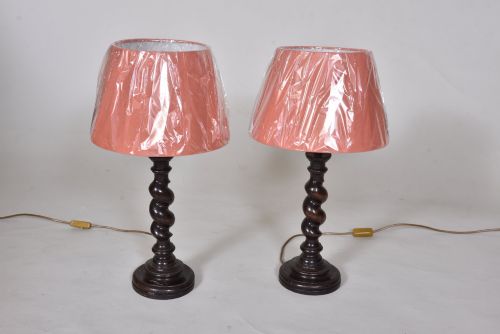
Carvers and turners shaped solid woods such as oak, mahogany, and walnut using lathes and hand chisels to create barley twist columns and classical proportions. Workshops applied surface treatments including giltwood, silver leaf, polychrome paint, and clear wax to finish the timber.
Gesso layers provide a smooth base for gold leaf application on decorative Italian and English wall lights and torcheres. Metal components like brass sockets, drip pans, and weighted bases frequently combine with the turned wood structures to ensure stability.
Distinctions in craftsmanship and condition
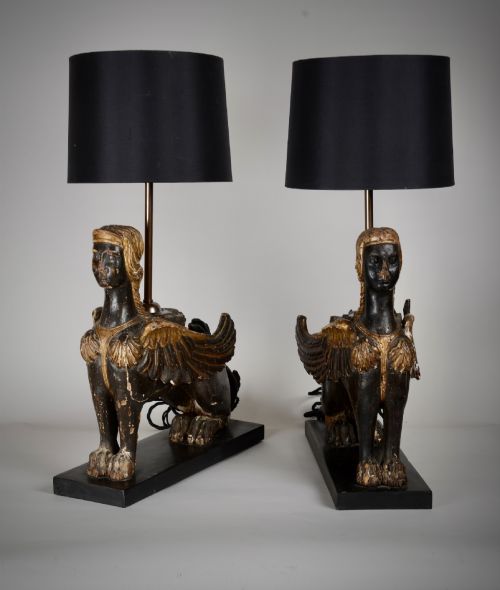
The depth and crispness of hand carving separate ordinary turned columns from exceptional sculptural works, particularly on giltwood and figures such as eagles or sphinxes. Crisp detail in the acanthus leaves or fluting indicates a skilled hand at the bench rather than routine production.
Original surfaces versus later over-painting significantly influence the integrity of a pair. Cleanly aged patination on waxed oak or intact original gilding reveals how well a piece has survived through generations of domestic use.
The Antique Wooden Lighting Pair Glossary
- Torchere
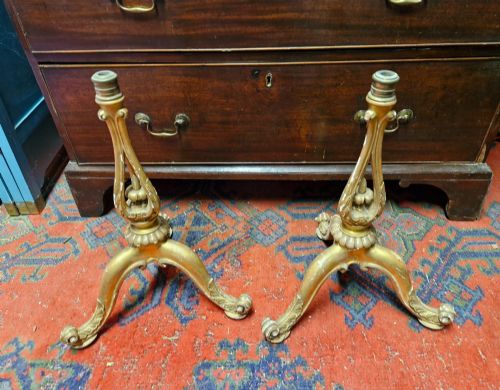
- A tall decorative stand designed to support a light source or candle. These slender columns often feature tripod bases and carved wooden shafts.
- Giltwood
- Timber coated with a thin layer of gold leaf over a prepared gesso ground. This technique creates a brilliant reflective surface popular in continental and neoclassical wall lights.
- Barley Twist
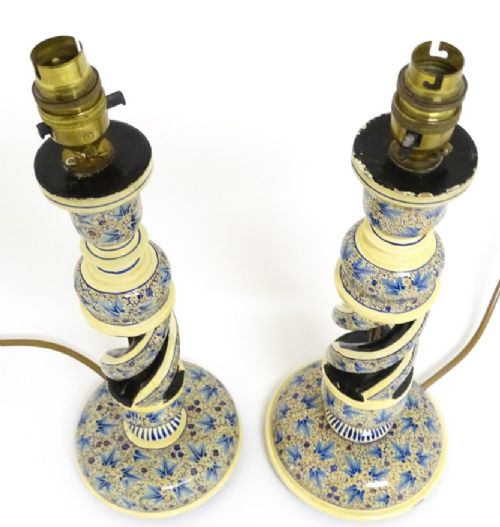
- A spiral turning technique resembling a twisted rope, carved into wooden shafts of candlesticks and lamp bases. This decorative motif appears frequently on oak pieces from the early twentieth century.
- Pricket
- A sharp metal spike on a candlestick designed to hold a candle in place. Older ecclesiastical and altar-style sticks often use this method instead of a socket.
- Sconce
- A wall-mounted lighting fixture designed to hold candles or electric bulbs. Paired examples often match the architectural symmetry of a room.
Antique Wooden Lighting Pair: Frequently Asked Questions
How do I wire antique wooden lamps safely?
Most antique wooden lamps require rewiring by a qualified electrician to meet modern safety standards. Contemporary wiring can be threaded discreetly through existing internal channels or wired externally without damaging the historic timber.
Collectors should check that the internal cord is modern and that the lampholder matches the scale of the wooden base. Professional rewiring preserves the structural integrity while ensuring domestic safety.
Can I mix different shades on a paired set?
Matching shades create a formal appearance, but complementary designs can soften the look depending on the room. Identical shades emphasise the symmetry of the wooden bases.
When pairing lamps with distinct silk or parchment shades, keep the proportions and colour tones balanced. This approach unifies mismatched elements while highlighting the carved wooden standards.
What is a lamp conversion?
A lamp conversion involves adapting an older object, such as a candlestick, torchere, or vase, to hold electrical wiring and lamp fittings. These pieces retain their original form while serving a modern functional purpose.
Conversions allow historical items to function as daily lighting without losing their decorative character. Careful adaptation preserves the exterior appearance of the timber.