


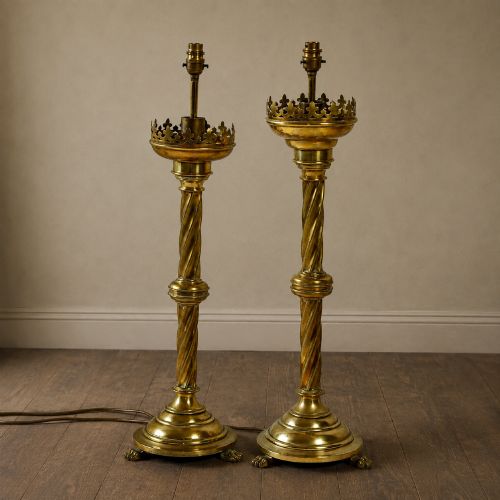
Barley Twist Table Lights
Barley twist table lights are turned standards that bring vertical rhythm to a room, pairing historic timber or cast metal with modern shades.
Barley Twist Table Lights
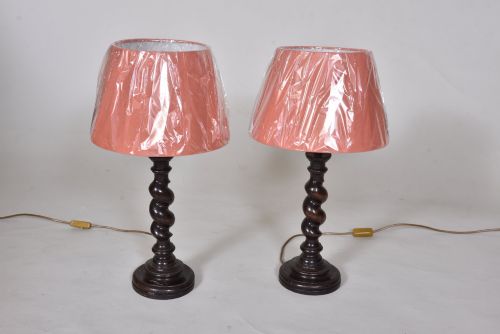
Barley twist table lights combine turned wooden or metal shafts with lamp fittings, appearing in forms from converted nineteenth-century candlesticks to dedicated twentieth-century lamp bases. The selection ranges through Victorian, Edwardian, and 1920s examples, alongside earlier eighteenth-century brass pieces adapted for illumination.
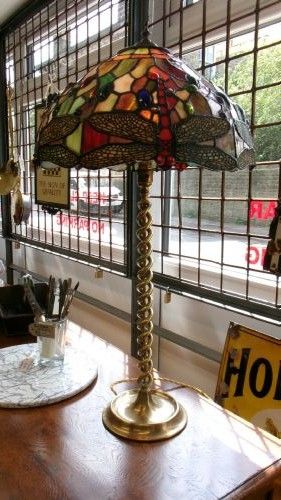
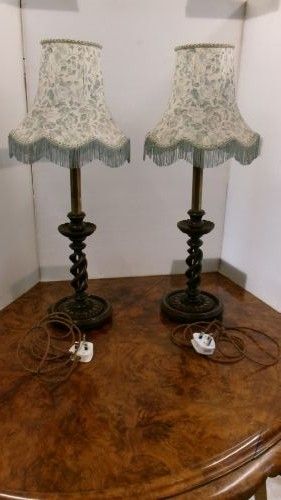
Wooden versions often employ oak or dark oak, whilst metal interpretations utilise brass, chrome, and bronze. These pieces frequently manifest as matched pairs or tall single standards, sometimes accompanied by fabric or Tiffany-style shades.
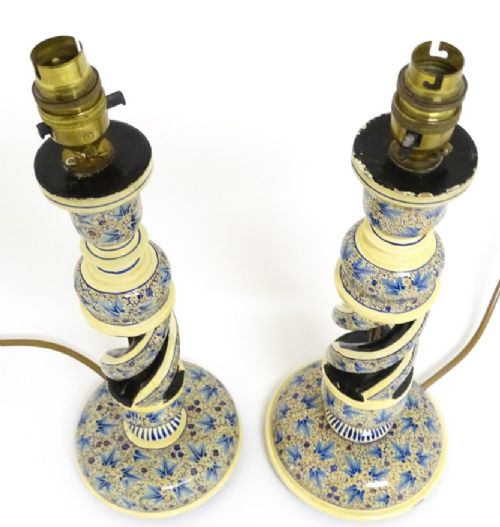
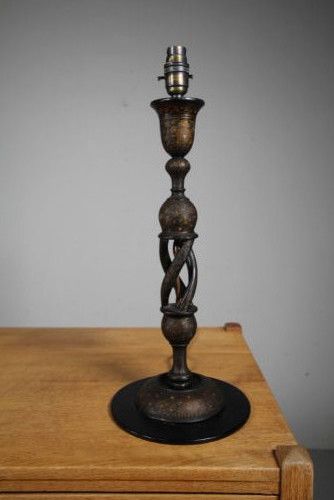
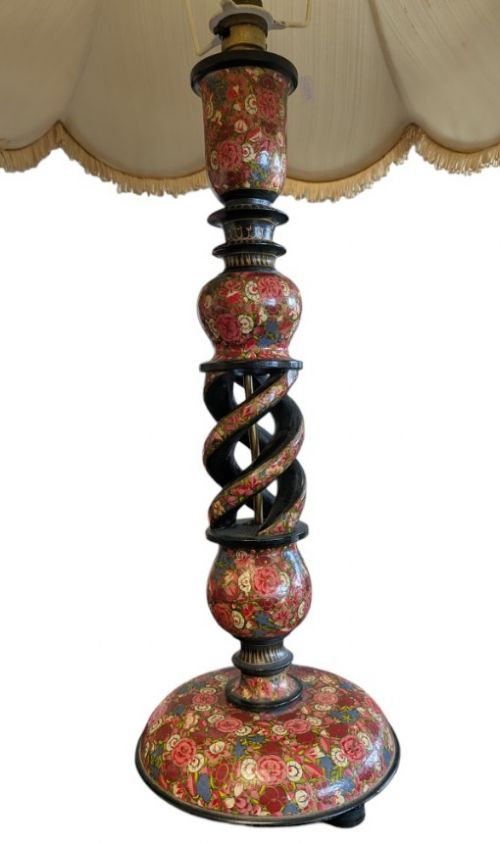
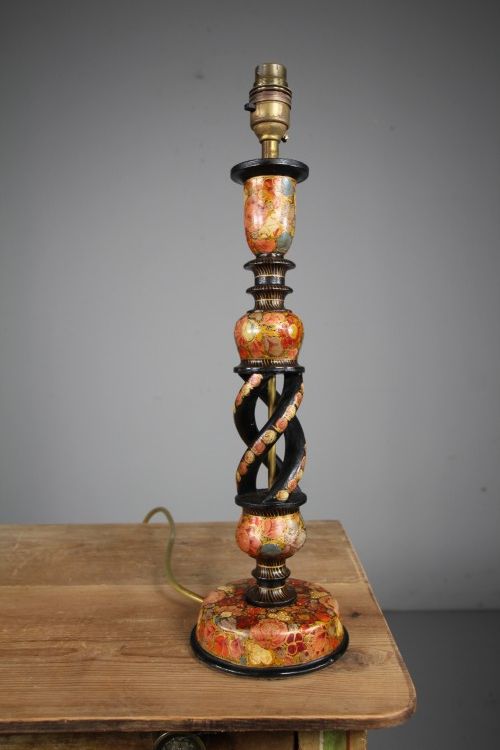
Regional and stylistic variations appear across the inventory, including hand-painted Kashmiri lamps and Gothic Revival altar candlesticks. Alongside these dedicated lamps, the broader grouping encompasses functional desk lamps and converted oil lamps.
How they were made
Makers shaped wooden standards using lathe-turning techniques to produce the characteristic helical twist, utilising dense timbers such as oak and mahogany. Metal examples, predominantly in brass and chrome, involved casting and hand-finishing to create open twists and double helix formations.
Surface treatment varied by origin, with British oak pieces displaying natural grain or wax finishes, while Kashmiri lamps featured detailed hand-painted lacquer work. Conversion work on older candlesticks and oil lamps typically involved boring internal channels for electrical wiring.
Listings span from the 18th century through to the 1930s, incorporating oak, brass, lacquer, and glass.
What varies in quality
Quality rests in the precision of the twist and the integrity of the material, where sharply defined helical cuts and heavy gauge brass outclass softer, blunt turns. The distinction between a standard production piece and a finer work lies in the crispness of the hand-carving or the weight of the metal casting.
Proportion and balance dictate the architectural success of a lamp, with taller examples requiring stable bases and harmonious diameters. Original surface patination on older oak and unpolished brass adds depth that heavy modern stripping removes.
T Thomason & Co
The Barley Twist Table Lights Glossary
- Barley twist
- A decorative turning technique resembling a spiral helix, resembling a stalk of barley. This profile defines the upright column of the lamp.
- Open twist
- A helical design where the central core is hollow or pierced, creating an airy structure rather than a solid carved column.
- Double helix
- A pair of intertwined spiral turns running parallel along the shaft. This intricate form requires advanced turning or casting skill.
- Altar candlestick
- A tall, heavy ecclesiastical candlestick, frequently adapted into a table lamp. These items originate from church settings and provide substantial height.
- Papier-mâché
- A composite material made from paper pulp and binder, used in specific regional decorative lamp bodies. It accepts lacquer and hand-painted finishes smoothly.
Barley Twist Table Lights: Frequently Asked Questions
How do I choose the right shade?
Selecting a shade depends on the height and weight of the twist base, ensuring neither element overpowers the other. Fabric shades suit wooden oak bases, whilst patterned or Tiffany-style shades often pair with brass standards.
Proportion remains key, with the shade width generally matching the height of the turned wooden or metal column.
How do I date a brass twist lamp?
Dating relies on the casting quality, the composition of the brass alloy, and assembly methods such as threaded rods versus pinned joints. Victorian and Edwardian examples often display distinct patination and weight compared to later twentieth-century productions.
Maker marks, where present, help pinpoint the exact workshop or decade of manufacture.
Can I polish antique brass bases?
Polishing brass is a matter of personal taste, though many collectors prefer to leave an aged patination intact. Gentle cleaning with a soft cloth removes dust without stripping the historic surface colour.
Harsh chemical cleaners should be avoided to protect the original finish and subtle tooling marks.