


Barley Twist Desk Lamp
A barley twist desk lamp brings sculptural warmth and turned height to a room, using the tactile spiral to catch the light.
Barley Twist Desk Lamp
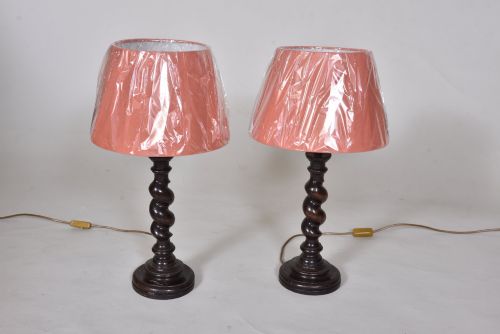
When you search for a barley twist desk lamp, you encounter turned wooden and metal stems designed to hold electrical fittings for illumination. The pieces listed here span the Victorian, Edwardian, and Art Deco eras, alongside early twentieth-century examples.
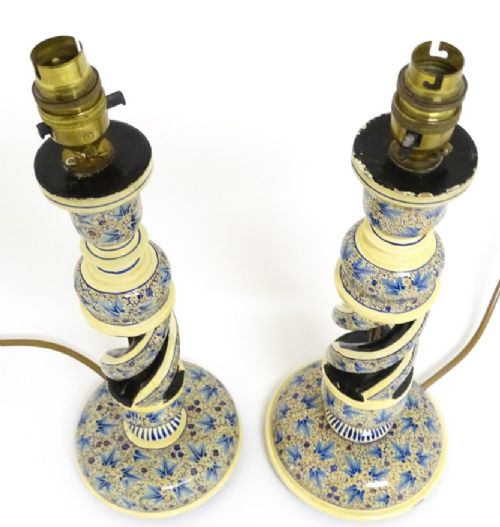
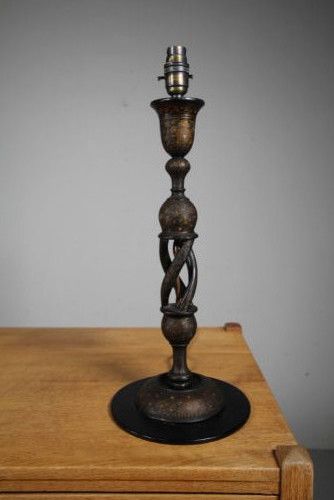
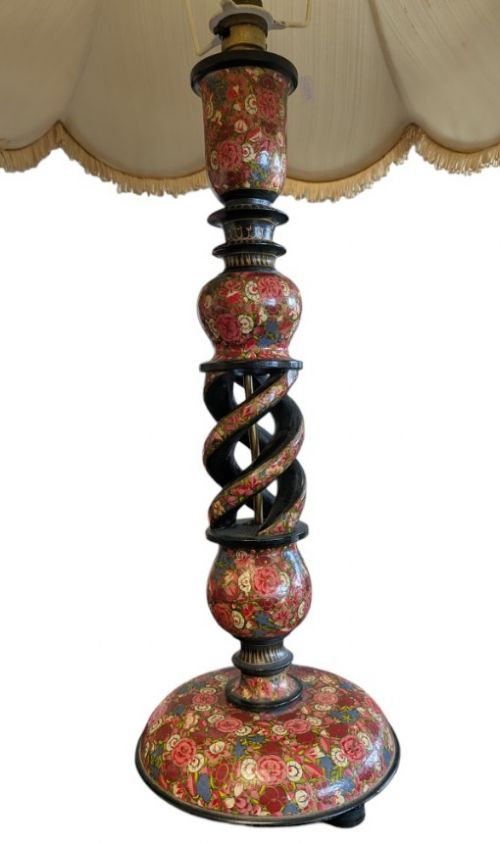
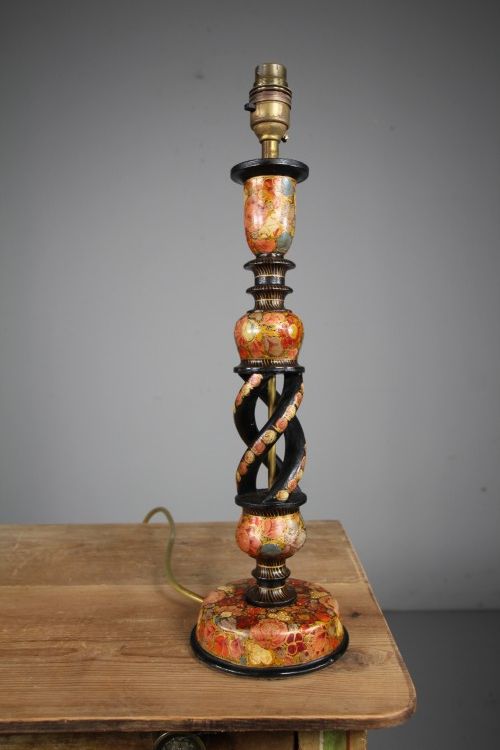
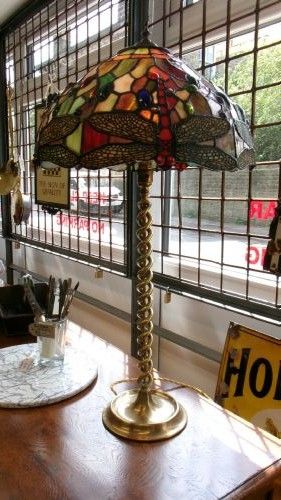
The selection ranges from tall brass open twist lamp bases and double helix designs to hand-painted Kashmiri table lamps. You also find side tables and lamp tables featuring the same characteristic spiral turning.
Origins represented in the inventory include English, French, and Anglo-Indian workshops, using materials from dark oak to papier-mâché and glass.
How they were made
Makers shaped the distinctive spirals of a barley twist desk lamp using woodturning techniques on timbers such as oak and walnut, or by casting and shaping brass and chrome. Some wooden and papier-mâché examples receive detailed hand-painted decoration, as seen in the Kashmiri items.
Metals are utilised for open twist and double helix formations, occasionally paired with fabric or Tiffany-style shades to complete the assembly.
Listings include items made from brass, dark oak, glass, lacquer, and papier-mâché.
What varies in quality
The distinction between ordinary and superior examples lies in the crispness of the turned spiral and the integrity of the material, whether cast brass or carved wood. Sharpness in the execution of the twist defines the visual impact of the stem.
Surface finish also determines quality, distinguishing hand-painted Kashmiri lacquered decoration and patinated dark oak from simpler production methods.
The Barley Twist Desk Lamp Glossary
- Barley twist
- A decorative spiral turning resembling the stalk of barley, popular in furniture and lamp bases across various centuries. This form creates diagonal movement along the vertical axis of the stem.
- Double helix
- A pair of intertwined spiral stems running parallel to one another. This technique demands greater precision from the turner or metalworker.
- Papier-mâché
- A composite material made of paper pulp mixed with adhesive, moulded and dried before being painted and lacquered. It provides a lightweight yet durable base for decorative finishes.
- Jacobean Revival
- A nineteenth-century style that imitates seventeenth-century English design, often featuring dark oak and heavy turned elements. Pieces in this style emphasise robust proportions and traditional joinery.
- Anglo-Indian
- A term describing items made in India during the British period, combining local craftsmanship with European forms. These objects often display intricate hand-painted or lacquered surfaces.
Barley Twist Desk Lamp: Frequently Asked Questions
What periods do these lamps come from?
The pieces span the Victorian and Edwardian eras, the 1920s, and the nineteenth and eighteenth centuries.
They reflect various revival styles and regional decorative traditions, including Anglo-Indian and French provincial work.
Are these lamps made of wood or metal?
Both materials appear across the selection. You find turned dark oak, walnut, and carved wood alongside brass, chrome, and papier-mâché.
Some examples combine wooden bases with fabric or glass shades.
How do I identify Kashmiri twist lamps?
Kashmiri examples typically feature hand-painted decoration and lacquer over wooden or papier-mâché bodies. They often date from the early twentieth century and display distinctive regional floral or patterned motifs.
Their surface texture differs markedly from plain polished oak or cast brass.