
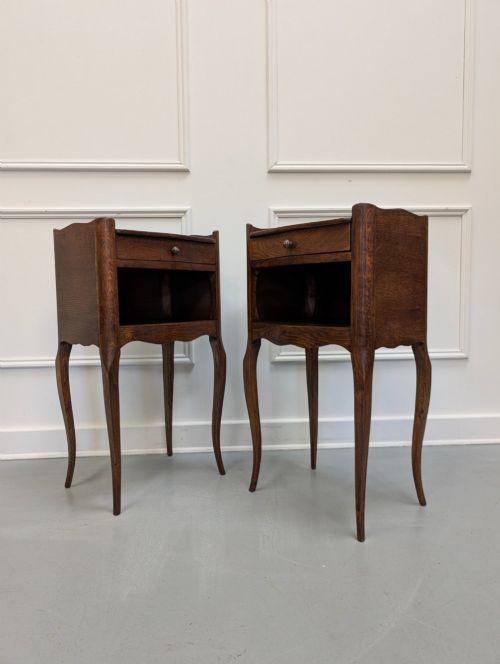
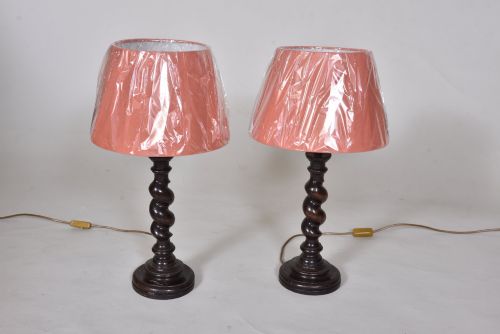
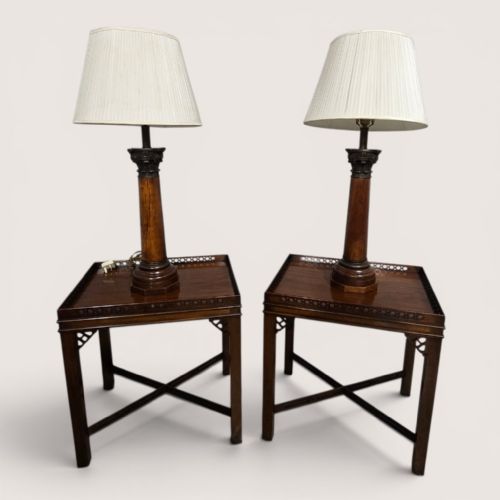
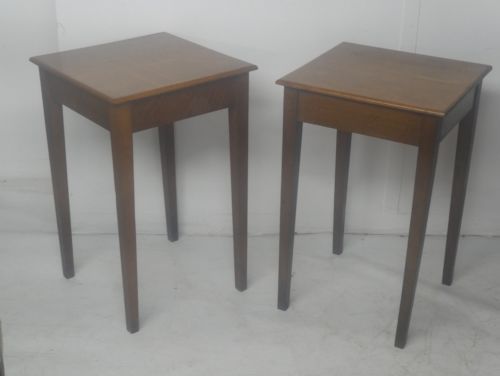

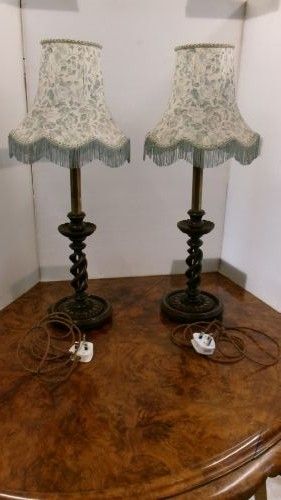


Pair of Oak Lamps
A pair of oak lamps brings heavy grain and grounded warmth to a room, offering the balanced symmetry of matched lighting.
Pair of Oak Lamps
A pair of oak lamps comprises matched timber light fittings or dual-purpose table structures originating from the nineteenth and early twentieth centuries. These pieces combine substantial domestic utility with the prominent styles of their periods, ranging from revival designs to country craftsmanship.
The current selection leans heavily towards table lamps and side tables adapted or built for illumination, often drawing on Jacobean revival, English country, or Arts and Crafts traditions. Buyers encounter everything from carved nineteenth-century French bases to twentieth-century standard and column lamps.
Earlier archive pieces show a strong presence of Edwardian column lamps and Heals designs originating from Oxford colleges, indicating institutional commissions alongside domestic items. These variations reflect how oak was utilised to project both sturdy utility and academic seriousness.
How they were made
Makers shaped these pieces from solid oak, sometimes employing dark finishes or limed surfaces to alter the natural tone of the grain. Turning, carving, and column construction dominate the physical form, whether executed for standard floor lamps or smaller table-height bases.
Metal components such as brass fittings frequently integrate with the timber structures, while fabric shades and fringe elements complete the lighting assemblies. Rewired examples demonstrate the practical adaptation of original wooden columns for modern electrical standards.
Listings feature oak combined with brass, fabric, and fringe across periods spanning the nineteenth century through nineteen-thirty.
What varies in quality
Quality rests primarily in the crispness of the timber carving and the architectural proportion of the columns or turned pillars. Superior examples display thoughtful integration of brass hardware and balanced proportions that anchor a room without appearing overly heavy.
The distinction between standard commercial production and finer workshops lies in the selection of the oak stock and the execution of details such as barley twists or fluted columns. Originality of surface finish and the integrity of matched pairs further separate ordinary pieces from superior examples.
Heals
The Pair of Oak Lamps Glossary
- Oak
- A durable hardwood characterised by prominent growth rings and medullary rays, widely utilised for furniture and lighting across multiple centuries. Its substantial weight provides essential stability for tall lamp bases.
- Jacobean Revival
- A nineteenth and early twentieth century design style referencing seventeenth-century British motifs, featuring heavy turned members and deep geometric carving. This aesthetic gives oak lamps a distinctly architectural presence.
- Arts and Crafts
- A movement prioritising visible construction, honest materials, and vernacular design traditions over mass-produced ornamentation. Lamps from this tradition emphasise the natural grain and simple geometry of the timber.
- Standard Lamp
- A floor-standing lighting fixture designed to illuminate a room from standing height rather than resting on a surface. Tall oak variants often employ column or pillar forms for structural support.
- Limed Oak
- A wood finishing technique involving a white pigment rubbed into the open pores of the oak to highlight the grain pattern. This treatment lightens the appearance of the timber while retaining its tactile texture.
Pair of Oak Lamps: Frequently Asked Questions
How do I date a pair of oak lamps?
Dating relies on observing stylistic markers such as column proportions, turning styles, and associated revival movements like Arts and Crafts or Jacobean revival.
Material details, wiring remnants, and historical context from periods like the Edwardian era or the nineteen-twenties help narrow the manufacturing window.
Are these lamps suitable for modern interiors?
Their neutral timber tones and classic structural forms allow oak lamps to anchor both traditional and contemporary interior spaces.
Many examples function well on side tables or as floor-standing standard lamps providing warm, ambient illumination.
How do I care for antique oak?
Maintenance involves dusting with a soft cloth and occasionally applying suitable wax to nourish the timber surface.
Direct sunlight and extreme humidity fluctuations should be avoided to prevent the oak from drying out or splitting.