
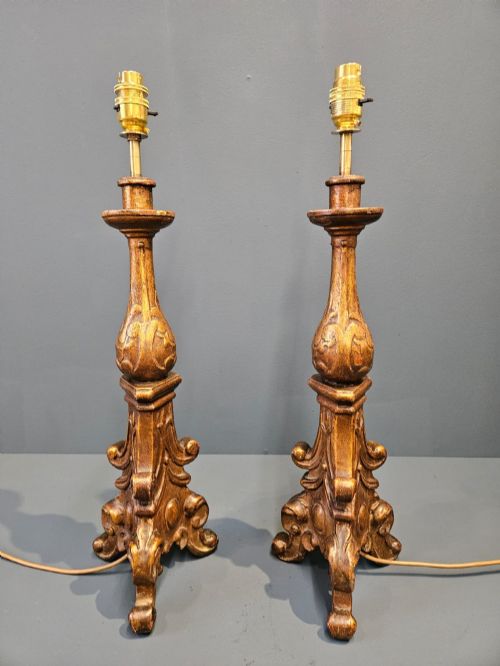


French Altar Lamps
French altar lamps bring ecclesiastical presence to domestic interiors, offering rich ecclesiastical patination and historic illumination.
French Altar Lamps
When you search for french altar lamps, you encounter repurposed sanctuary lighting originating primarily in the nineteenth century. These pieces bridge sacred and domestic spaces through conversion into practical table lamps.
The inventory on this page relies heavily on nineteenth century periods and continental styling. You will frequently meet heavy cast brass, giltwood, and carved timber forms adapted from church candlesticks and pricket sticks.
Forms vary from single tall shafts to substantial pairs and candelabras. French ecclesiastical aesthetics dominate, incorporating Gothic revival and Baroque revival design details into domestic lighting.
Materials and construction
Makers utilised cast brass, gilt bronze, and carved timber as the primary structural foundations for these ecclesiastical pieces. Metal components often received gilt surface treatments or silver plating to enhance visual weight.
Carved wooden elements frequently display applied gilt leaf or silver leaf over timber bases. Pricket sticks and candlesticks were subsequently adapted to house electrical fittings while retaining their original structural integrity.
Recorded styles range from French ecclesiastical and Gothic revival to Baroque revival and nineteenth century continental.
Judging quality
Quality rests in the crispness of the metal casting and the depth of the original gilding. Heavier gauge brass and deeply carved timber forms separate superior examples from simpler production.
Proportion and surface patination dictate visual success. Retaining an undisturbed historic finish elevates a piece far above heavily stripped or overly polished alternatives.
The French Altar Lamps Glossary
- Pricket stick
- A candlestick featuring a central spike designed to impale a wax candle rather than sit inside a socket. This form is common in church metalwork.
- Giltwood
- Timber that has been coated with a thin layer of gold leaf or gesso preparation. It offers a reflective, aged surface.
- Ecclesiastical
- Relating to the Christian Church or its clergy, defining the original religious context of these objects. These items were made for chapel and church altars.
- Gothic revival
- An architectural and decorative style drawing inspiration from medieval design. It frequently appears in nineteenth century church furnishings.
French Altar Lamps: Frequently Asked Questions
What are French altar lamps?
French altar lamps are historic church candlesticks and pricket stands converted into electrical table lamps. They retain their original ecclesiastical character while serving contemporary domestic lighting needs.
Most examples date from the nineteenth century and incorporate materials like cast brass, carved timber, and gilt finishes.
How were they used originally?
These objects stood upon church altars to hold wax candles during religious services and liturgy. Their height and reflective surfaces maximised light distribution within dim chapels.
Over time, many of these pieces found their way out of religious institutions and into the hands of antiquarian dealers for domestic adaptation.
How do I live with them?
Integrate these lamps into living spaces where their height and historic patination can act as sculptural focal points. They pair well with understated fabric shades that balance the ornate metal or carved wooden bases.
Ensure placement considers the overall scale of the piece, as many standing altar lamps possess considerable height and presence.
How do I tell periods apart?
Examine the casting quality, tool marks, and fastener types to determine age. Nineteenth century examples often display heavier metal gauge and hand-chased surface details.
Stylistic cues such as Baroque scrolls or Gothic tracery help anchor pieces within specific revival movements of the Victorian era.